Home → Episodes → Fade in to Murder
Fade in to Murder
Russian title: Фатальный выстрел · Russian version
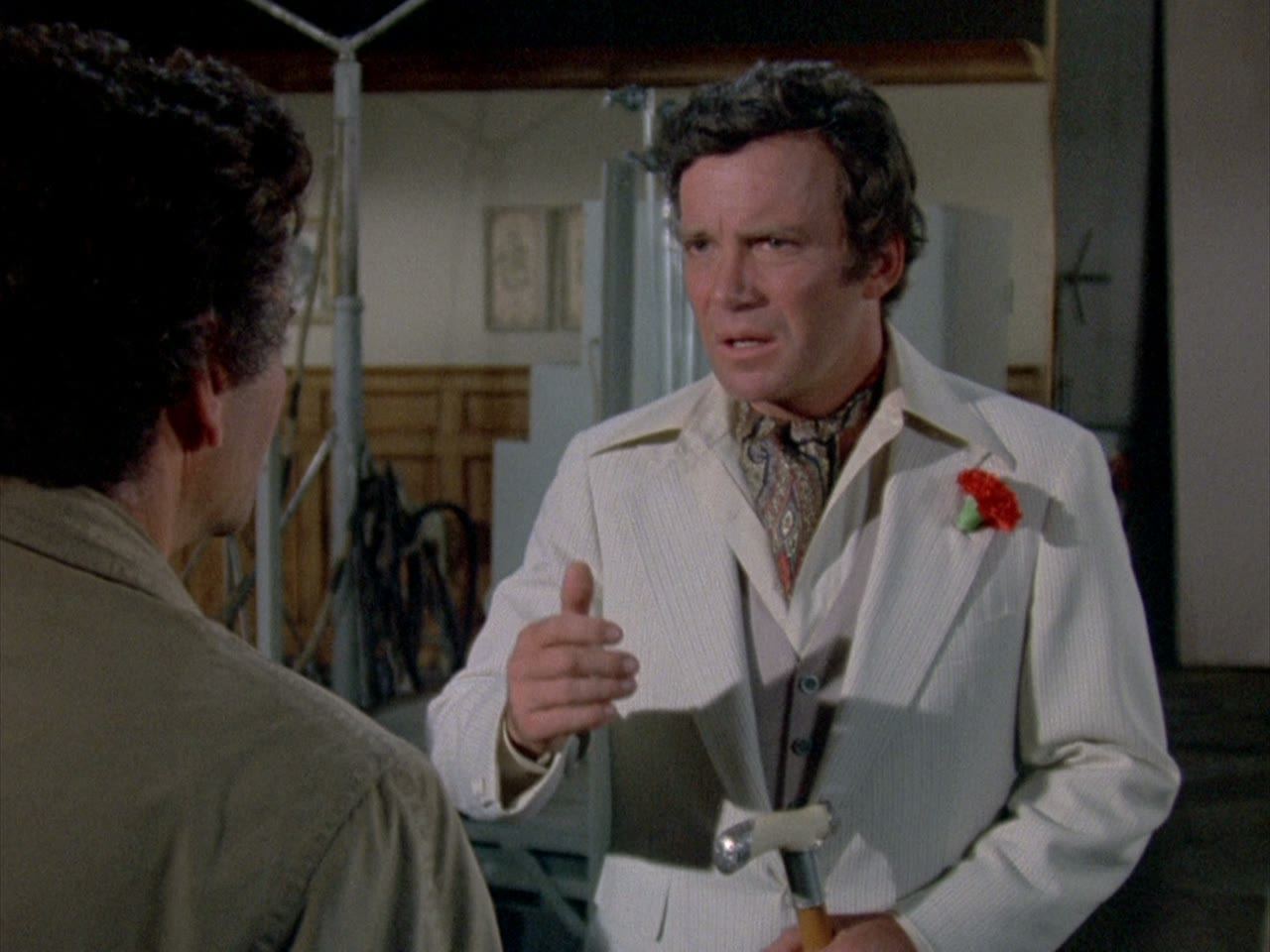
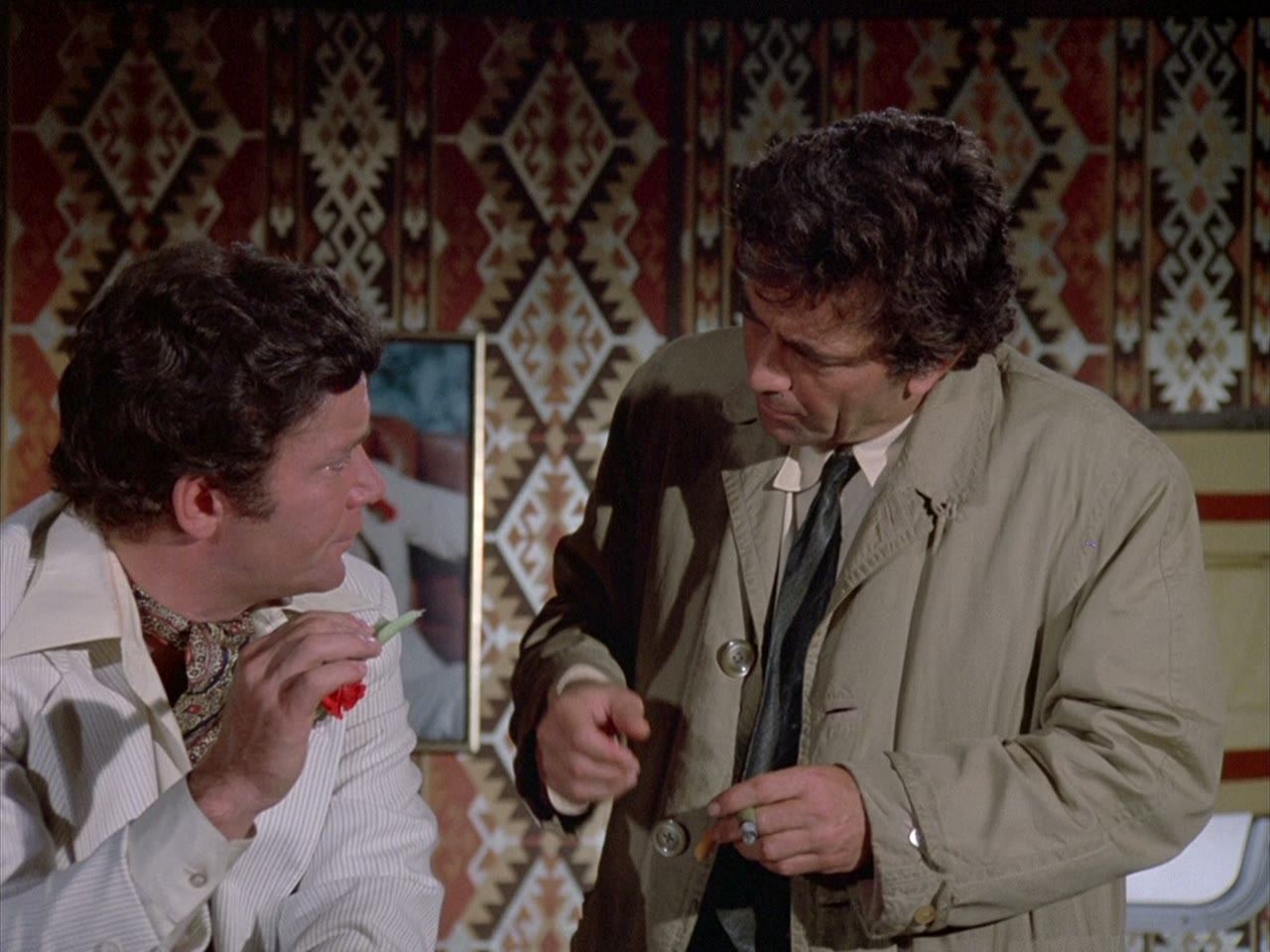
The star of a television detective series murders his producer and uses the tricks of his own show to build the alibi. William Shatner playing a vain actor who plays a detective is exactly as enjoyable as it sounds.
Editor’s rating — 8.5 out of 10.
- Number
- 38 of 69
- Aired
- October 10, 1976
- Running time
- 70 min
- Director
- Bernard L. Kowalski
- Writer
- Henry Garson / Peter Feibleman and Lou Shaw
- Music
- Bernardo Segall
The case
- The killer
- William Shatner as Ward Fowler
- The victim
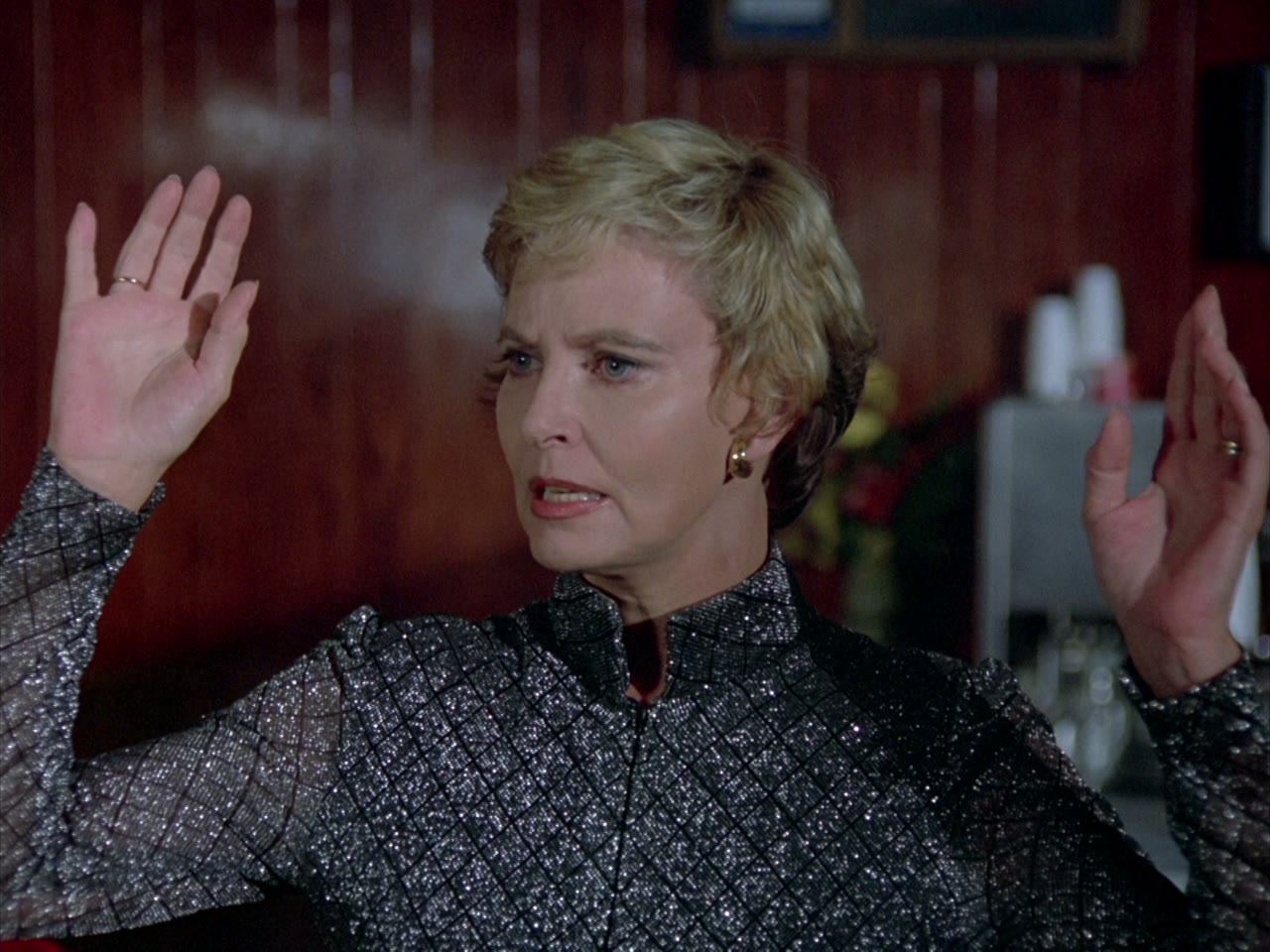
- Lola Albright as Claire Daley
- Guest cast
- William Shatner, Bert Remsen, Walter Koenig, Danny Dayton, Lola Albright, Shera Danese
Columbo is an inverted mystery: the murder opens the film and the killer is known from the first minutes. What you are watching for is how he proves it — see how the character works.
The murder
Ward Fowler is the star of Lieutenant Lucerne, a hit television detective series, and is being blackmailed by his producer Claire Daley over a past she has documented. The money is manageable; the exposure is not.
He kills her in her office and then constructs an alibi out of his own profession: a recorded television appearance, a carefully edited sequence of events, and the sort of misdirection that his scriptwriters supply him with every week.
The murder is committed by a man who has spent a decade pretending to solve murders, and who has therefore absorbed a great deal of half-understood police procedure — which is both his advantage and the reason he is caught.
Ward Fowler has played Lieutenant Lucerne for years and has begun to confuse the two jobs. He gives interviews about police procedure, offers opinions on real cases, and is treated by the public as an expert on something he only pretends to do.
Claire Daley produces his show and has documentation of something in his past that would end it. The blackmail has been running long enough that Fowler has had time to plan properly.
The murder is committed with the tools of his trade: an edited recording, a carefully constructed sequence of appearances, and the sort of misdirection his scriptwriters hand him every week. He kills her at the studio and steps back into an evening that appears unbroken.
How Columbo gets him
The episode's joke is that Fowler keeps trying to help. He offers Columbo professional insight, suggests lines of inquiry, explains what a detective would do — all of it drawn from scripts, none of it from life. Shatner plays the vanity at exactly the right pitch.
Columbo's advantage is that he actually does this for a living. Every piece of television logic Fowler offers is subtly wrong in a way only a real policeman would notice, and the lieutenant lets each one pass without comment while filing it away.
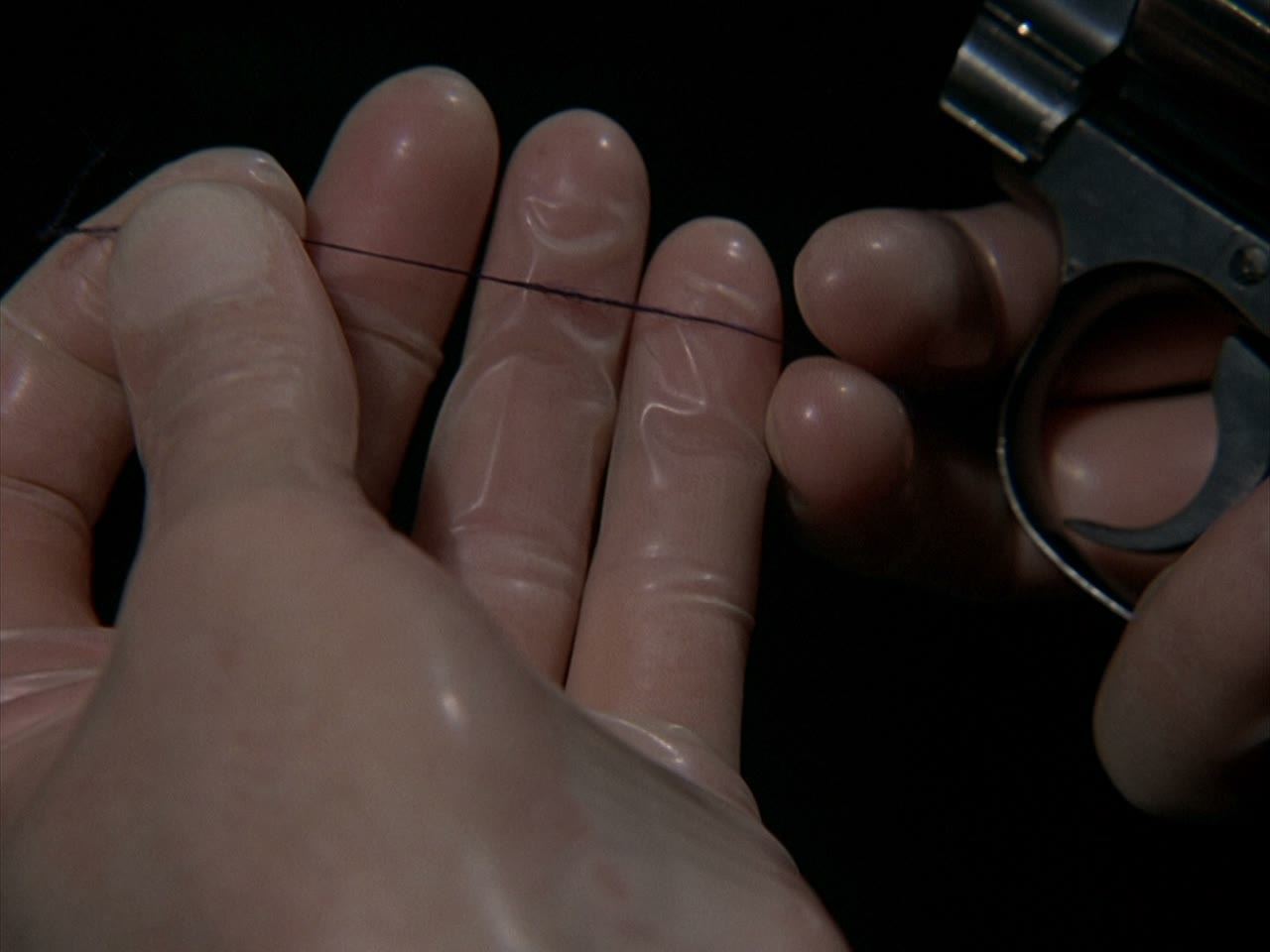
The physical case turns on the alibi recording and on a detail of the murder scene that reflects how a television crime is staged rather than how a real one looks.
Fowler cannot stop helping. He offers Columbo insights, suggests lines of inquiry and explains how detectives think — all of it drawn from scripts, none of it from life. Shatner plays the vanity exactly right, and the joke never tips into farce.
The lieutenant's advantage is simply that he does this for a living. Every piece of television logic Fowler produces is wrong in a small way, and Columbo lets each one pass while filing it.
The murder scene has the same problem. It has been arranged the way a crime is staged for a camera — legible, well lit, slightly too complete — rather than the way one actually looks.
Worth knowing
- Shatner returned to the series in 1994 for Butterfly in Shades of Grey, making him one of only a handful of repeat murderers.
- The fictional Lieutenant Lucerne is an affectionate parody of exactly the sort of show Columbo was competing against.
- Directed by Bernard L. Kowalski, who made four episodes across the run.
- Shatner returned in 1994 for Butterfly in Shades of Grey, making him one of only four actors to play two Columbo murderers.
- The fictional Lieutenant Lucerne is an affectionate parody of the sort of detective series Columbo was competing against.
- Broadcast in February 1976.
Verdict
Light, funny and self-aware without being smug. The mystery is thin, but the central joke — an actor who thinks television has taught him how crime works — carries it comfortably.
Shatner is clearly enjoying himself, and the episode is smart enough to let the vanity be the murderer's actual weakness rather than just a character note.
Light and self-aware, with a central joke that carries the whole film: an actor who believes television has taught him how crime works.
The mystery is thin, but the episode is smart enough to make the vanity the murderer's actual weakness rather than a decorative character note.
What the people who made it said
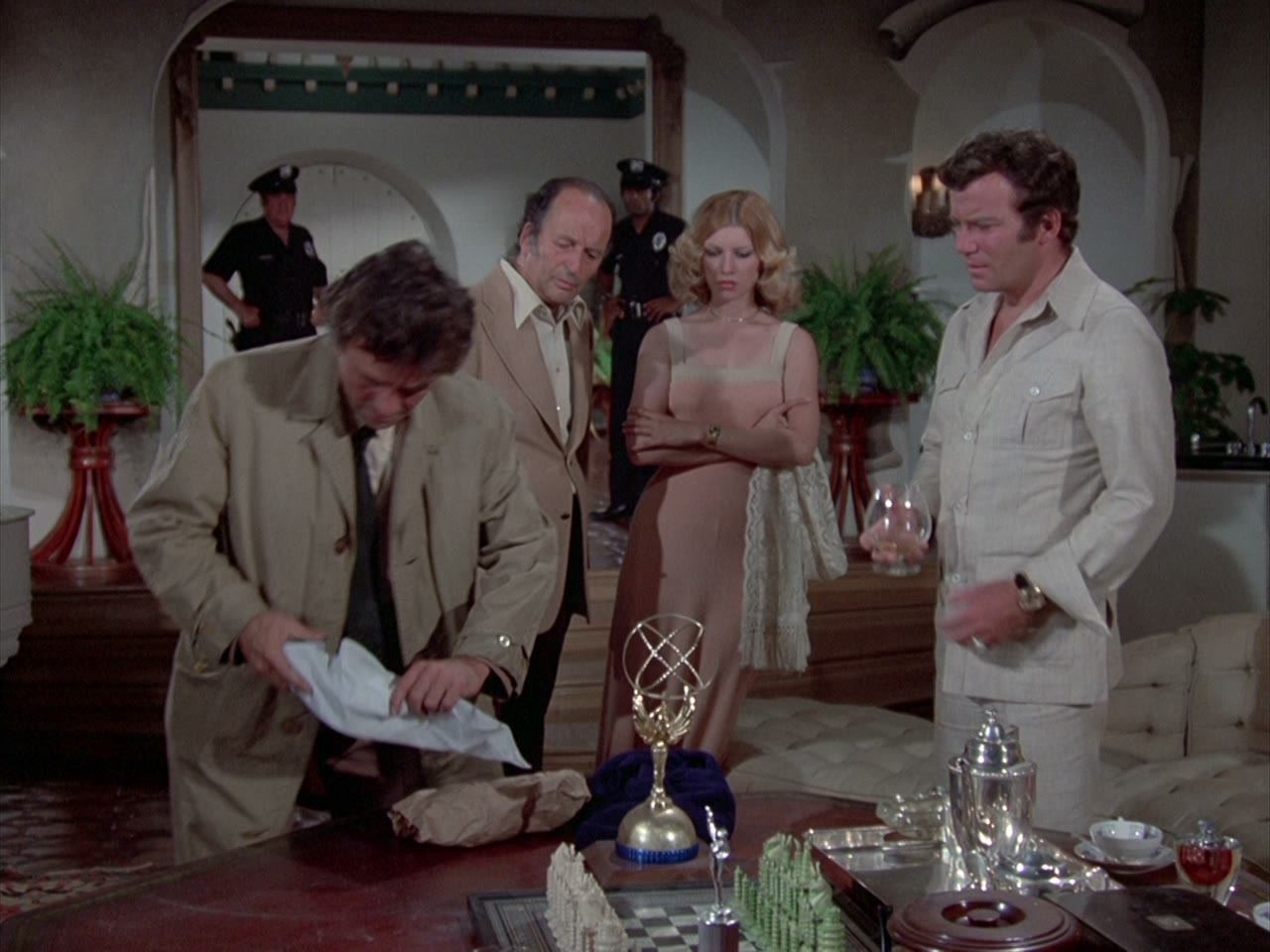
Koenig describes what working with Falk looked like from the inside: the shoot began at three in the afternoon and ran until two in the morning, because Falk kept listening to the sergeant’s explanation and finally took the director aside — the lines were too close to his own, he wanted new ones. At two a.m. Koenig asked for the sense of them rather than the text, and played the scene as improvisation, in one wide shot.
“Tell me the gist of what you want. I'm not going to be able to remember this — just tell me the gist and I'll improvise it.”
Shatner was already a Star Trek name, and still counted a Columbo booking as an honour — and he is clear about who the show rested on.
“I felt honored to be asked to be on Columbo. It was a prestigious show in the public consciousness. The key to the show's success was Peter Falk, who was a terrifically nice guy and a joy to work with.”
Quotes are in the speaker’s own words — from a transcript of the recording, or from the printed source. Players open at the right minute. Everything is shortened; the full version is in the source.
Familiar faces
Actors who turn up in the series more than once — sometimes in very different parts.
- John Finnegan as Assistant Director 12 episodes also in Blueprint for Murder, The Most Dangerous Match, Lovely But Lethal, A Friend in Deed, Last Salute to the Commodore and 6 more
- Shera Danese as Molly 6 episodes also in Murder Under Glass, Murder, A Self Portrait, Columbo and the Murder of a Rock Star, Undercover, A Trace of Murder
- Fred Draper as Joseph 4 episodes also in Lovely But Lethal, A Deadly State of Mind, Last Salute to the Commodore
- Timothy Carey as Tony 3 episodes also in Ransom for a Dead Man, Dead Weight
- Victor Izay as Conroy 3 episodes also in An Exercise in Fatality, Now You See Him
- Jimmy Joyce as Camera Operator 3 episodes also in Blueprint for Murder, Last Salute to the Commodore
- William Shatner as Ward Fowler 2 episodes also in Butterfly in Shades of Grey
- Frank Baxter as Walter Gray 2 episodes also in Lady in Waiting
- Dorothy Dells as Julia 2 episodes also in Now You See Him
Cast data from TMDB, including uncredited bit parts. All the familiar faces →