Home → Episodes → Blueprint for Murder
Blueprint for Murder
Russian title: План убийства · Russian version
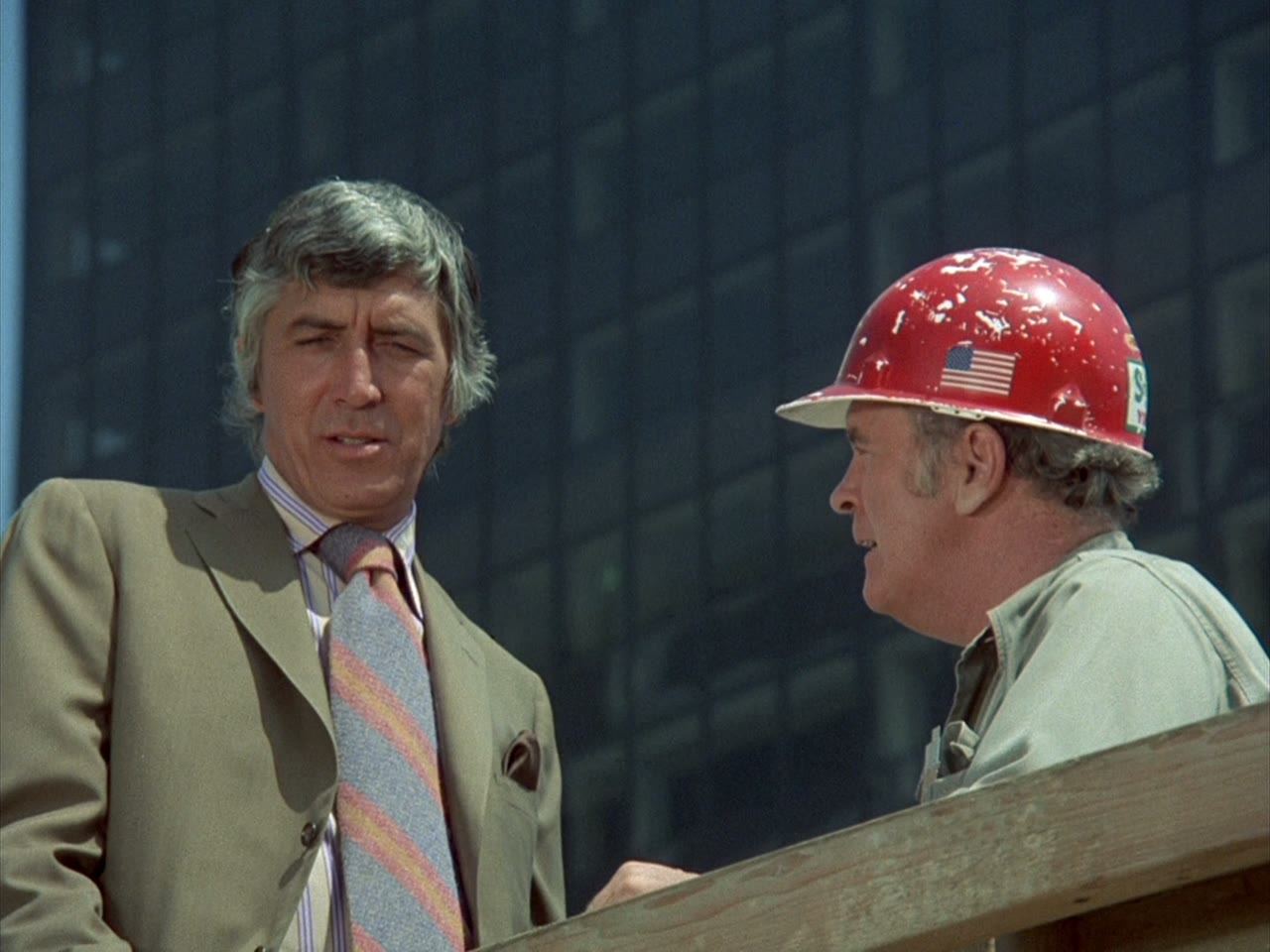
An architect kills the millionaire who has decided to stop funding his city of the future, and hides the body inside the concrete of the project itself. The only episode Peter Falk directed.
Editor’s rating — 7.5 out of 10.
- Number
- 9 of 69
- Aired
- February 9, 1972
- Running time
- 71 min
- Director
- Peter Falk
- Writer
- William Kelley / Steven Bochco
- Music
- Gil Mellé
The case
- The killer
- Patrick O'Neal as Elliot Markham
- The victim
- Forrest Tucker as Beau Williamson
- Guest cast
- Patrick O'Neal, Janis Paige, Forrest Tucker, Pamela Austin, John Fiedler, Bettye Ackerman
Columbo is an inverted mystery: the murder opens the film and the killer is known from the first minutes. What you are watching for is how he proves it — see how the character works.
The murder
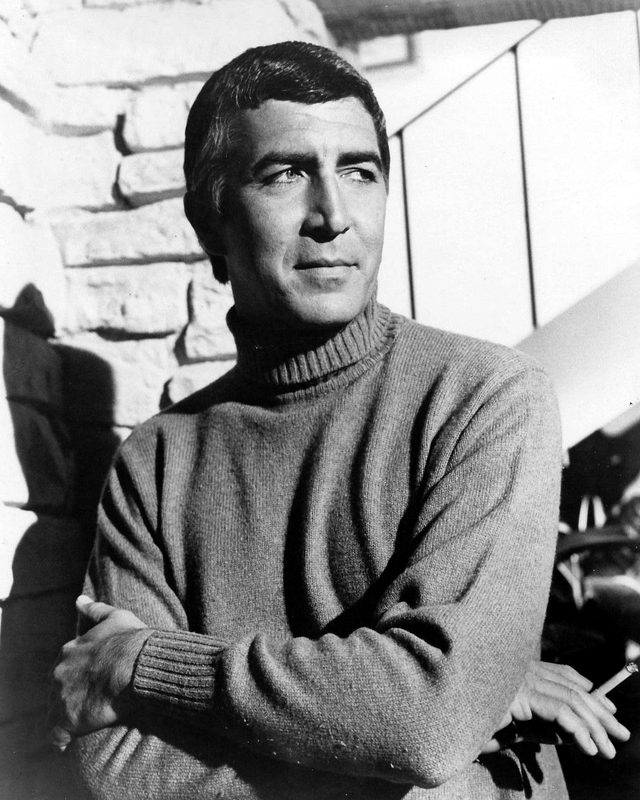
Elliot Markham has designed something enormous — a planned city on the edge of Los Angeles — and has persuaded the industrialist Bo Williamson to pay for it. When Williamson returns from a trip having decided the whole thing is a vanity project he no longer wants to fund, Markham loses not a commission but the only thing that has ever justified him.
He shoots Williamson at the site and disposes of him in the most literal way available: the body goes into a foundation that is about to be poured. Concrete is set within hours. Nobody digs up half a city on a hunch.
The cover story is thin but adequate: Williamson has gone away again, as he often does, and his signature is easy enough to arrange. Markham's confidence rests entirely on the impossibility of searching the site — a confidence he displays a little too openly.
Elliot Markham has designed a planned city on the edge of Los Angeles and persuaded the industrialist Bo Williamson to pay for it. Williamson returns from a trip having decided it is a vanity project he no longer wants to fund.
For Markham this is not the loss of a commission but of the only thing that has ever justified him. He shoots Williamson at the site and puts the body into a foundation about to be poured.
Concrete sets within hours, and nobody digs up half a city on a hunch. The cover story is thin — Williamson has gone away again, as he often does — and Markham's confidence rests entirely on the impossibility of searching.
How Columbo gets him
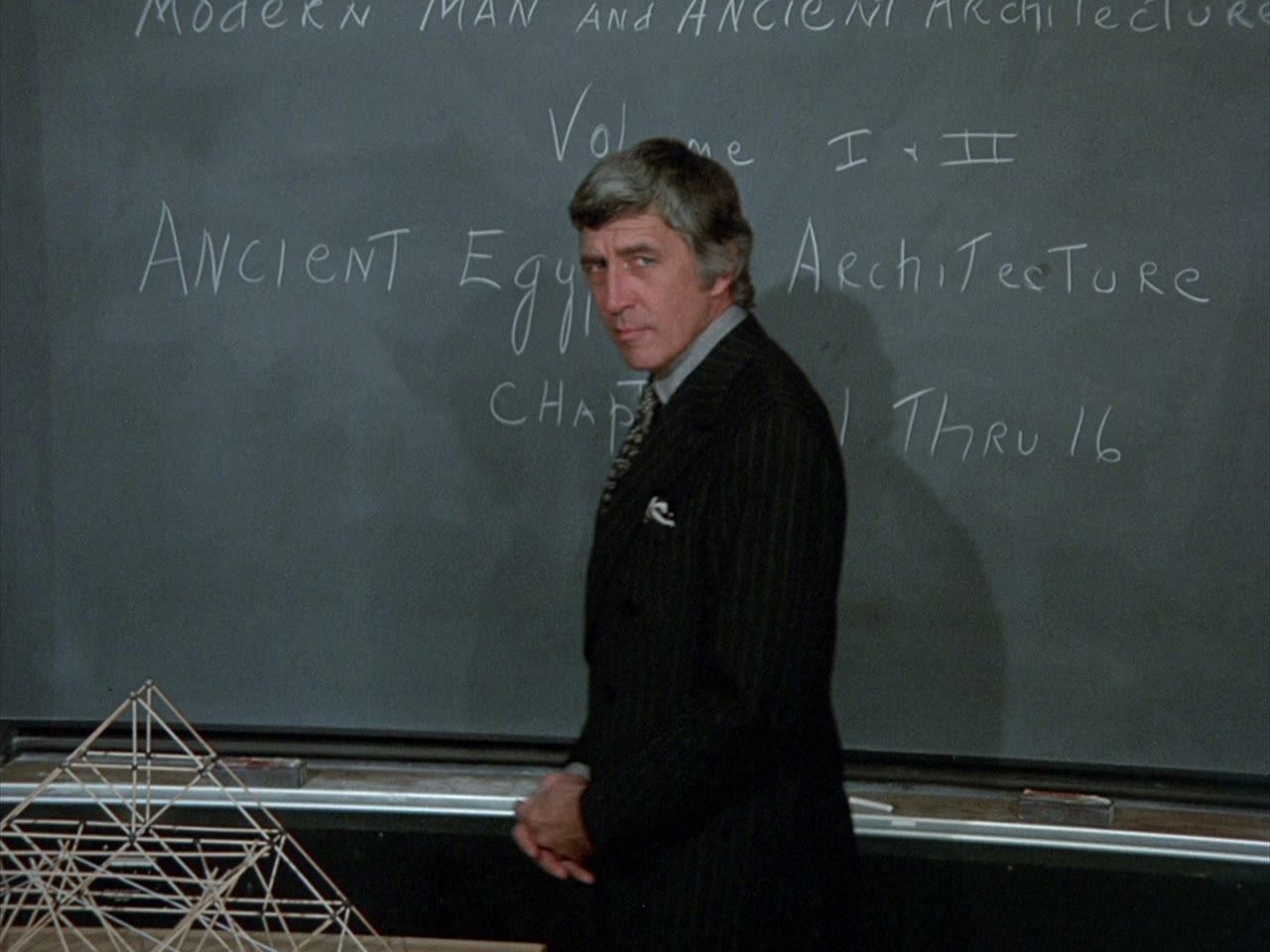
Markham is the most articulate killer of the season and the most pleased with himself. He talks about vision, about the philistinism of money, about what a city should be. Columbo listens and asks about the plumbing. Their exchanges are the class comedy of the series at its purest: a man who thinks in centuries against a man who thinks about where the missing person's car is parked.
The lieutenant's suspicion is prosaic. Williamson's wife believes her husband is dead, and Williamson's habits — the drinking, the cigars, the phone calls — stop dead on a particular evening. Columbo works the timeline until the last hours of the man's life are located at the construction site and nowhere else.
The problem is proof. He cannot excavate a development on suspicion, and Markham knows it. So Columbo does something the series rarely allows him: he lies, elaborately and on the record, obtaining an order to dig in a place he has no reason to believe holds anything at all.
Markham is the most articulate killer of the first season and the most pleased with himself. He talks about vision and the philistinism of money; Columbo asks about the plumbing. It is the class comedy of the series at its purest.
The suspicion is prosaic. Williamson's wife believes her husband is dead, and his habits — the drinking, the cigars, the phone calls — stop on a particular evening.
The problem is proof, and the lieutenant solves it by doing something the series rarely allows: he lies on the record, obtaining an order to dig in a place he has no reason to believe holds anything.
Worth knowing
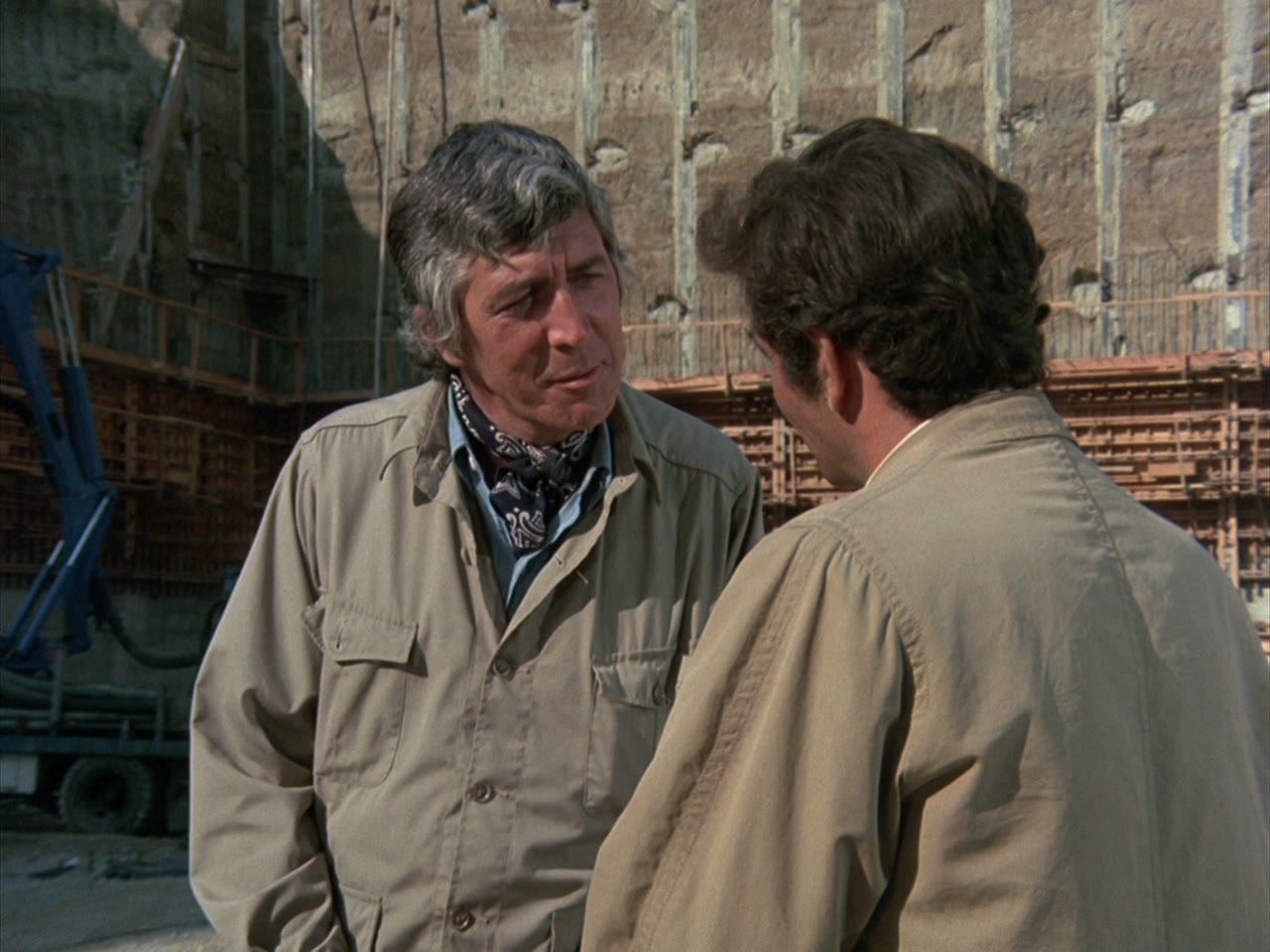
- Peter Falk directed, and the episode is noticeably more interested in faces than in plot mechanics; long takes sit on Markham while he talks himself into trouble.
- Patrick O'Neal plays Markham as a man performing the role of a great artist, which makes his collapse at the end unusually undignified.
- The unbuilt city is a real location — an unfinished development that the production dressed as Markham's project.
- Peter Falk directed, and the episode is more interested in faces than in plot mechanics; long takes sit on Markham while he talks himself into trouble.
- The unbuilt city is a real location — an unfinished development dressed as Markham's project.
- Broadcast in February 1972.
Verdict
A strong close to the first season, and interesting as the one film where Falk controlled both sides of the duel. The bluff at the centre is the boldest thing Columbo does in the early years: if Markham holds his nerve for ten more seconds, there is no case at all.
It is also the episode that makes the series' politics plainest. Markham's dream is genuinely beautiful, and it is built on the assumption that a rich man's inconvenient decision can be poured into a foundation.
A strong close to the first season and interesting as the one film where Falk controlled both sides of the duel. The bluff is the boldest thing Columbo does in the early years: ten more seconds of nerve and there is no case at all.
It also makes the series' politics plainest. Markham's dream is genuinely beautiful, and it is built on the assumption that a rich man's inconvenient decision can be poured into a foundation.
What the people who made it said
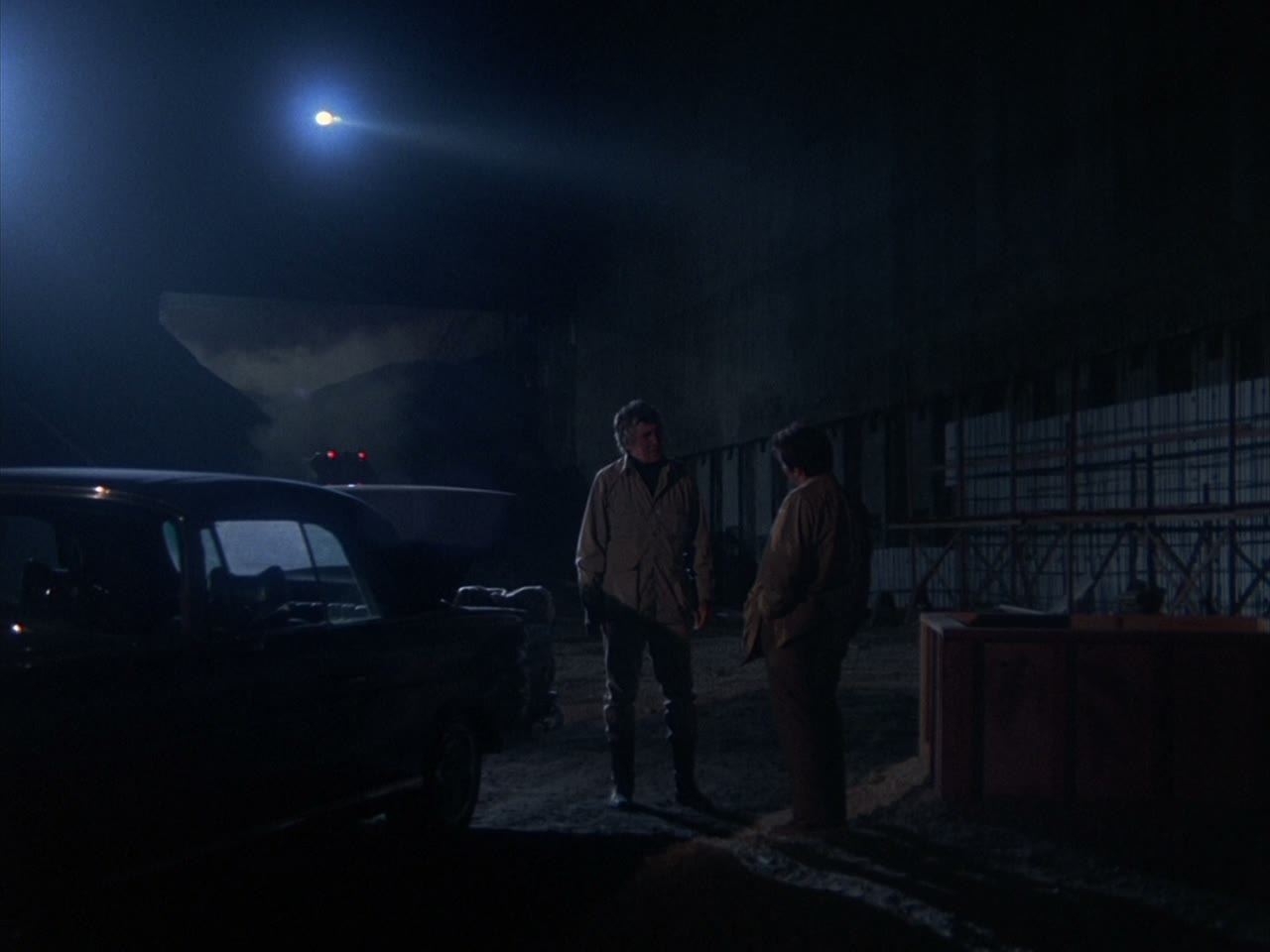
Falk directed this one himself — and the producers, Levinson says, handed him the most awkward material: the shoot was on a working construction site in Century City, with crews interrupting every take.
“From the standpoint of difficulties, we gave him the worst one to direct. When he was directing, he called on Spielberg and Cassavetes for advice. That was one of the first examples of Spielberg helping another director.”
Falk’s preparation was impeccable, but directing and carrying the lead at the same time cost his performance, in the producers’ view.
“Our feeling was that he did a good job directing, but not so good playing the character.”
Quotes are in the speaker’s own words — from a transcript of the recording, or from the printed source. Players open at the right minute. Everything is shortened; the full version is in the source.
Familiar faces
Actors who turn up in the series more than once — sometimes in very different parts.
- John Finnegan as Carl 12 episodes also in The Most Dangerous Match, Lovely But Lethal, A Friend in Deed, Last Salute to the Commodore, Fade in to Murder and 6 more
- Jimmy Joyce as Workman 3 episodes also in Last Salute to the Commodore, Fade in to Murder
- Cliff Carnell as Officer Wilson 3 episodes also in The Most Crucial Game, Identity Crisis
- Patrick O'Neal as Elliot Markham 2 episodes also in Make Me a Perfect Murder
- Robert Gibbons as Clerk 2 episodes also in Now You See Him
Cast data from TMDB, including uncredited bit parts. All the familiar faces →