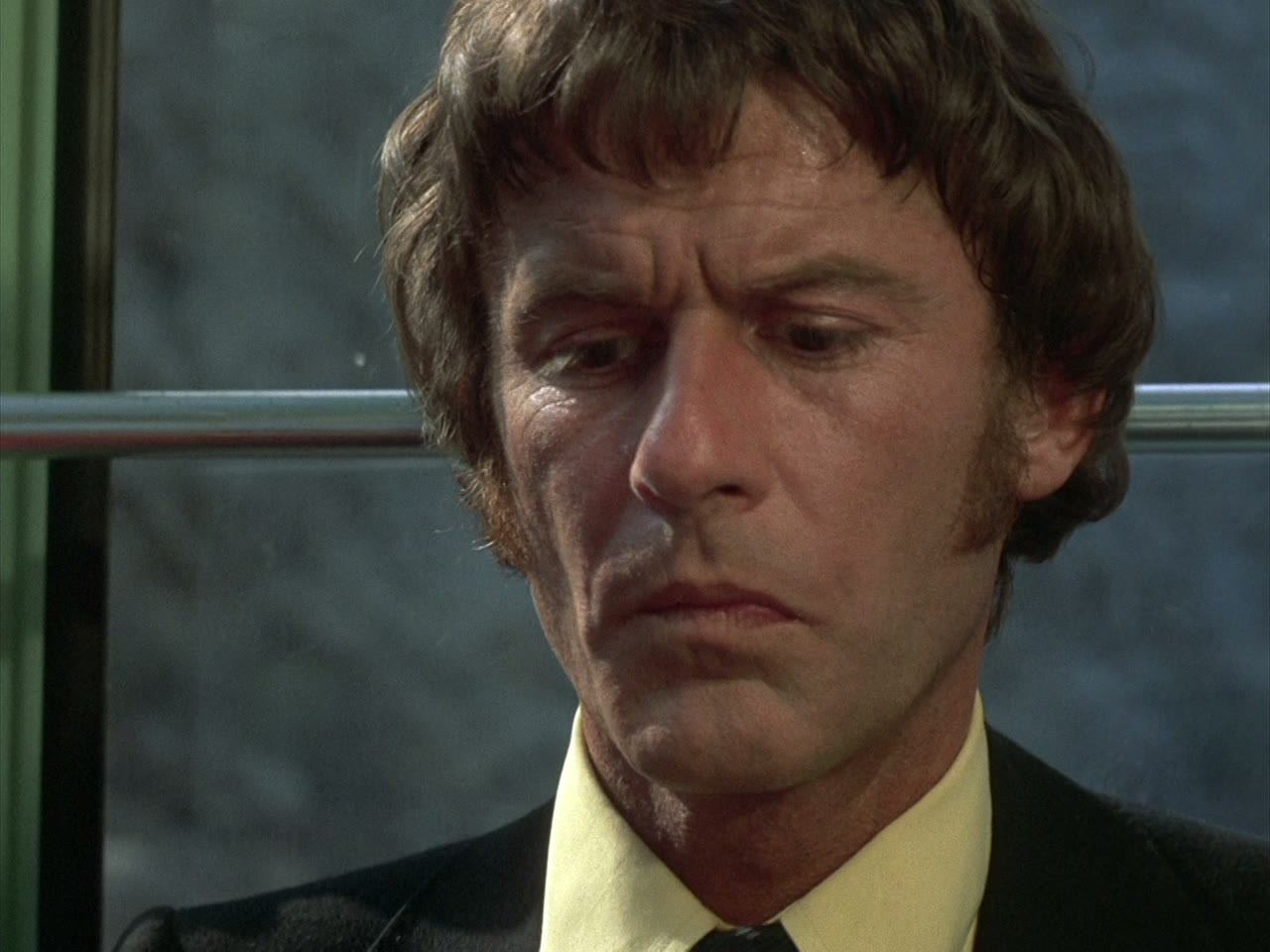
Short Fuse
Russian title: Короткое замыкание · Russian version
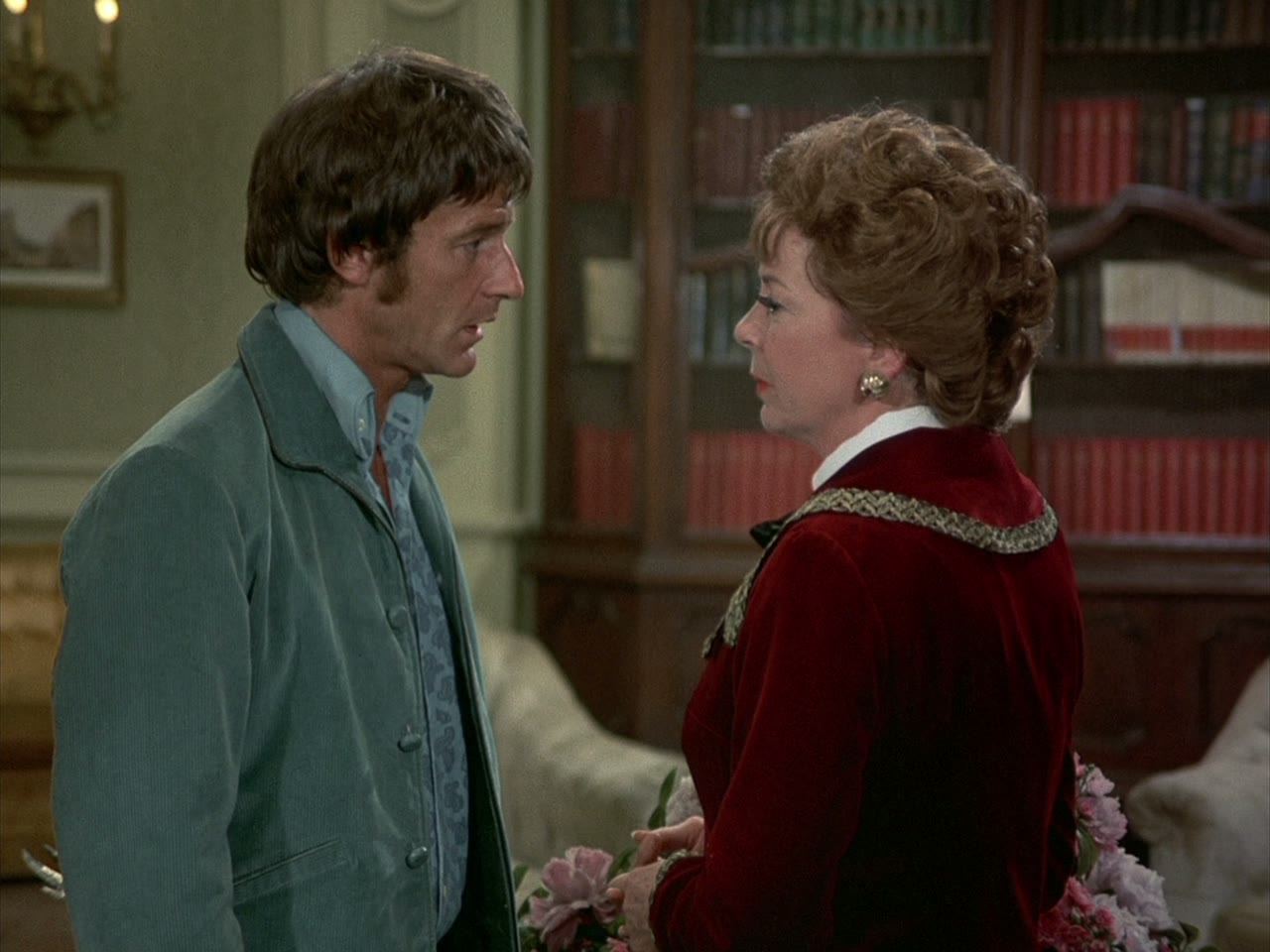
A chemist and heir plants a bomb in a cigar box for the uncle who is about to remove him from the family firm. Roddy McDowall plays him as a clever, spoiled boy who has decided that murder is a chemistry problem with a tidy solution.
Editor’s rating — 6.5 out of 10.
- Number
- 8 of 69
- Aired
- January 19, 1972
- Running time
- 72 min
- Director
- Edward M. Abroms
- Writer
- Lester Pine & Tina Pine and Jackson Gillis / Jackson Gillis
- Music
- Gil Mellé
The case
- The killer
- Roddy McDowall as Roger Stanford
- The victim
- James Gregory as David Buckner and Lawrence Cook as Quincy
- Guest cast
- Roddy McDowall, Anne Francis, Steve Gravers, Rosalind Miles, Stuart Nisbet, Ida Lupino
Columbo is an inverted mystery: the murder opens the film and the killer is known from the first minutes. What you are watching for is how he proves it — see how the character works.
The murder
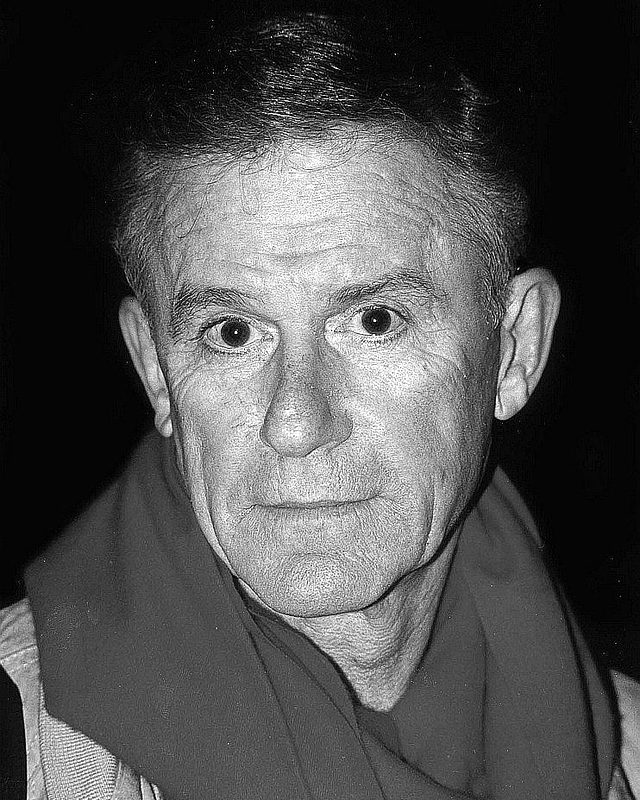
Roger Stanford works in the laboratory of the family chemical company and considers himself its intellectual centre. His uncle David Buckner, who runs the business, sees an unstable young man who plays practical jokes with laboratory materials and intends to remove him from the company and the payroll.
Roger's answer is technically elegant and morally infantile. He builds an explosive device disguised as a camera case, places it in his uncle's car, and arranges for the car to be driven up a mountain road where the blast will be attributed to an accident. His aunt dies alongside his uncle, which he treats as a rounding error.
Then he does the thing that ruins him: he goes to the office and behaves like a man performing grief, badly, for an audience he assumes is not paying attention.
Roger Stanford works in the family firm's laboratory and considers himself its intellectual centre. His uncle David Buckner, who actually runs the business, sees an unstable young man who plays practical jokes with laboratory materials.
Buckner intends to remove him from the company and the payroll, which for Roger means the end of an allowance he has never had to justify.
The answer is technically elegant and morally infantile: a camera-shaped explosive in the car, timed for a mountain road where the blast will read as an accident. His aunt dies alongside his uncle, which he treats as a rounding error.
How Columbo gets him
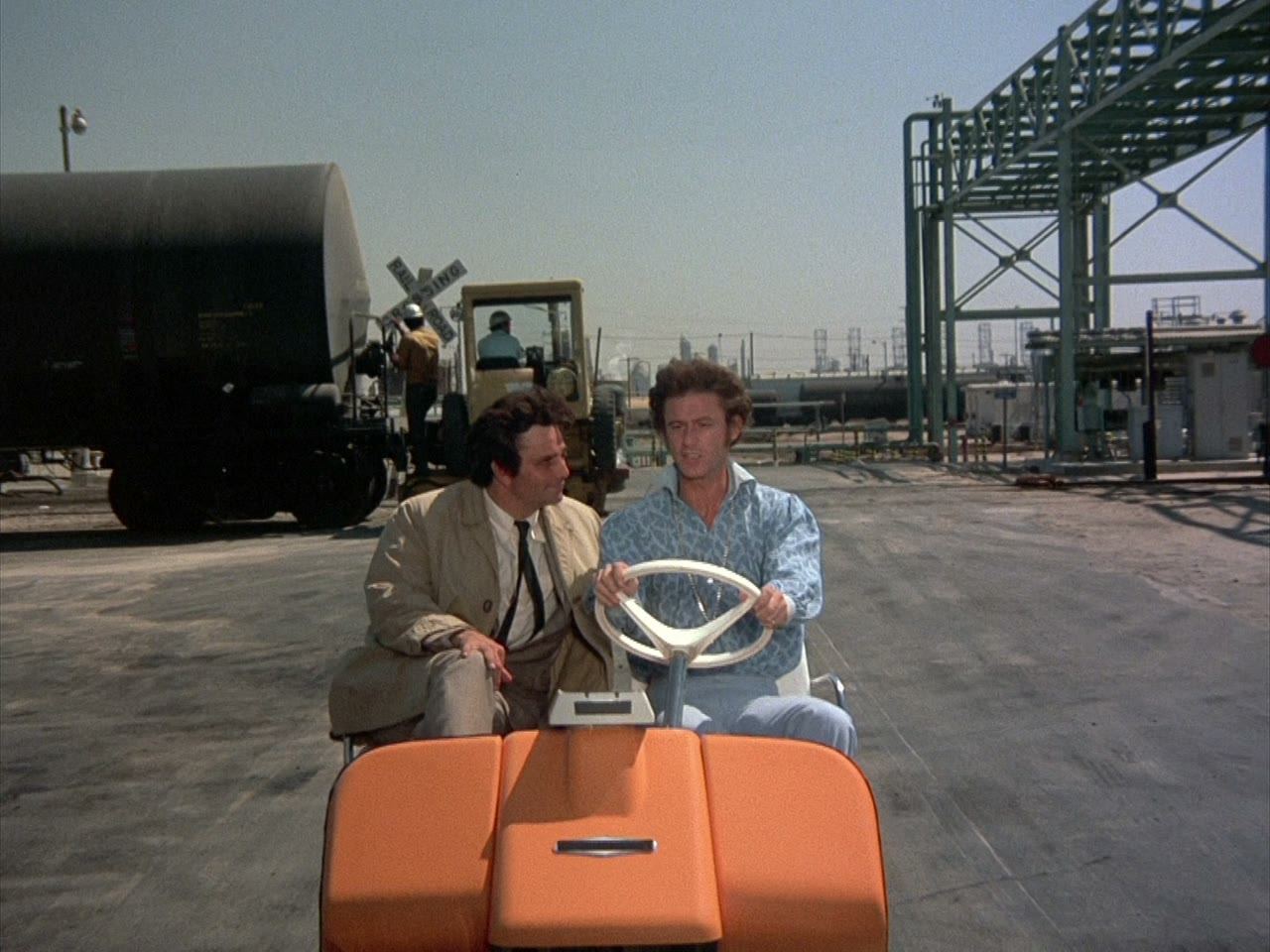
Columbo takes to Roger immediately in the way he takes to all the worst ones — with delighted interest in the chemistry, the equipment, the clever little tricks. Roger, who wants nothing more than an audience for his brilliance, demonstrates. Each demonstration narrows the field of people capable of building the device that killed his uncle.
The investigative work here is unusually technical for the first season: how the bomb was triggered, what it was made from, who had access to those materials on that day. But the lieutenant's instinct is the usual one — the nephew is not behaving like a man who has lost his family, he is behaving like a man who has won something.
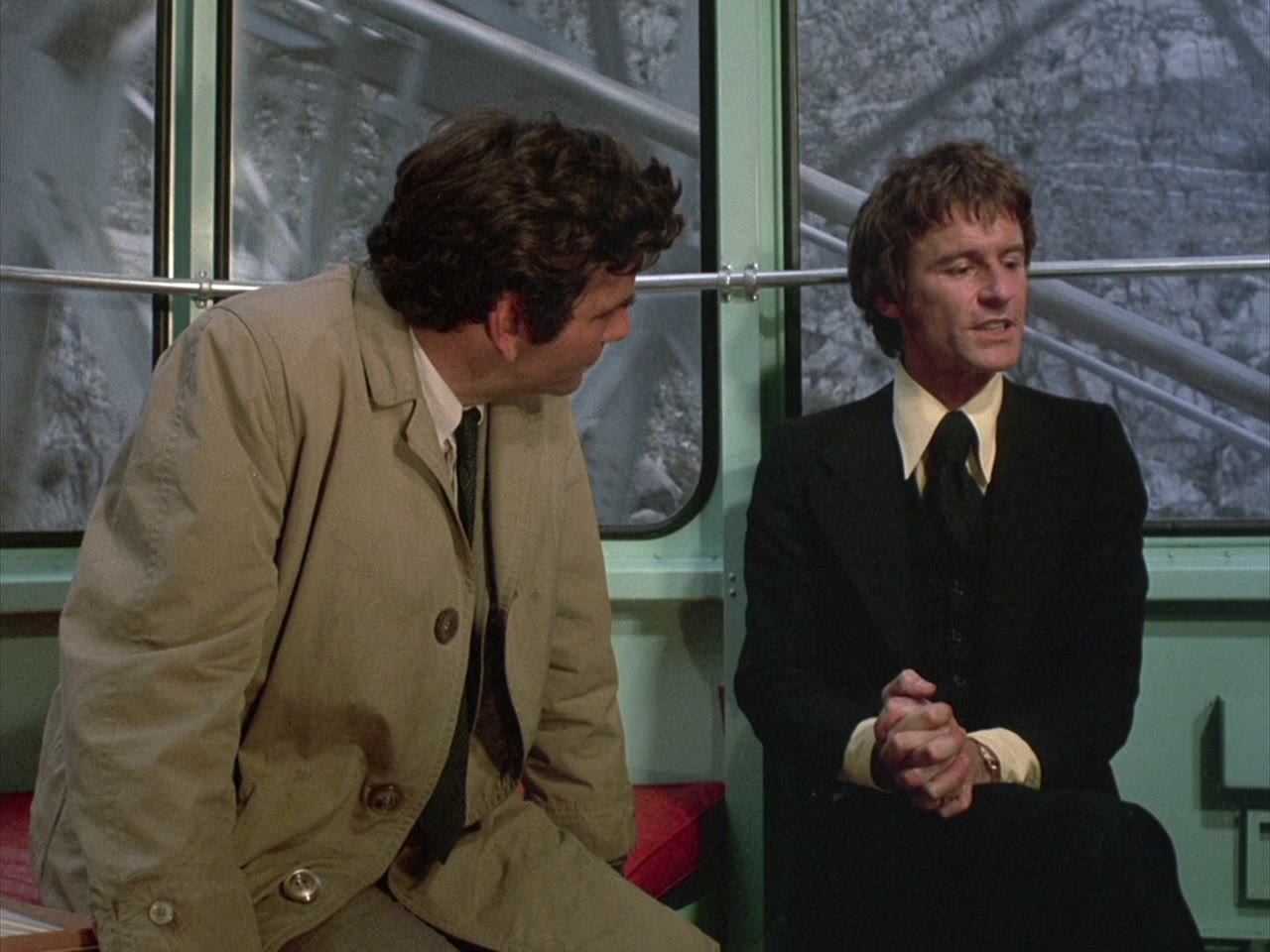
The finale is the best-remembered part of the episode. Columbo arranges to travel with Roger in a cable car, and produces, in that enclosed and slowly rising space, a box that Roger has every reason to believe is the same kind of device he built himself.
Columbo takes to Roger the way he takes to all the worst ones — with delighted interest in the chemistry and the equipment. Roger, who wants an audience for his brilliance, demonstrates, and each demonstration narrows the list of people who could have built the device.
The investigative work is unusually technical for the first season: how the bomb was triggered, what it was made from, who had access to those materials that week.
The instinct underneath it is the usual one. The nephew is not behaving like a man who has lost his family; he is behaving like a man who has won something.
Worth knowing
- Roddy McDowall would return to the series in The Most Crucial Game's era as another murderer, one of the few actors invited back more than once.
- James Gregory plays the uncle, and the film gives him just enough screen time to make his death a loss rather than a plot device.
- The cable-car finale was shot at a working aerial tramway, and Falk's discomfort with the height is not entirely acting.
- James Gregory plays the uncle, and the film gives him enough screen time to make his death a loss rather than a plot device.
- The cable-car finale was shot at a working aerial tramway, and Falk's discomfort with the height is not entirely acting.
- Broadcast in January 1972.
Verdict
A middling mystery lifted by a very good villain and an outstanding last ten minutes. Roger is the first Columbo killer who is genuinely childish rather than arrogant, and McDowall plays the difference precisely.
The episode is also an early example of the series' favourite ending: not a confession extracted by evidence, but a reflex the guilty cannot suppress.
A middling mystery lifted by a very good villain and an outstanding last ten minutes. Roger is the first Columbo killer who is childish rather than arrogant, and McDowall plays the difference precisely.
The ending is also an early example of the series' preferred finish: not a confession extracted by evidence but a reflex the guilty cannot suppress.
What the people who made it said
The first season was planned as six films and shot at a frantic pace — with a star who kept walking off and hardly any finished scripts. When it was all done, the network asked for one more.
“The network was so pleased with what they were seeing that they wanted the seventh. We were furious. We didn't want to do another one. We had just done all of those pictures in a very short time frame with no scripts ready.”
The seventh film was shot in even more of a rush than the others, and Falk himself judged the result without indulgence.
“It's just not as strong as the others in the first season.”
Quotes are in the speaker’s own words — from a transcript of the recording, or from the printed source. Players open at the right minute. Everything is shortened; the full version is in the source.
Familiar faces
Actors who turn up in the series more than once — sometimes in very different parts.
- Anne Francis as Valerie Bishop 2 episodes also in A Stitch in Crime
- Stuart Nisbet as Pinstripe 2 episodes also in The Most Dangerous Match
- Ida Lupino as Doris Buckner 2 episodes also in Swan Song
- William Windom as Everett Logan 2 episodes also in Prescription: Murder
- Lew Brown as Farrell 2 episodes also in Candidate for Crime
- James Gregory as David Buckner 2 episodes also in The Most Crucial Game
- George Sawaya as Man 2 episodes also in A Case of Immunity
Cast data from TMDB, including uncredited bit parts. All the familiar faces →