Home → Episodes → Lady in Waiting
Lady in Waiting
Russian title: На грани нервного срыва · Russian version
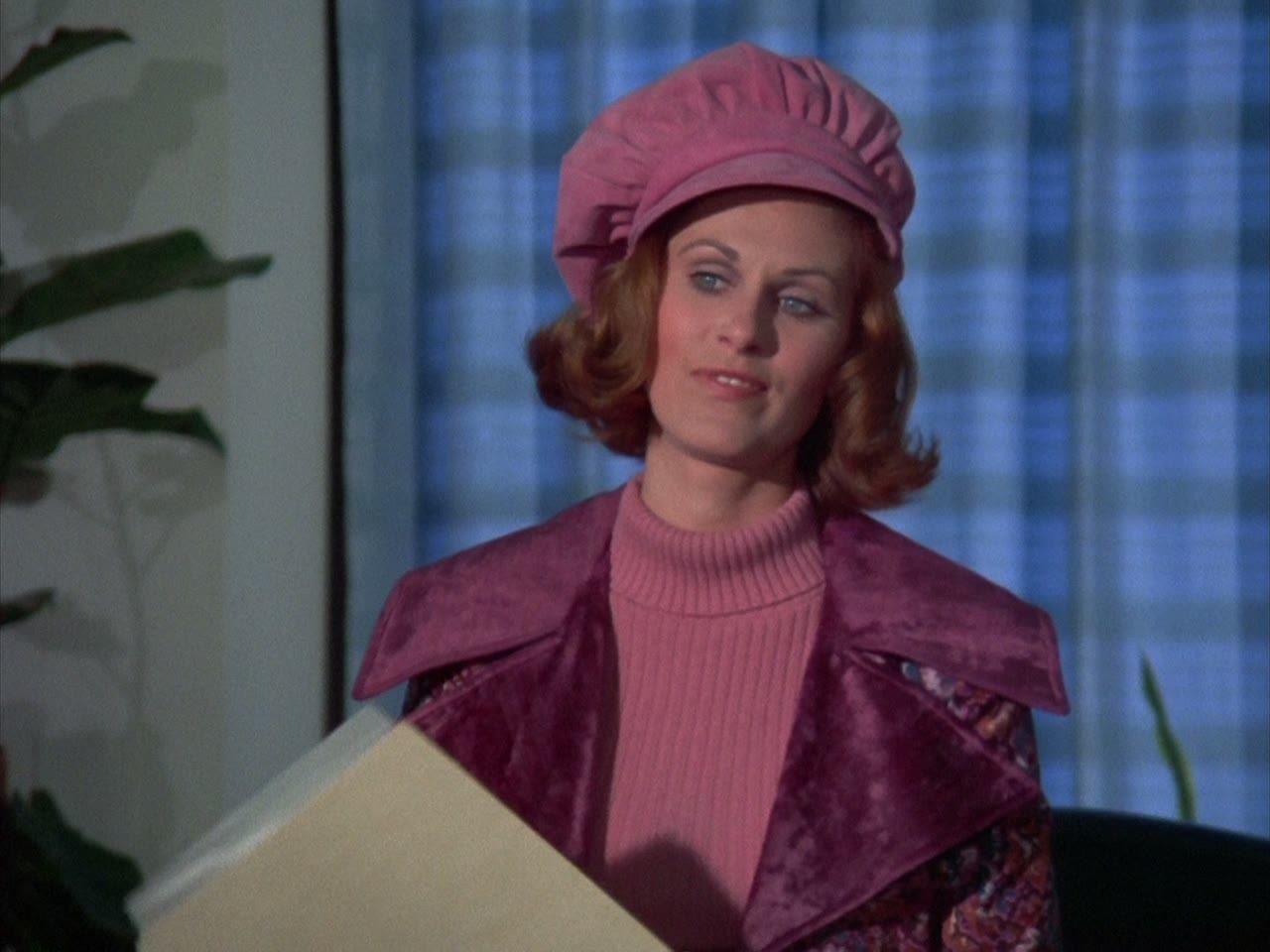
A woman who has spent her entire life being managed by her older brother shoots him and calls it self-defence against an intruder. Then, freed of him, she becomes someone else entirely — and that transformation, not the murder, is what the film is actually about.
Editor’s rating — 8 out of 10.
- Number
- 7 of 69
- Aired
- December 15, 1971
- Running time
- 72 min
- Director
- Norman Lloyd
- Writer
- Barney Slater / Steven Bochco
- Music
- Billy Goldenberg
The case
- The killer
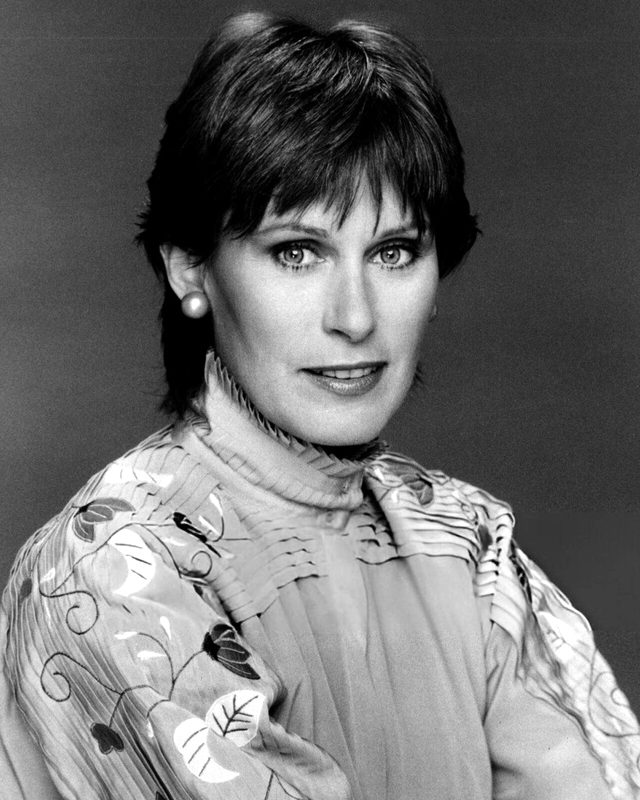
- Susan Clark as Beth Chadwick
- The victim
- Richard Anderson as Bryce Chadwick
- Guest cast
- Susan Clark, Richard Bull, Jon Lormer, Frank Baxter, Richard Anderson, Jessie Royce Landis
Columbo is an inverted mystery: the murder opens the film and the killer is known from the first minutes. What you are watching for is how he proves it — see how the character works.
The murder
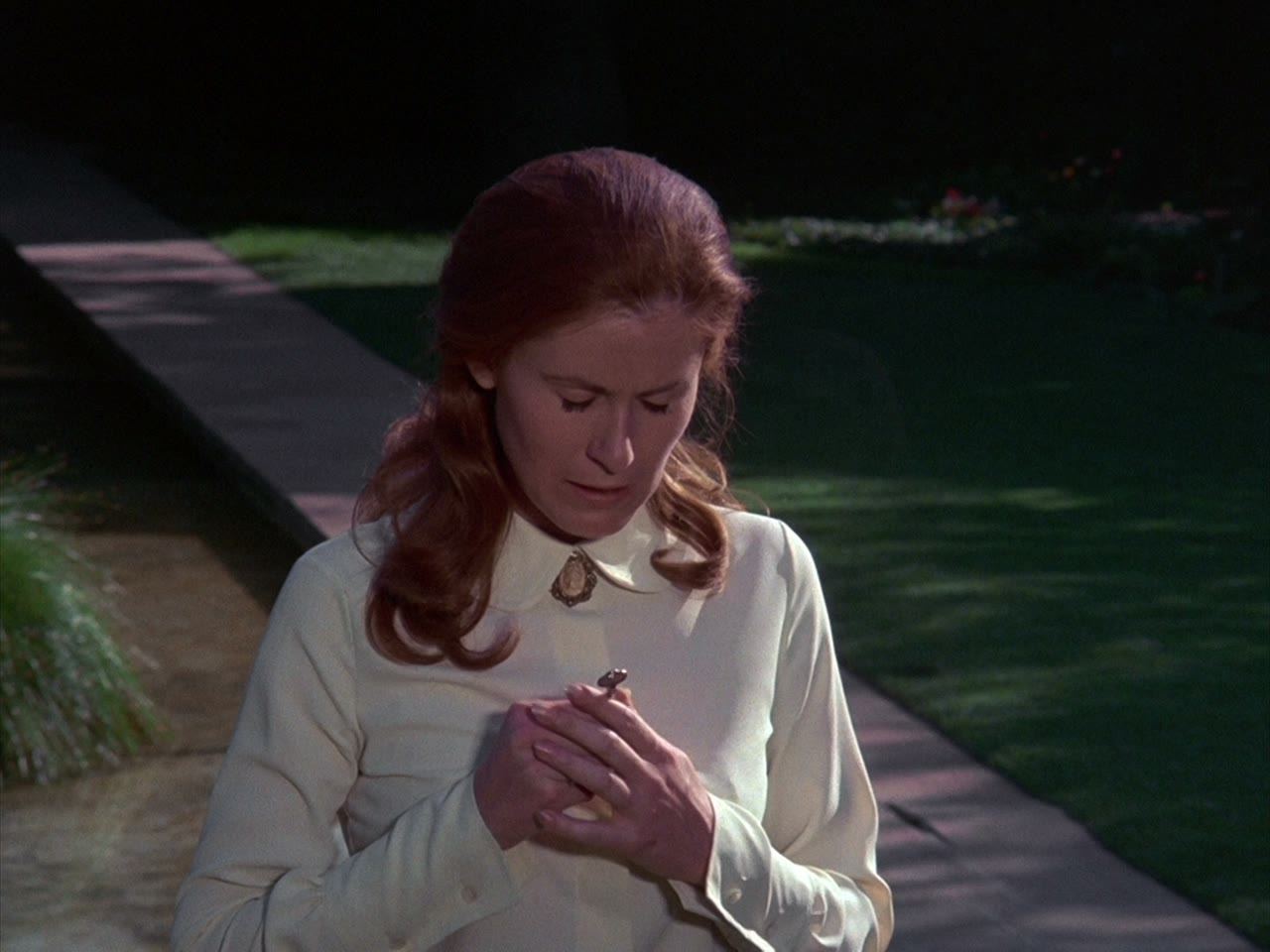
Beth Chadwick is thirty-something, unmarried, and treated by her brother Bryce as staff. He runs the family company, runs her social life, and has just moved to end her engagement to a man he considers unsuitable. Her existence is a series of permissions granted and withdrawn by someone else.
The plan she builds is careful in a way that tells you she has been thinking about it for a long time. She rehearses a scenario in which Bryce comes home late, she mistakes him for a prowler, and she shoots him through the bedroom door — a tragic accident by a frightened woman living in a big house.
What she cannot rehearse is the aftermath. Bryce dies, the story holds, and Beth walks out of the inquest into a life that is suddenly her own. Within days she is running the company, dressing differently, speaking differently and dismissing the people who used to handle her. The meek sister was a role, and she has stopped playing it.
Beth Chadwick is in her thirties, unmarried, and treated by her brother Bryce as staff. He runs the family company, manages her social life and has just moved to end her engagement.
The plan has clearly been rehearsed for a long time: Bryce comes home late, she mistakes him for a prowler, and she shoots him through the bedroom door — a tragic accident by a frightened woman alone in a big house.
What she cannot rehearse is the aftermath. Within days she is running the company, dressing differently, speaking differently and dismissing the people who used to handle her. The meek sister was a role, and she has stopped playing it.
How Columbo gets him
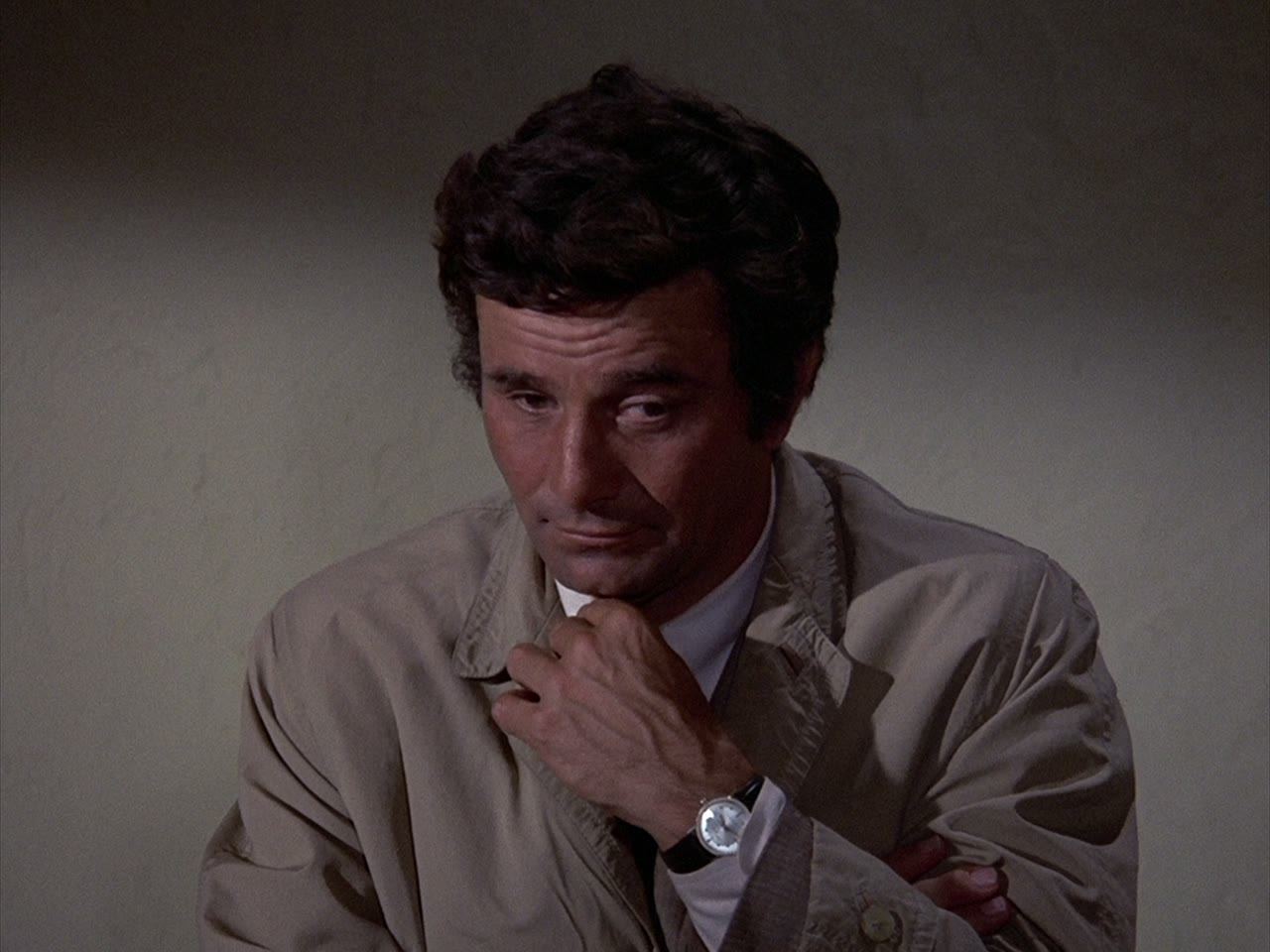
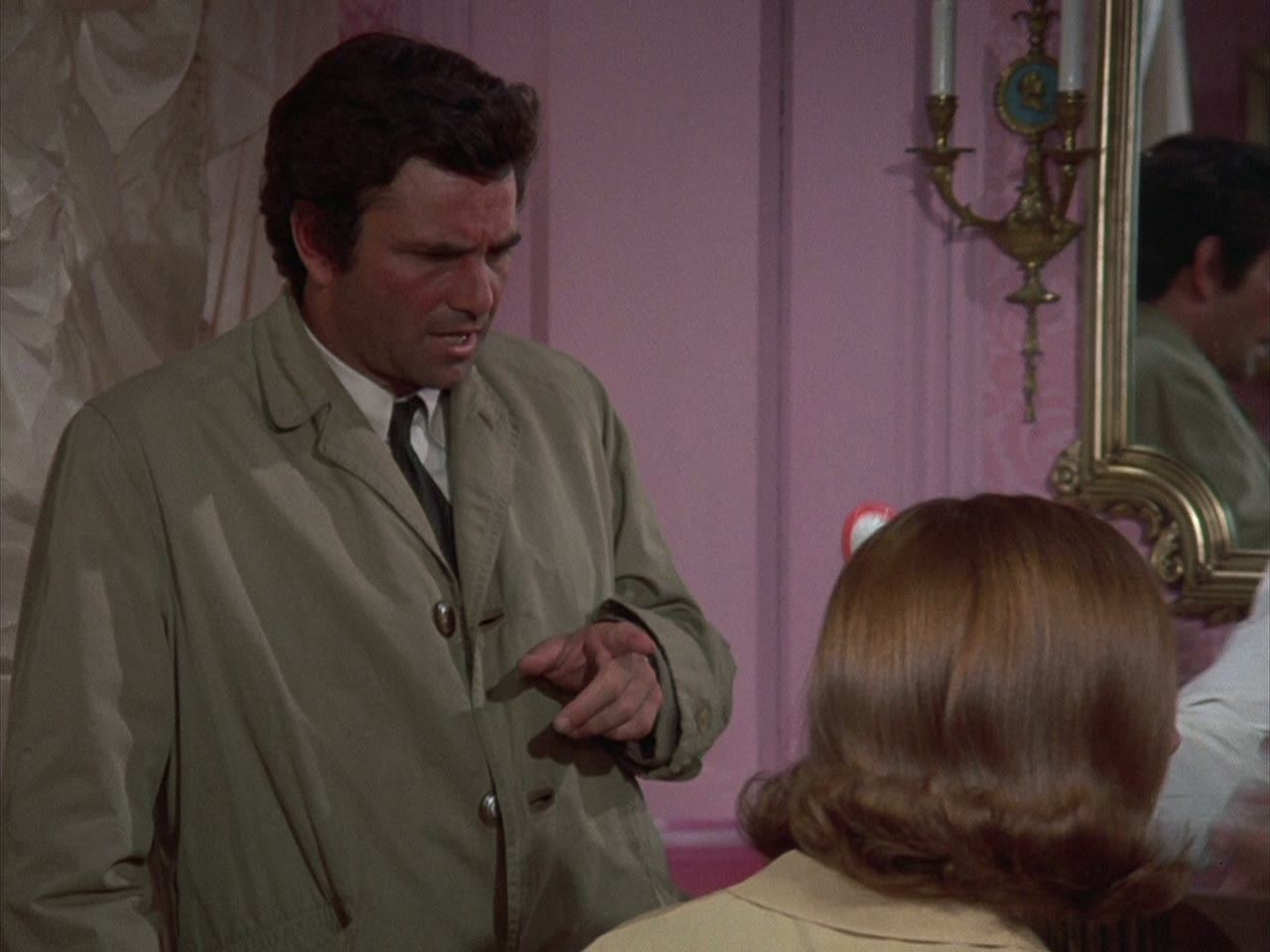
Columbo's problem is that the physical story is plausible and the emotional story is not. A woman terrified enough to fire through a door does not, a fortnight later, look like a person who has been released. He keeps returning to the house, apparently to tidy up paperwork, and watching her change.
The technical objection is precise. Beth said she heard Bryce at the door and fired; the sequence of sounds she describes, matched against where the body fell and where the shots went, does not work. She has described the crime the way she planned it rather than the way it happened — which is the mistake of someone who rehearsed too well.
The film's real tension is that Columbo comes to like her, or at least to understand her, and pursues her anyway. Susan Clark plays the second half as a woman who is finally, visibly happy, and the lieutenant is the only person in her life who can see both versions at once.
Columbo's problem is that the physical story is plausible and the emotional one is not. A woman terrified enough to fire through a door does not, a fortnight later, look like someone who has been released.
The technical objection is precise: the sequence of sounds she describes, matched against where the body fell and where the shots went, does not work. She has described the crime as she planned it rather than as it happened.
The real tension is that he comes to understand her and pursues her anyway. Susan Clark plays the second half as a woman who is finally, visibly happy, and the lieutenant is the only person who can see both versions at once.
Worth knowing
- Susan Clark's performance is the reason the episode is remembered — the shift from cowed to commanding happens almost scene by scene, without a single line explaining it.
- The murder is one of the few in the series committed for freedom rather than money, and the script is careful never to make Bryce sympathetic.
- Directed by Norman Lloyd, better known as an actor, who keeps the camera on Beth in the moments the plot does not need.
- Susan Clark's shift from cowed to commanding happens scene by scene, without a single line explaining it.
- The murder is one of the few in the series committed for freedom rather than money, and the script never makes Bryce sympathetic.
- Directed by Norman Lloyd, better known as an actor; broadcast December 1971.
Verdict
The most psychologically interesting episode of the first season and the one that ages best. The mystery is thin; the character study is excellent.
The ending is genuinely uncomfortable, because what Columbo takes away from Beth is not just her freedom but the only weeks of her life in which she was fully herself.
The most psychologically interesting episode of the first season and the one that ages best. The mystery is thin; the character study is excellent.
The ending is genuinely uncomfortable, because what Columbo takes from Beth is not only her freedom but the only weeks of her life in which she was fully herself.
What the people who made it said
Guest actors at Universal were shot fast: half an hour of rehearsal if you were lucky, then the camera. Falk, meanwhile, would drop the script on the spot — one scene, Clark says, they played with no written lines at all.
“He said: you really want to say this? I said: I don't care, Peter, it's your show — what do you want to say? He said: let's improv.”
Quotes are in the speaker’s own words — from a transcript of the recording, or from the printed source. Players open at the right minute. Everything is shortened; the full version is in the source.
Familiar faces
Actors who turn up in the series more than once — sometimes in very different parts.
- Frank Baxter as Fred 2 episodes also in Fade in to Murder
- Leslie Nielsen as Peter Hamilton 2 episodes also in Identity Crisis
- Barbara Rhoades as Hostess 2 episodes also in Identity Crisis
Cast data from TMDB, including uncredited bit parts. All the familiar faces →