Home → The show → The character
Lieutenant
Columbo
The most famous policeman in television history — and a man about whom almost nothing is officially known. No first name, no wife on screen, no address. Everything we have, he told us himself. And, as it turns out, he lies.
The killer comes first
Columbo is built backwards from the whole detective genre. You see the murder in full: who, whom, how and why. There is no puzzle. What you are invited to watch is one courteous man in a crumpled raincoat proving it for the next ninety minutes.
The format is called the inverted mystery, and English gave it a better name — a howcatchem rather than a whodunit. The show did not invent it, but it turned it into a machine that ran for thirty-five years without changing the formula once.
Everything else follows from that. Since the viewer already knows the answer, tension has to come from the lieutenant himself: did he notice the same detail we did, has the killer realised he is caught, and at what point does politeness stop being politeness. The drama moves off the plot and onto the man — which is why the character outlasted every one of the 69 stories.
- The murder, shown in full.
- Columbo arrives, twenty minutes in, apparently by accident.
- One detail that does not add up.
- The siege: visits without a reason, questions about nothing, stories about his wife.
- A trap, usually staged, that only the guilty could react to.
- “Just one more thing” — and the confession.
A poor policeman against rich men
The murderers are almost never poor. Surgeons, conductors, winemakers, chefs, generals, film stars, studio owners — people with houses in Bel Air and the certainty that their money proves their intelligence.
Against them stands a man who earns eleven thousand a year, drives a wreck and apologises for his coat. That is the mechanism, not the decoration: the killer loses precisely because he cannot believe this shambling person from homicide could outplay him. It is not the evidence that undoes him. It is his contempt.
Columbo works this deliberately. He points out his own poverty aloud, admires the house, asks what a painting cost, says his wife would never let him into a restaurant like this. Every line of it is a move. The lower his opponent places him, the more freely that opponent talks.
- Hunts for the pencil and notebook that are in his pocket.
- Comes back to the door three times in one conversation.
- Asks about the wine, the breed of the dog, the price of the watch.
- Apologises more often than he asks.
The man with no name
Levinson and Link did not forget to name him. They decided not to — and did not know the name themselves.
The idea was that the detective drifts into the film about a third of the way through, shuffles, apologises, talks the killer into a confession and walks off into the fog. No station house, no family on screen, no private life — nothing that turns a hero into an ordinary man with a personnel file. A name would have broken the whole thing.
Then the prop department intervened. Three or four episodes into the season a scene needed Columbo to open his wallet: badge on one side, identification on the other. The ID was made quickly, and in the space for a signature someone scrawled, legibly if untidily, Frank Columbo. That wallet was used for most of the first run — more than forty films.
Falk did not know. Levinson and Link did not know. The props team was certain nobody could read it on a thirteen-inch Zenith — and later handed the same ID to an entirely different character. In thirty-five years nobody ever addresses him by a first name.
“They scribbled the name — legible though sloppy, Frank Columbo — put it in the wallet and used that ID for almost every show during the first run.”
The wife nobody has seen
He mentions her in nearly all 69 films. In thirty-five years she is never shown: no face, no voice, not even a photograph on a desk. It is the most sustained refusal to show a character in television history.
She is the show’s working tool rather than a mystery. While Columbo relays what his wife thinks about opera, about his raincoat and about tonight’s dinner, the millionaire opposite relaxes and starts treating him as harmless. By the time that turns out to be wrong, it is usually too late.
“About this tall. Black hair, worn up today, sort of in a bun.”
The only description of her in the entire series. Troubled Waters, 1975
In that same film the ship’s captain and purser see her — the one independent confirmation that she exists at all. Everything else is his word, which is what started the long argument about whether he invented her.
The case against invention is strong. He phones her when no suspect is present and the call gains him nothing. A spy who has bugged the house knows her favourite music is Madame Butterfly. A dog groomer takes instructions from her. And one entire film is built on an attempt to murder her — a difficult thing to arrange for a woman who does not exist. Falk closed the question in 1999: all those people exist.
Three things the actor brought himself
The raincoat, the shoes and the car were chosen by neither writer nor costume designer. William Link admitted it plainly: they had written the policeman as a tidy man who simply did not care about clothes. The scruffiness is entirely Peter’s.
The raincoat
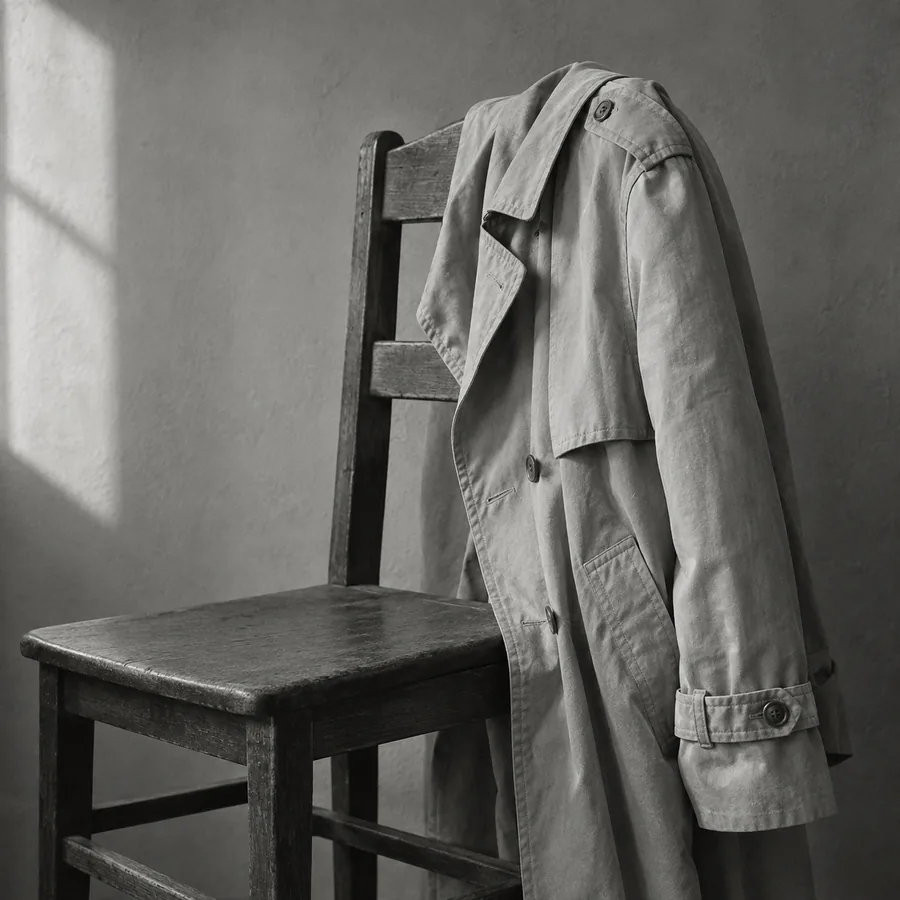
Bought for fifteen dollars in 1967, when Falk was caught in the rain in New York — a year before the first film, and for himself. He wore it for thirty-five years.
The legend of the single coat is neat but wrong: two or three stand-ins were kept on set and new ones were deliberately aged, as TV Guide reported back in 1974.
The Peugeot 403
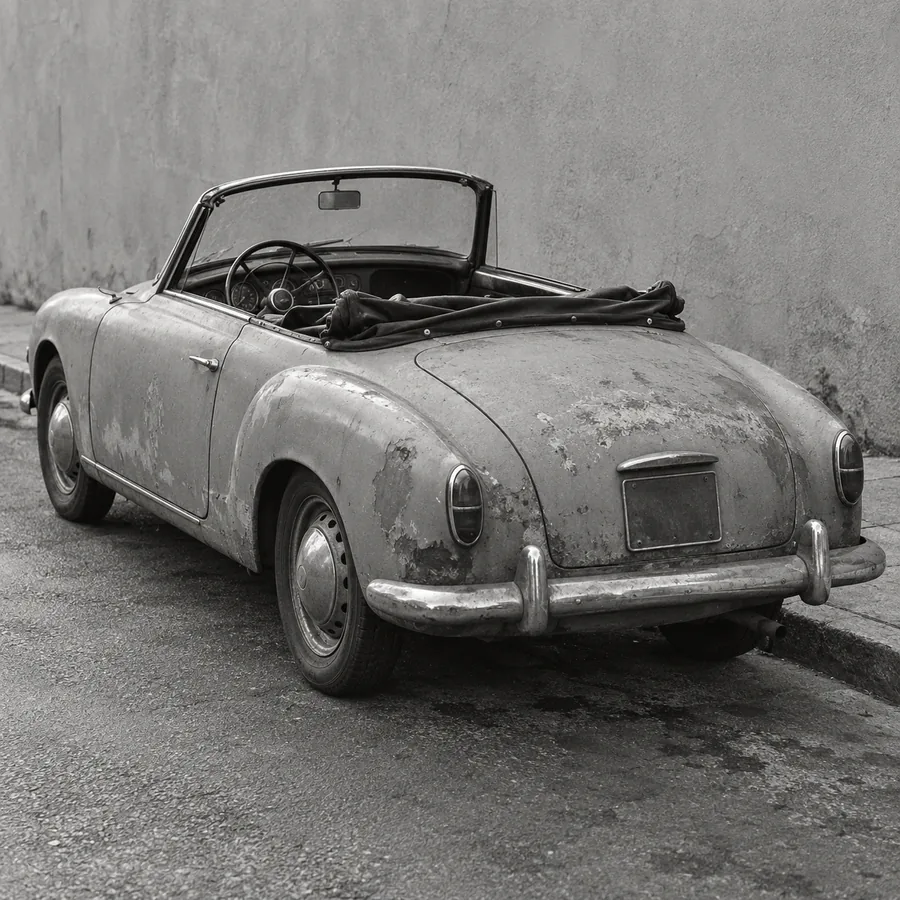
A 1959 convertible. Falk was driven around the Universal backlot to pick a car for the character, spotted this wreck in a corner and said he wanted that one. The crew assumed he was joking.
The choice is cruelly precise: a rare French convertible is not a poor man’s car, it is an absurd one. Not “I have no money” but “I do not care what you think”.
Cigar, pencil, notebook
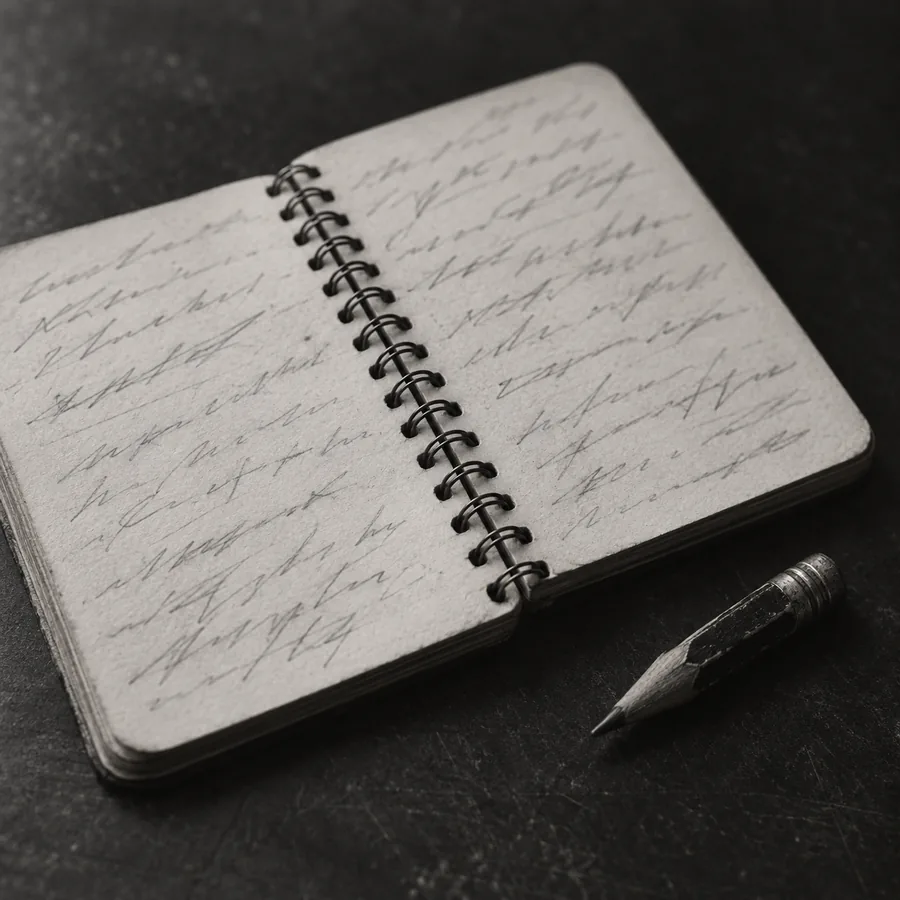
Cheap and nasty cigars — though he will not turn down a good Cuban. The pencil his wife puts in his pocket every morning, which he still cannot find.
The notebook is a separate trick: he leafs through it, hunts for an entry, reads out the wrong one. The other man sees someone who cannot manage paperwork and stops following the questions.
A dog called Dog
A basset hound from the pound, first seen in Étude in Black in 1972. He has no name: his owner simply calls him Dog. Exactly the same logic as the man’s own missing name, and the only joke the series makes at its own expense.
The breed is perfectly chosen. A basset looks like an infinitely tired, entirely useless creature that happens to own one of the best noses in the world. No better portrait of the owner was available.
One shot in 69 cases
He does not carry a weapon and by his own admission knows little about guns. In Forgotten Lady it emerges that a colleague sits his range qualification for him. All 69 killers surrender to a man without a pistol.
“Just one more thing”
The line was in a script and Falk fell in love with it — for what it does to the staging: walk to the door, say goodbye, open it, turn around. The killer has already exhaled. That is the moment the real question gets asked.
It works on plain physiology of attention. The conversation has been declared over, the guard is down, and the next sentence lands on a relaxed man rather than a prepared one. Over thirty-five years it caught out chefs, surgeons, generals and at least one spy.
Falk used it again for the title of his memoir, Just One More Thing, in 2006.
Common questions
What is Columbo’s first name?
He does not have one. Richard Levinson and William Link deliberately never gave him a first name and did not know it themselves. The ID card visible on screen reads “Frank Columbo”, but that was written by the prop department, not by a writer — the name never appears in any script.
Is Mrs Columbo ever shown?
Never, in 69 films — no face, no voice, no photograph. He talks about her in nearly every episode. The only description of her comes in Troubled Waters (1975), where the ship’s captain and purser also see her.
Does Mrs Columbo actually exist?
Within the show, yes. He phones her when there is no suspect in the room and nothing to gain, a spy who has bugged their house knows her favourite music, and one whole film is built around an attempt on her life.
What was the Mrs. Columbo spin-off?
An NBC series from 1979 starring Kate Mulgrew as the wife. The creators objected, Falk called it disgraceful, the character was quietly divorced and renamed, and the show changed titles four times before closing in 1980. Columbo never appeared in it.
What is the dog called?
Nothing. He is a basset hound from the pound and his owner simply calls him Dog. He first appears in Étude in Black in 1972.
What car does Columbo drive?
A 1959 Peugeot 403 convertible. Peter Falk picked it himself: he was walked around the Universal backlot to choose a car and pointed at that wreck.
Does Columbo carry a gun?
No. He dislikes guns and admits he knows little about them. He fires one once in the entire run — in Playback (1975), as an experiment.