Home → Episodes → Prescription: Murder
Prescription: Murder
Russian title: Рецепт убийства · Russian version
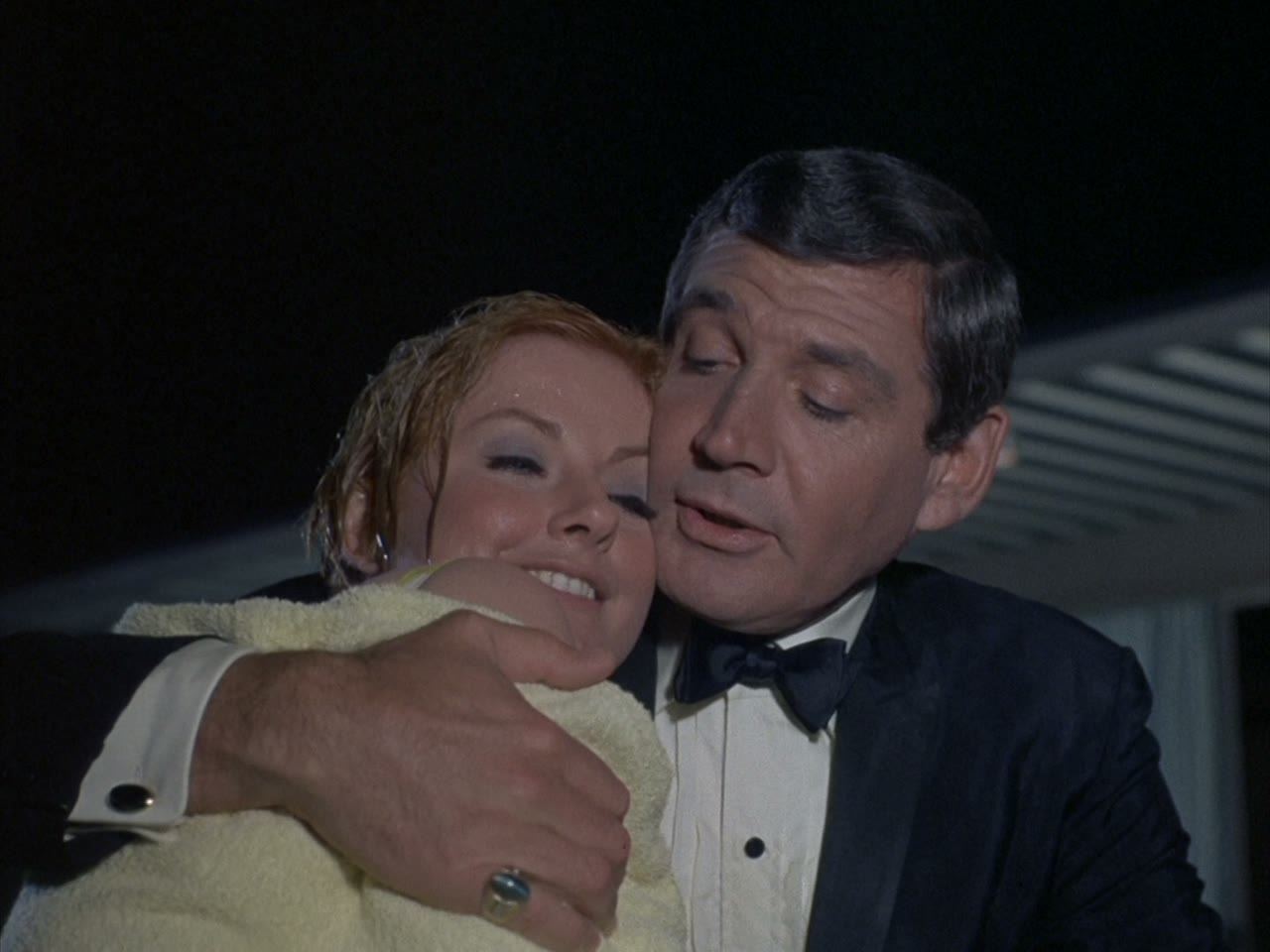
The pilot, and the film that proved the whole idea worked. A Beverly Hills psychiatrist murders his wife and builds an alibi out of a plane ticket and a very willing young mistress. Then a small, apologetic policeman turns up to clarify one or two things, and never quite leaves.
Editor’s rating — 8.5 out of 10.
- Number
- 1 of 69
- Aired
- February 20, 1968
- Running time
- 94 min
- Director
- Richard Irving
- Writer
- Richard Levinson & William Link, based on their play
- Music
- Dave Grusin
The case
- The killer
- Gene Barry as Ray Flemming
- The victim
- Nina Foch as Carol Flemming
- Guest cast
- Gene Barry, William Windom, Nina Foch, Katherine Justice, Virginia Gregg, Andrea King
Columbo is an inverted mystery: the murder opens the film and the killer is known from the first minutes. What you are watching for is how he proves it — see how the character works.
The murder
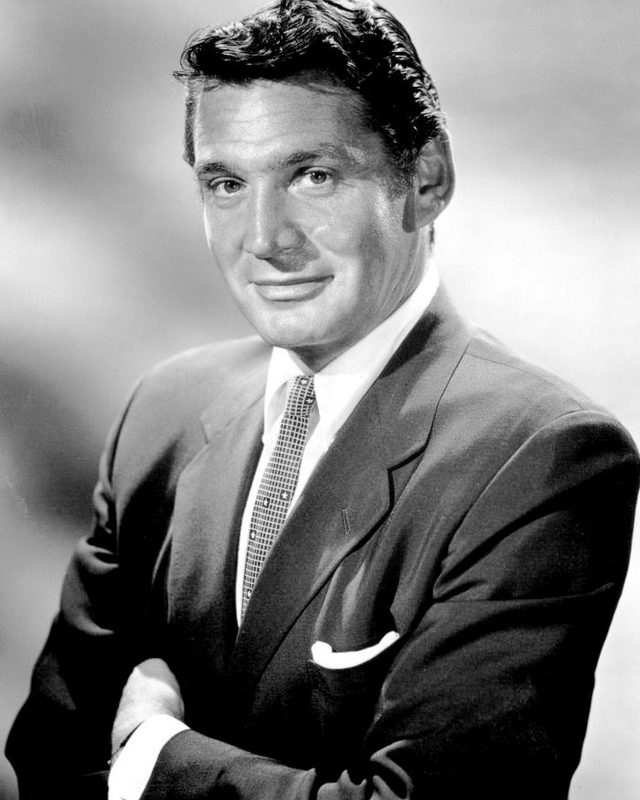
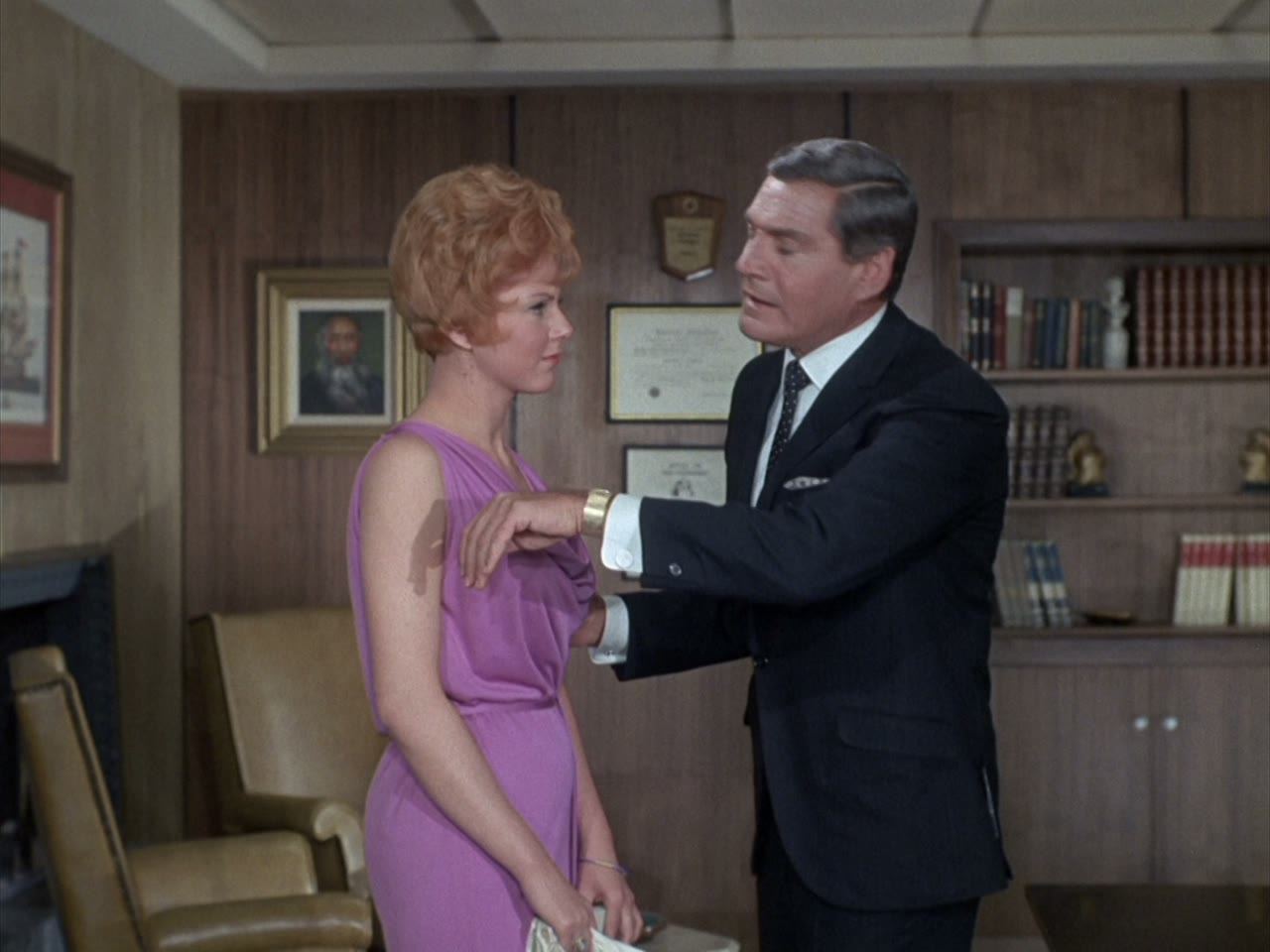
Dr Ray Flemming is a successful psychiatrist with a wealthy wife he no longer wants and a much younger lover, the actress Joan Hudson, whom he has no intention of losing. Divorce would cost him the house, the practice and the standard of living that comes with both. So he decides on the arrangement that will cost him nothing.
The plan is built on impersonation. Flemming strangles his wife Carol at home in the early evening, then meets Joan at the airport, where she boards a flight to Acapulco wearing Carol's coat, Carol's sunglasses and Carol's ticket. She makes a scene at the gate so the cabin crew will remember an argument between the doctor and his wife, then slips off the aircraft before it leaves. As far as the airline is concerned, Mrs Flemming flew to Mexico alive and angry while her husband stayed behind.
Back in Los Angeles, Flemming waits for the body to be found, expecting the police to read the scene as a burglary interrupted. It is a good plan, and for a doctor who spends his working life reading other people, it has one weakness he has not accounted for: it needs a second person to hold their nerve.
How Columbo gets him
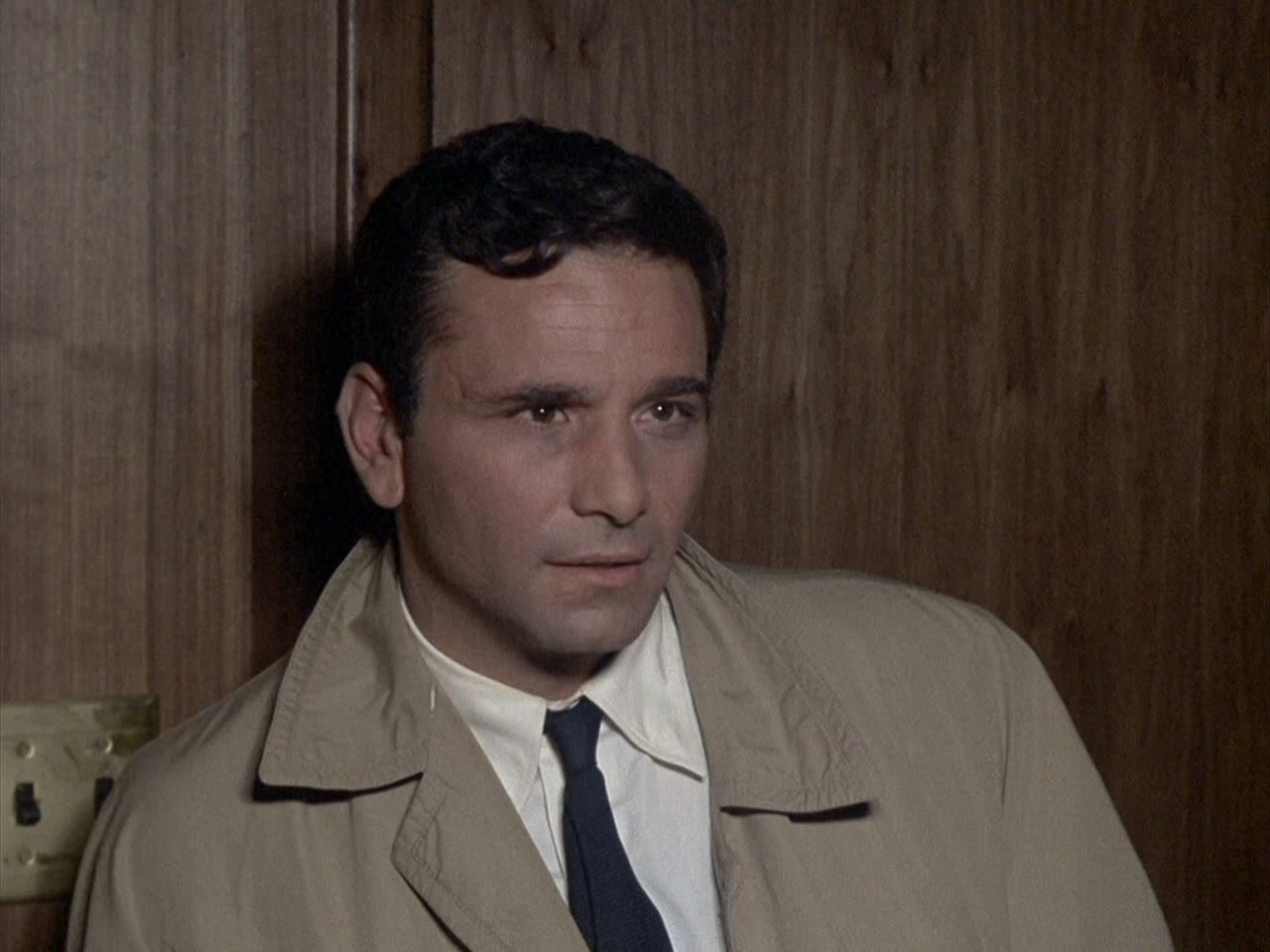
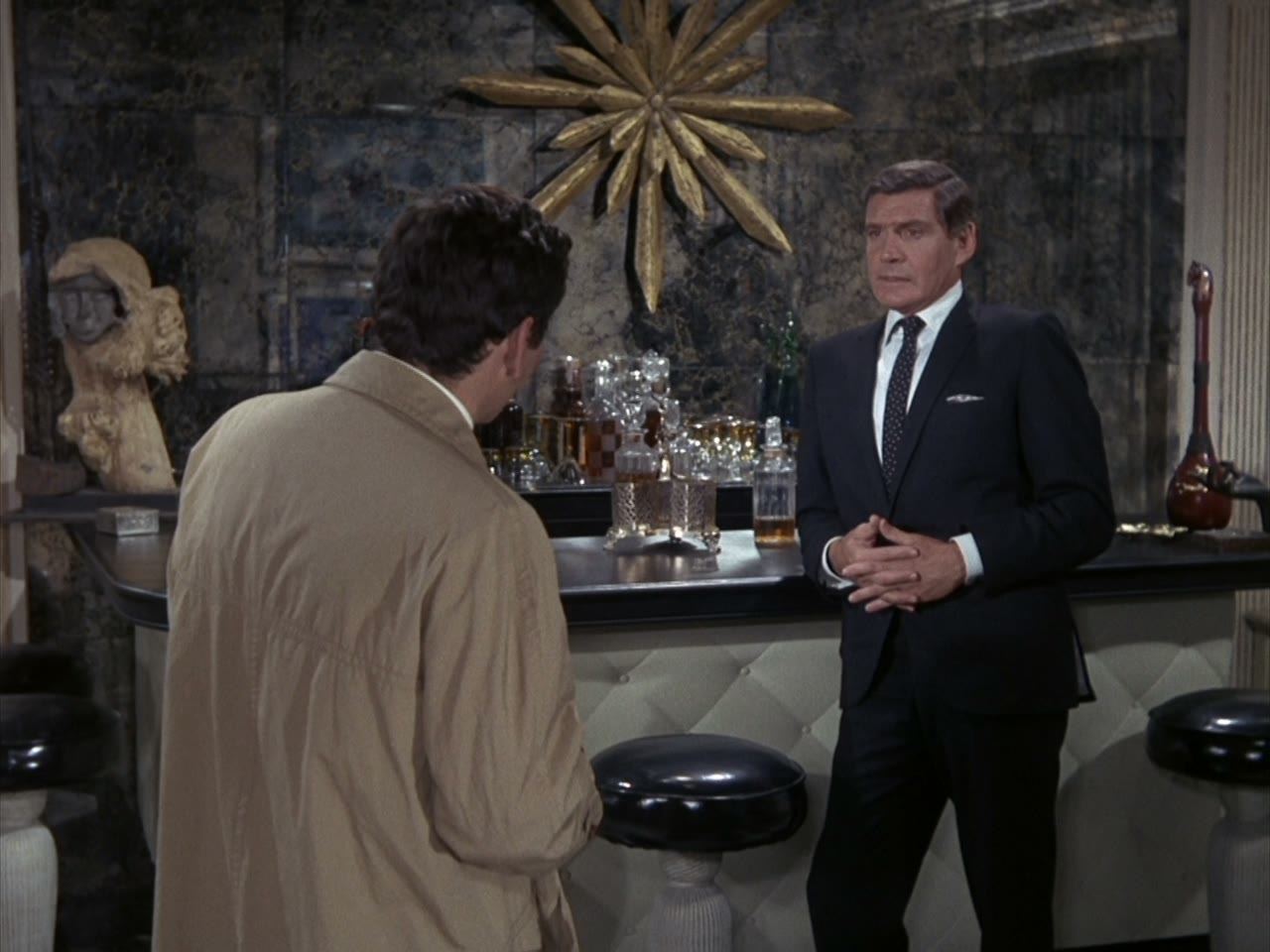
Columbo arrives at the apartment and immediately behaves like a man who has wandered into the wrong meeting. He admires the furniture, apologises for the intrusion, mentions his wife, and asks why a burglar would take the trouble to open a wall safe and then leave without emptying it. Flemming answers everything smoothly, which is his first mistake: he treats the conversation as an examination he is passing rather than one he is sitting.
What follows is the first proper demonstration of the method the series will run on for thirty-five years. Columbo does not gather evidence so much as apply pressure to a relationship. He works out very quickly that the alibi requires an accomplice, and that the accomplice is the weaker party — a young woman with no experience of this and a great deal to lose. From that point he stops investigating Flemming and starts investigating what Flemming will do when he is frightened.
The psychiatrist, being a psychiatrist, is confident he can manage a policeman. He explains professional detachment, offers diagnoses, treats every question as a symptom. Columbo lets him. It is worth watching how little the lieutenant actually asserts in this film: he raises possibilities, retreats from them, comes back to the door. By the end Flemming has told him considerably more than he has been asked.
Worth knowing
- The role was offered first to Bing Crosby, who turned it down rather than let filming interfere with his golf. Lee J. Cobb was unavailable. Falk, at forty, was thought too young.
- This is an adaptation of the 1962 stage play, where Columbo was played by the seventy-year-old Thomas Mitchell in what turned out to be his last role.
- Falk is noticeably neater here than he will ever be again: better pressed, sharper in the exchanges, and more likely to carry the raincoat than wear it.
Verdict
As a mystery it is the least surprising thing the series ever made, because it predates every convention it is establishing. As a first meeting it is fascinating. The character is almost fully formed but not quite — there is a hardness in Falk's performance, a willingness to be openly rude, that the later films sand away.
Watch it first and you will see the machine being built. Watch it last, after sixty-eight other films, and you will notice how much of Columbo was there from the very beginning and how much Falk quietly added later.
What the people who made it said
The Bing Crosby story is usually told as an anecdote. The man who lived it confirms it — and explains why the choice made sense at the time: they pictured a pipe rather than a cigar, and thought of Crosby as a serious dramatic actor.
“We sent him the script. He sent us a nice letter back — liked the script, liked the character, but he said: look, I'm retired now, I'm playing golf.”
In the stage play the character wore a top coat, not a raincoat: Southern California barely has rain. The raincoat came out of Falk’s own wardrobe — bought, he said, on 57th Street in New York when he was caught in a downpour.
“It was a top coat in the play. Falk had a raincoat — I think he said it was bought on 57th Street.”
The historian of the series checked the legend of “the one raincoat” frame by frame and found a snag: the coat in the very next film is slightly different. Falk did bring something from home — but it was not one coat for thirty-five years.
“The truth is probably not quite that black and white, because if you look in the very next episode he's got a slightly different raincoat.”
Quotes are in the speaker’s own words — from a transcript of the recording, or from the printed source. Players open at the right minute. Everything is shortened; the full version is in the source.
Familiar faces
Actors who turn up in the series more than once — sometimes in very different parts.
- William Windom as Burt Gordon 2 episodes also in Short Fuse
- Frank Baker as Man in Park 2 episodes also in Murder by the Book
- Mark Russell as Policeman 2 episodes also in Murder by the Book
Cast data from TMDB, including uncredited bit parts. All the familiar faces →