Home → Episodes → Ransom for a Dead Man
Ransom for a Dead Man
Russian title: Развод по-американски · Russian version
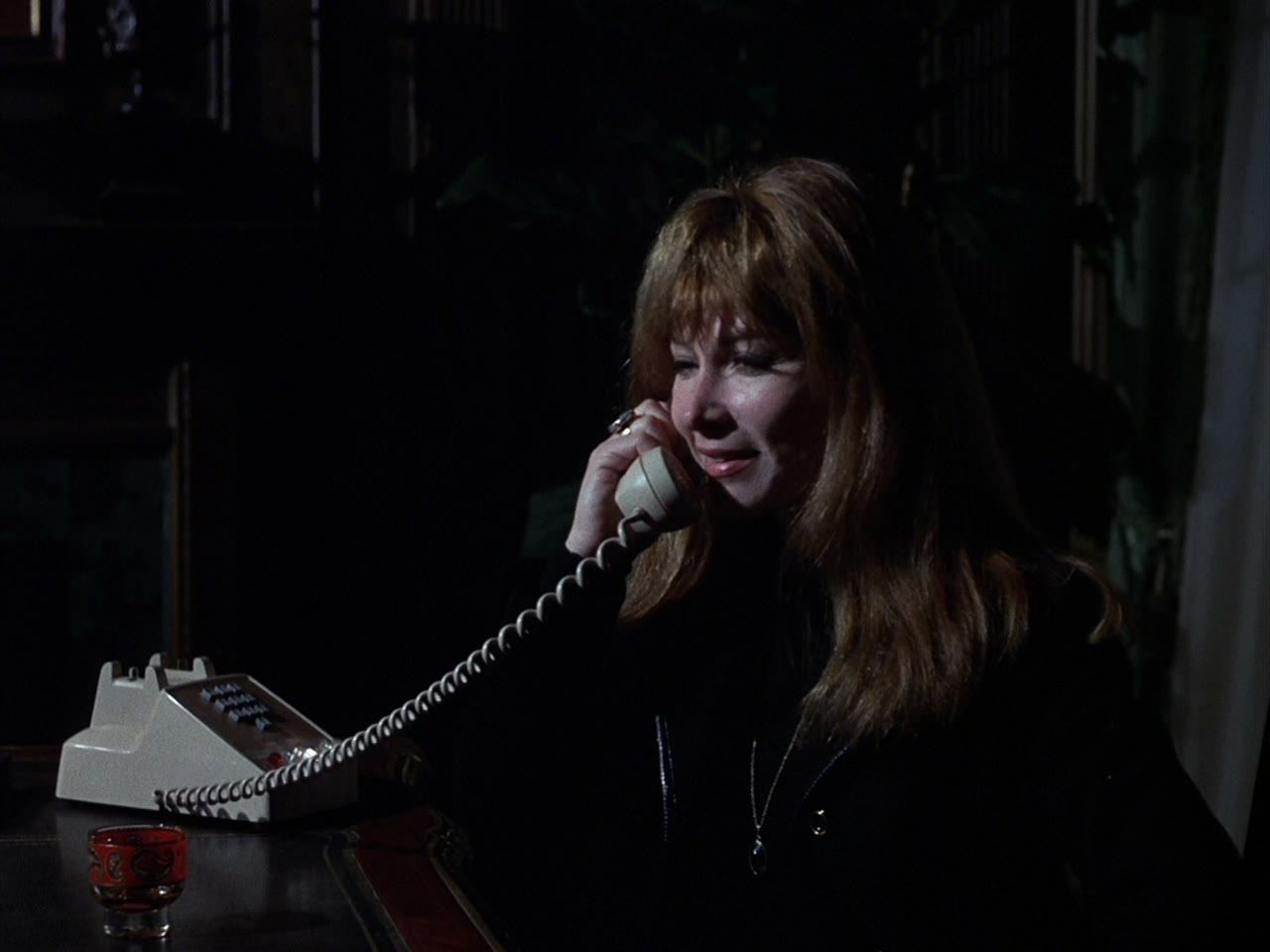
The second pilot, and the one where the format clicks into place. A Los Angeles attorney shoots her husband and dresses the killing up as a kidnapping — then finds that the hardest person to convince is not the police but her own stepdaughter.
Editor’s rating — 8 out of 10.
- Number
- 2 of 69
- Aired
- March 1, 1971
- Running time
- 92 min
- Director
- Richard Irving
- Writer
- Richard Levinson & William Link / Dean Hargrove
- Music
- Billy Goldenberg
The case
- The killer
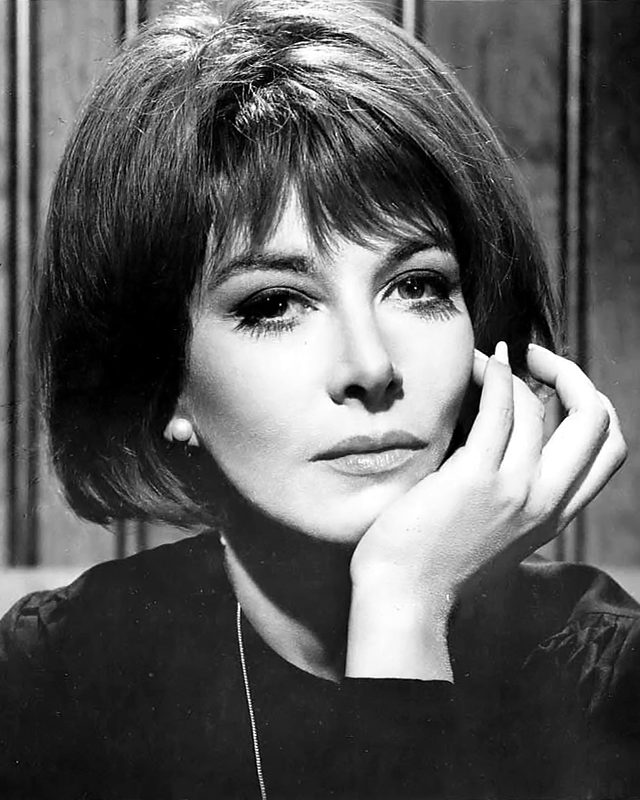
- Lee Grant as Leslie Williams
- The victim
- Harlan Warde as Paul Williams
- Guest cast
- Lee Grant, John Fink, Harold Gould, Patricia Mattick, Paul Carr, Jed Allan
Columbo is an inverted mystery: the murder opens the film and the killer is known from the first minutes. What you are watching for is how he proves it — see how the character works.
The murder
Leslie Williams is a defence attorney who is very good at her job and entirely done with her marriage. Her husband is an obstacle rather than a threat, and she removes him with the same efficiency she brings to a courtroom: she shoots him at home, on a night she has already accounted for, and then sets about making his death into someone else's crime.
The staging is elaborate and, on paper, excellent. She records a ransom demand using an electronic voice filter, phones it through herself, and organises a drop that sends the police chasing a kidnapper who does not exist. The money leaves her hands and comes straight back to them. The body is hidden where it will surface at the right moment, and the widow is left grieving in public with an alibi built from her own performance.
What she does not plan for is Margaret, her stepdaughter, who returns home, looks at her father's widow for about ten minutes, and decides she is guilty. Margaret is not clever about it — she is a teenager with a grudge and a hunch — but she is loud, and she is right.
How Columbo gets him
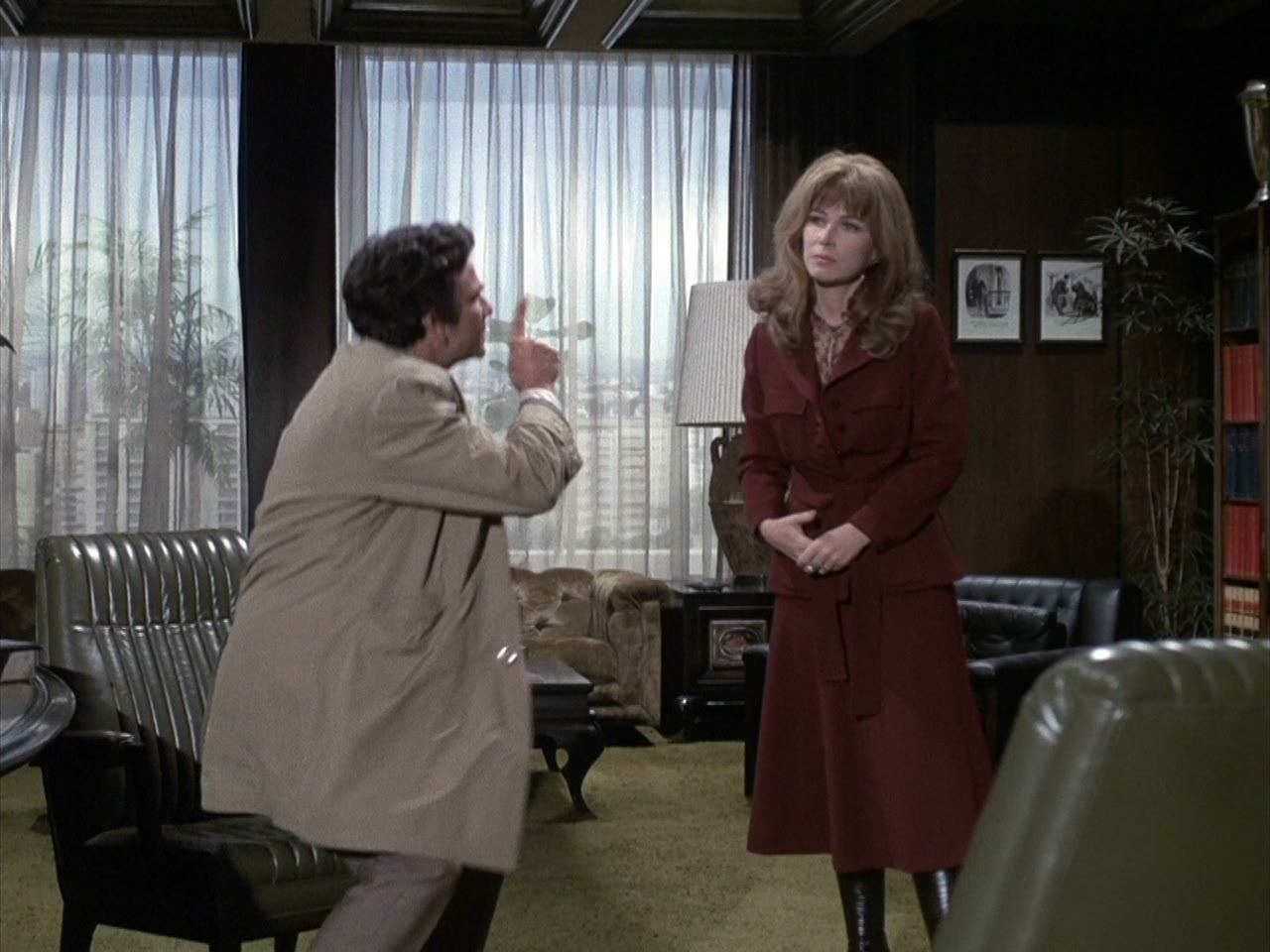
Leslie is the first murderer in the series to be professionally armoured. She knows the law better than the officers investigating her, she knows how evidence is challenged, and she treats Columbo's wandering questions as exactly what they appear to be: incompetence. Their scenes have a specific pleasure to them, because she keeps correcting him and he keeps thanking her for it.
Columbo's difficulty is that everything about the kidnapping is technically consistent. The voice is disguised, the drop was observed, the money is gone. What he keeps returning to is scale — the small human details that a plan cannot cover. Why so much money, when a real kidnapper would take what he could carry? Why is the widow so composed in private and so devastated in public?
The solution, when it comes, is a piece of theatre rather than forensics, and it establishes something the series will use again and again: Columbo wins not by finding the evidence but by making the killer produce it. He convinces Leslie that Margaret is blackmailing her over the ransom money — that the girl has found it and wants a share.
Worth knowing
- Lee Grant was nominated for an Emmy for the part, and her Leslie set the pattern for the series' best killers: composed, professional, and undone by contempt rather than by evidence.
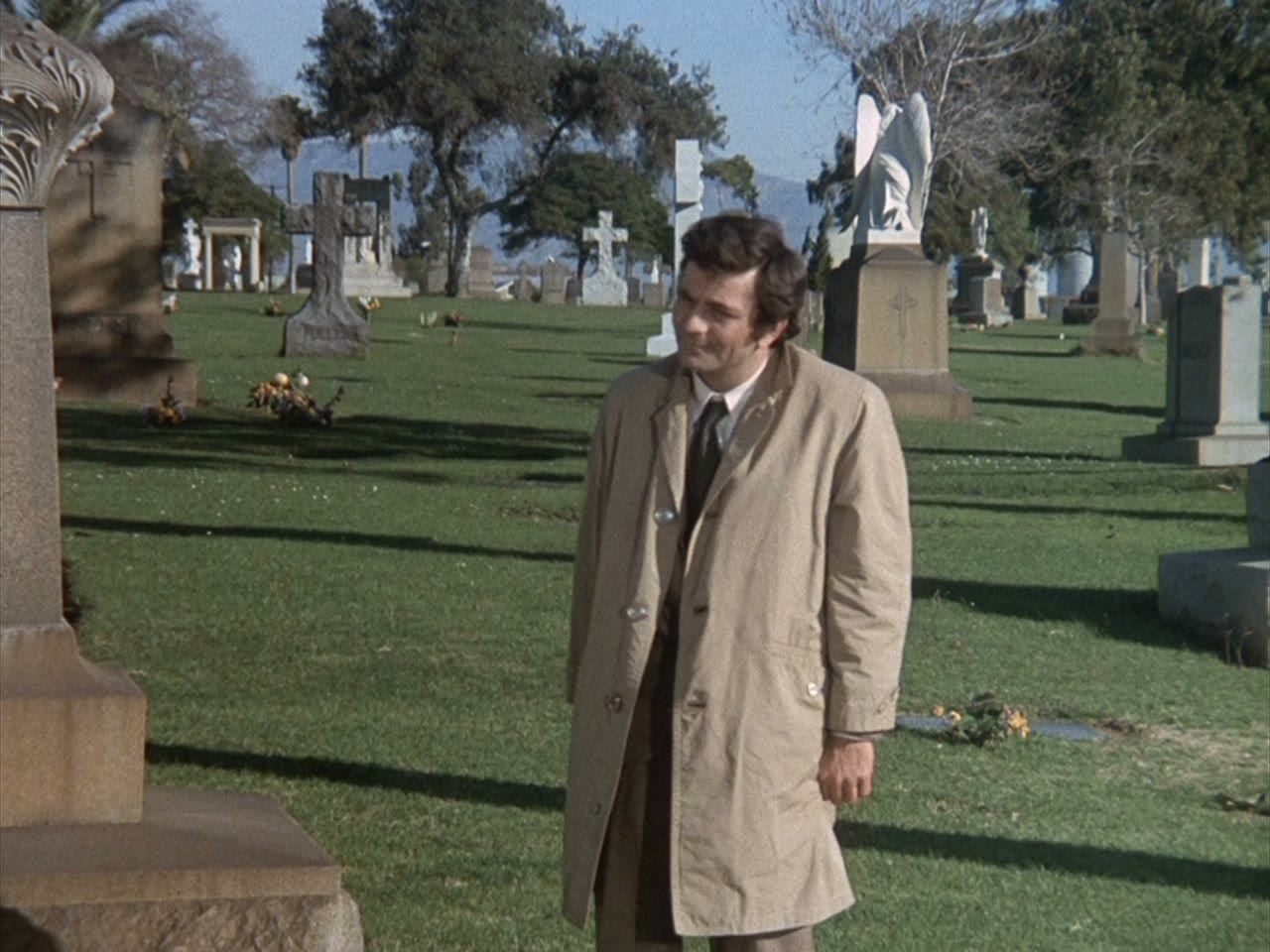
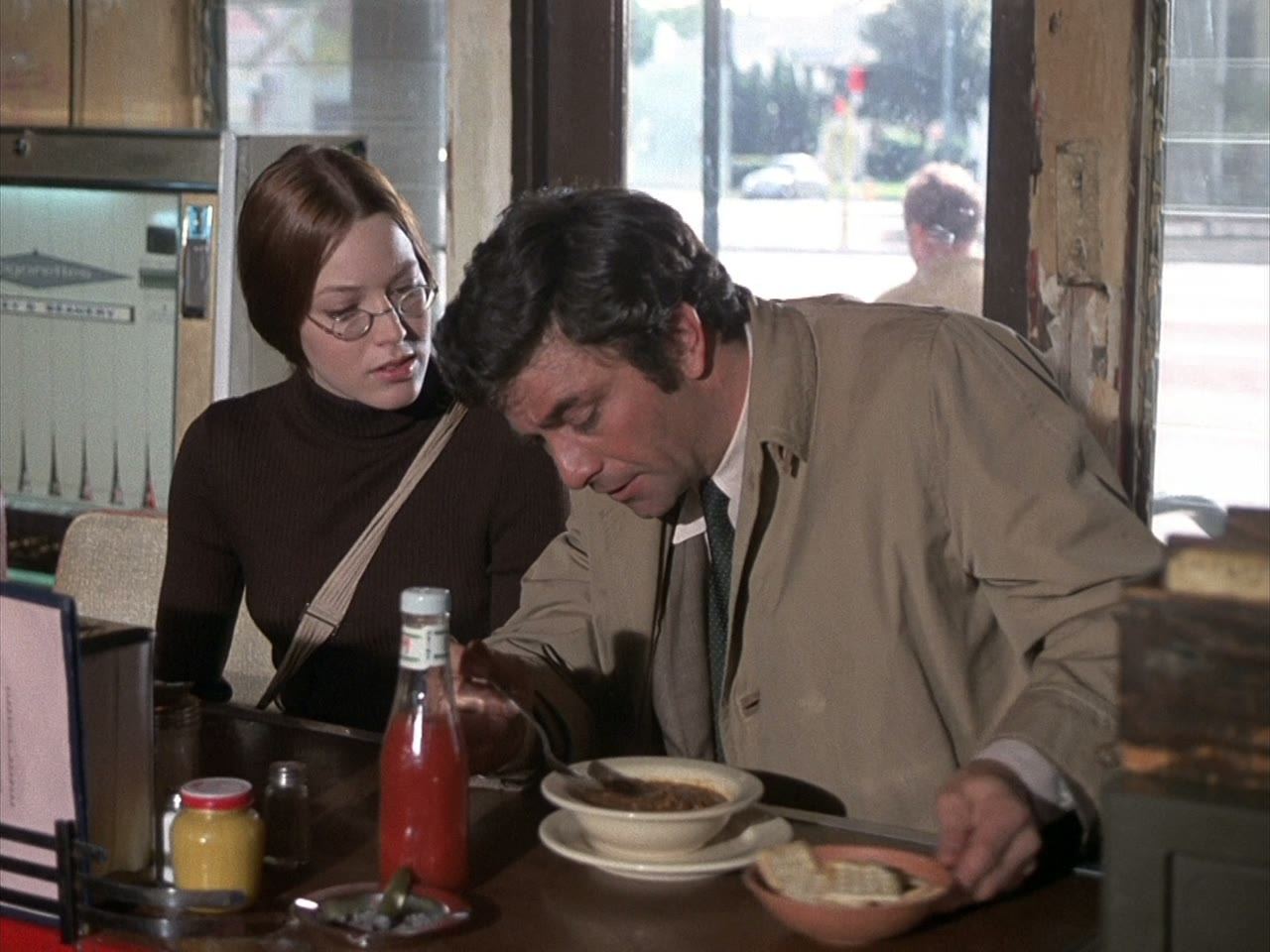
- This is the first appearance of the raincoat as a permanent fixture rather than an occasional prop.
- The film was made a full year before the series was commissioned; NBC wanted a second demonstration that the format could sustain itself without the novelty of the first.
Verdict
Slower than the episodes that follow, and noticeably longer than it needs to be — the ninety-minute shape has not been solved yet. But the relationship at the centre is superb, and the ending is the first time the series does the thing it will become famous for: the trap that only the guilty could walk into.
If you are starting from the beginning, this is where the show stops being a promising pilot and becomes Columbo.
What the people who made it said
After the first TV movie NBC wanted twenty-two episodes a year, and Falk refused: he had already had one bad experience with a series, he wanted films, and he was not giving up years of his life. A couple of years later Herb Schlosser, head of NBC on the West Coast, came back to the writers with the line that produced this film.
“He said: you know, that cop haunts me. Let's do another two-hour with that cop, since he won't do it as a series.”
The second film was not written by Levinson and Link, and the reason was dull: money. They fell out with the studio over residuals and refused, recommending Hargrove. He heard the same terms and refused too; the next writer was suspended. Only when the payments were rewritten did Hargrove take the job.
“I found out there was no royalty and I turned it down. Then they found a way to express the money in a different fashion, and then I wrote the pilot.”
Grant plays her character as a gambler who keeps raising the stakes. The coldness of the part, she says, changed even the way she looked on screen.
“I was never more beautiful in anything. I think it was because I was so cold and so cruel — that does something to your face and your stature. She was a gambler; she kept pushing the stakes higher and higher, and when she got caught it was like a gambler getting up from the table.”
Quotes are in the speaker’s own words — from a transcript of the recording, or from the printed source. Players open at the right minute. Everything is shortened; the full version is in the source.
Familiar faces
Actors who turn up in the series more than once — sometimes in very different parts.
- Charles Macaulay as Richard 3 episodes also in Etude in Black, Mind Over Mayhem
- Timothy Carey as Bert 3 episodes also in Dead Weight, Fade in to Murder
- Judson Morgan as Judge 2 episodes also in A Friend in Deed
Cast data from TMDB, including uncredited bit parts. All the familiar faces →