Home → Episodes → Last Salute to the Commodore
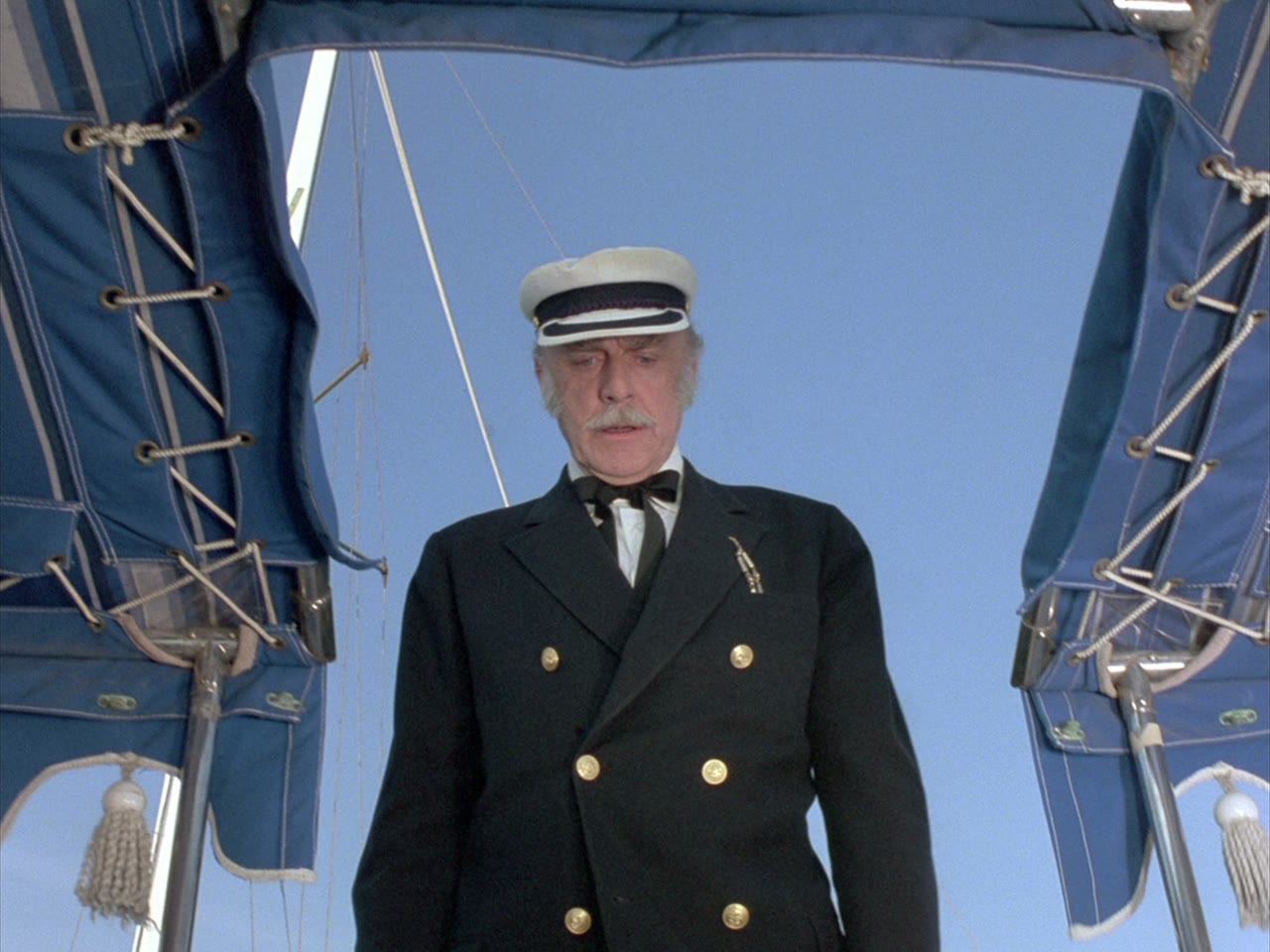
Last Salute to the Commodore
Russian title: Последний салют командору · Russian version
The episode that breaks the format on purpose: the murderer is not revealed at the start, Columbo behaves strangely throughout, and the whole thing turns out to be a performance. The most divisive hour the series ever made.
Editor’s rating — 6 out of 10.
- Number
- 37 of 69
- Aired
- May 2, 1976
- Running time
- 91 min
- Director
- Patrick McGoohan
- Writer
- Jackson Gillis
- Music
- Bernardo Segall
The case
- The killer
- Fred Draper as Swanny Swanson
- The victim
- John Dehner as Otis Swanson and Robert Vaughn as Charles Clay
- Guest cast
- Fred Draper, Dennis Dugan, Diane Baker, Bruce Kirby, Robert Vaughn, Wilfrid Hyde-White
Columbo is an inverted mystery: the murder opens the film and the killer is known from the first minutes. What you are watching for is how he proves it — see how the character works.
The murder
Commodore Otis Swanson runs a yacht-building company and has decided to sell it, against the wishes of everyone who stands to profit from it staying in the family. He is killed the same night, and his body is put out to sea in one of his own boats.
For the first and only time in the run, the audience does not see who did it. The film withholds the murder, presents a house full of plausible suspects — the son-in-law, the daughter, the business partner — and proceeds as a conventional whodunit.
The answer, when it comes, is Swanny Swanson, the company's long-serving partner, and the second death that follows is what exposes him. But the identity matters far less than the structure: the series has deliberately taken away the thing that makes it itself.
The Swanson household is full of people who need the sale not to happen: a son-in-law running the company badly, a daughter with expectations, a partner whose stake is his whole life. The film introduces them all with equal weight, which is the first signal that the format has been suspended.
The commodore's body is put out to sea in one of his own boats, which is both practical and, in a film about a shipbuilding family, pointed. The second death — of a witness — follows the pattern of the first.
Swanny Swanson turns out to be the killer, and the reveal is handled as a conventional third-act disclosure rather than as the confirmation of something we watched happen.
How Columbo gets him
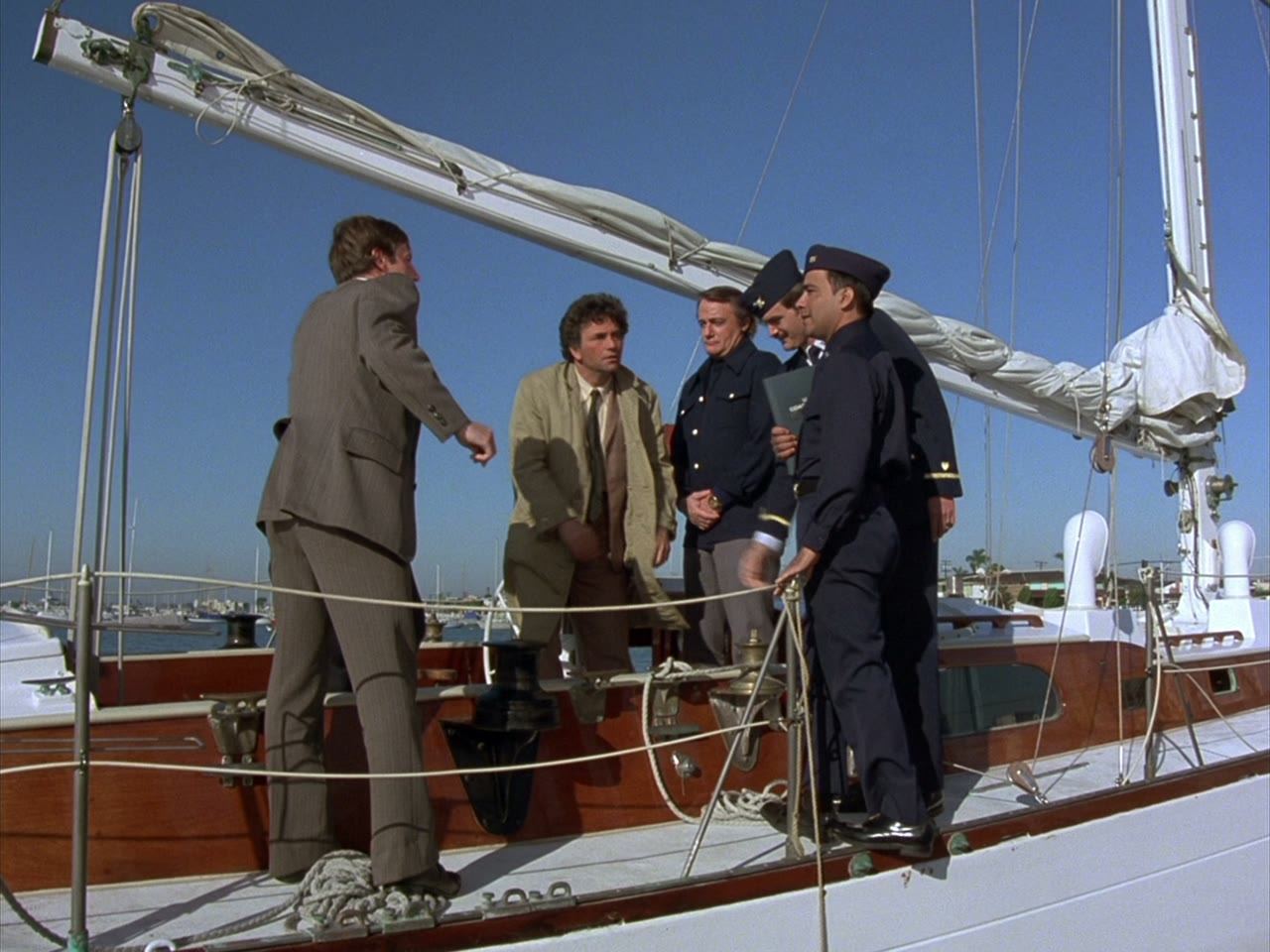
Columbo is off in this episode, and it is intentional. He is distracted, oddly cheerful, sometimes rude, and behaves throughout as though he is playing a part badly. Several scenes exist purely to make the audience wonder what is wrong with him.
The reason turns out to be tactical: he is performing incompetence at a scale beyond his usual, in order to make a specific person relax. Whether it works as drama is exactly what viewers have argued about for fifty years.
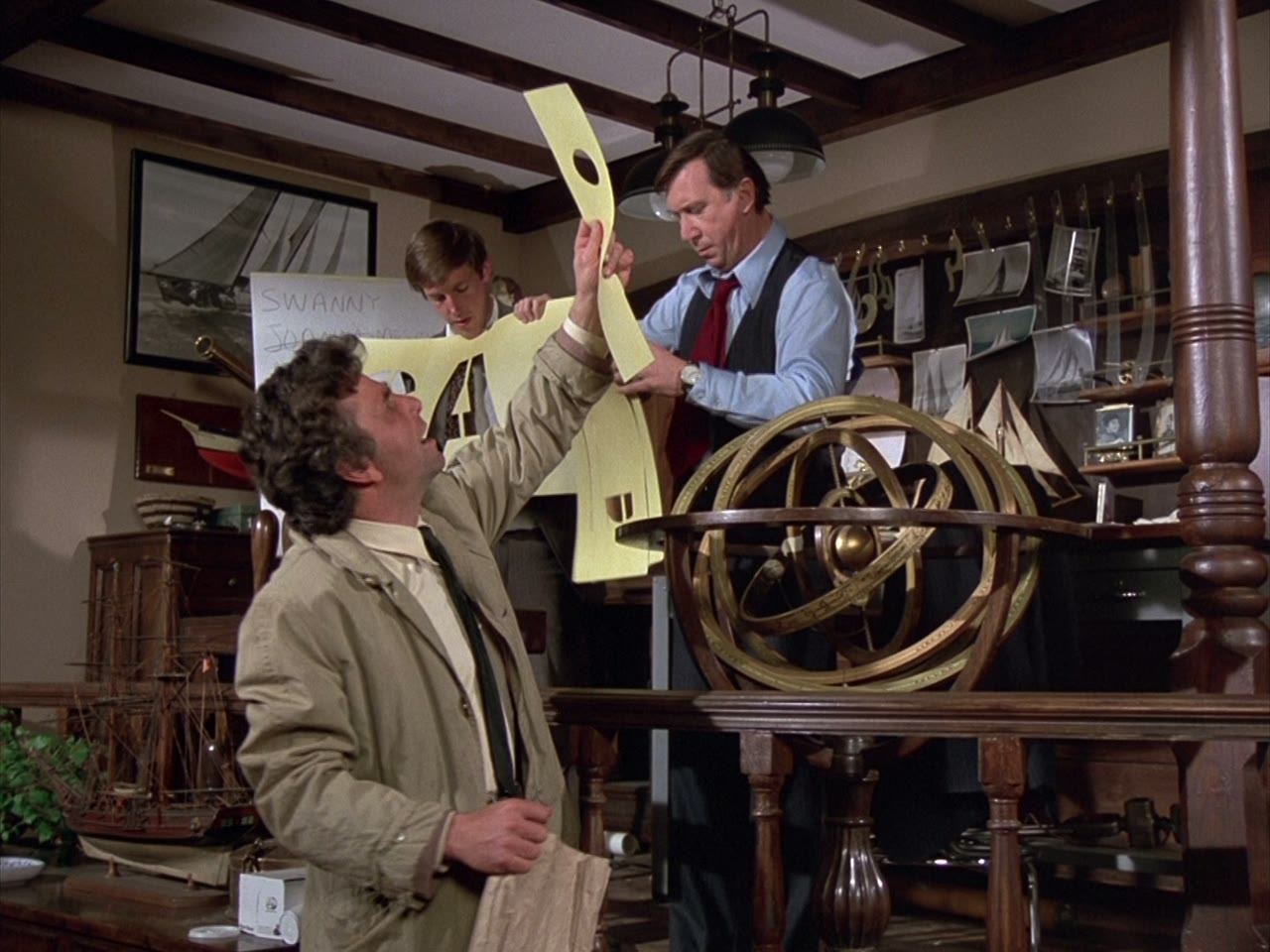
The investigation itself is conventional detective work — timelines, tides, the movement of a boat — and it is the least interesting part of the film.
Columbo's behaviour is the real experiment. He is jovial where he is usually diffident, blunt where he is usually oblique, and at one point openly rude — all of it, the film eventually suggests, deliberate.
Whether that reads as a bold choice or as a mistake is the question fans have argued for fifty years. What is not in dispute is that Falk plays it consciously; the performance is not a lapse.
The physical investigation — tides, timings, a boat's movements — is competent and unmemorable, which is unusual for the series and rather proves the point about what the format actually depends on.
Worth knowing
- Patrick McGoohan directed, and the decision to abandon the inverted structure was his and Falk's together.
- Fred Draper, who plays Swanson, was a member of the Cassavetes circle and a long-standing friend of Falk's.
- The episode is consistently voted the weakest of the classic run in fan polls, and just as consistently defended by a minority who admire the nerve.
- Patrick McGoohan directed; the decision to drop the inverted structure was taken jointly with Falk, who wanted to see whether the show could work as a conventional mystery.
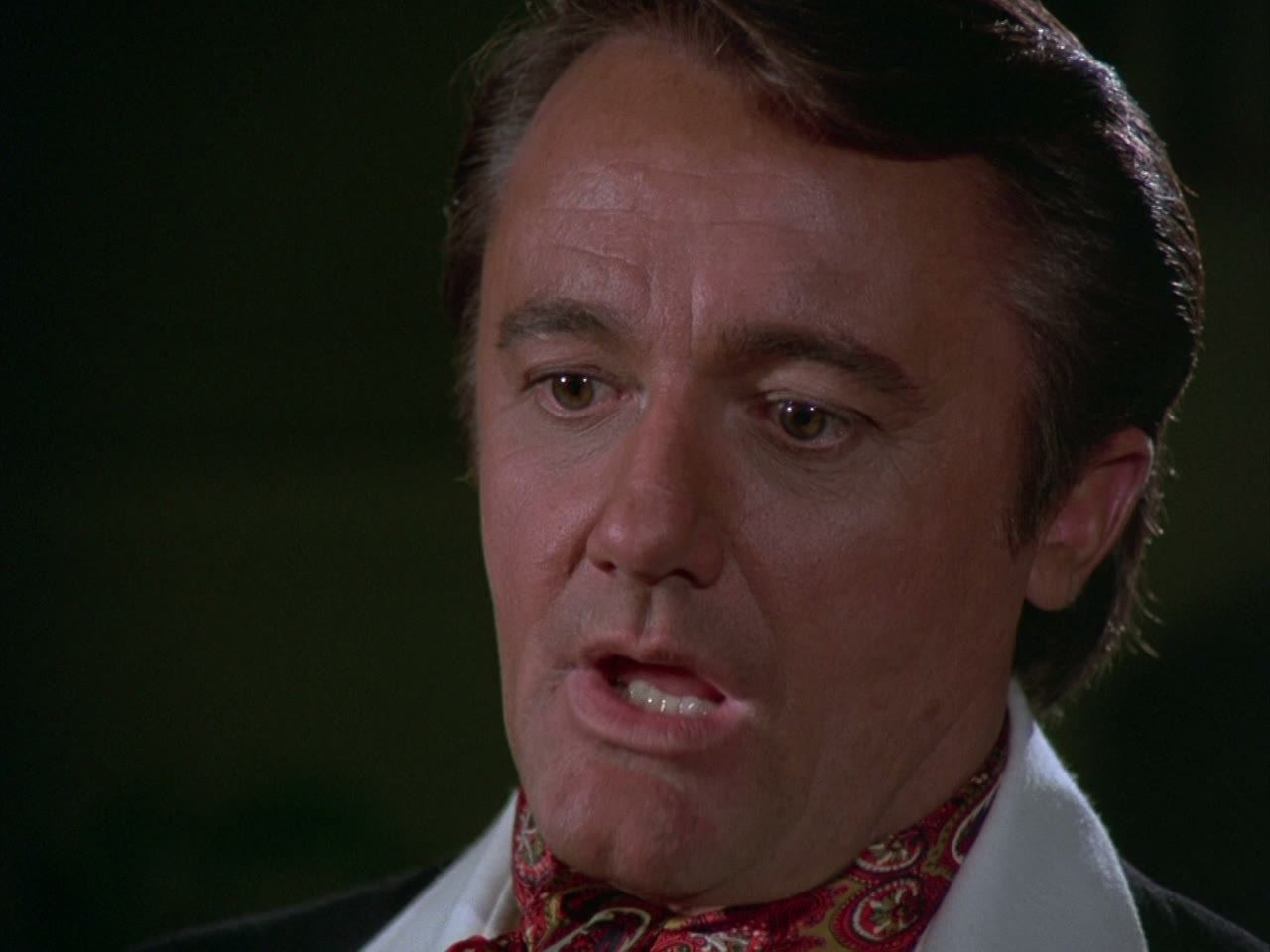
- Robert Vaughn appears as the son-in-law, three years after playing the murderer in Troubled Waters.
- Broadcast in May 1976 as the final film of the fifth season.
Verdict
Not the place to start, and not really the place to go tenth either. Everything that makes Columbo work is deliberately removed, and what remains is a fairly ordinary mystery with an unusually eccentric detective.
Worth watching once you know the format well, purely to see a show at the height of its confidence decide to dismantle itself for an hour.
The most instructive failure in the series. Remove the inversion and the duel, and what remains is a competent television mystery with an eccentric lead — which is exactly what Columbo was designed not to be.
Watch it late, and watch it as an experiment rather than an episode. It explains, better than any successful film could, why the format works.
What the people who made it said
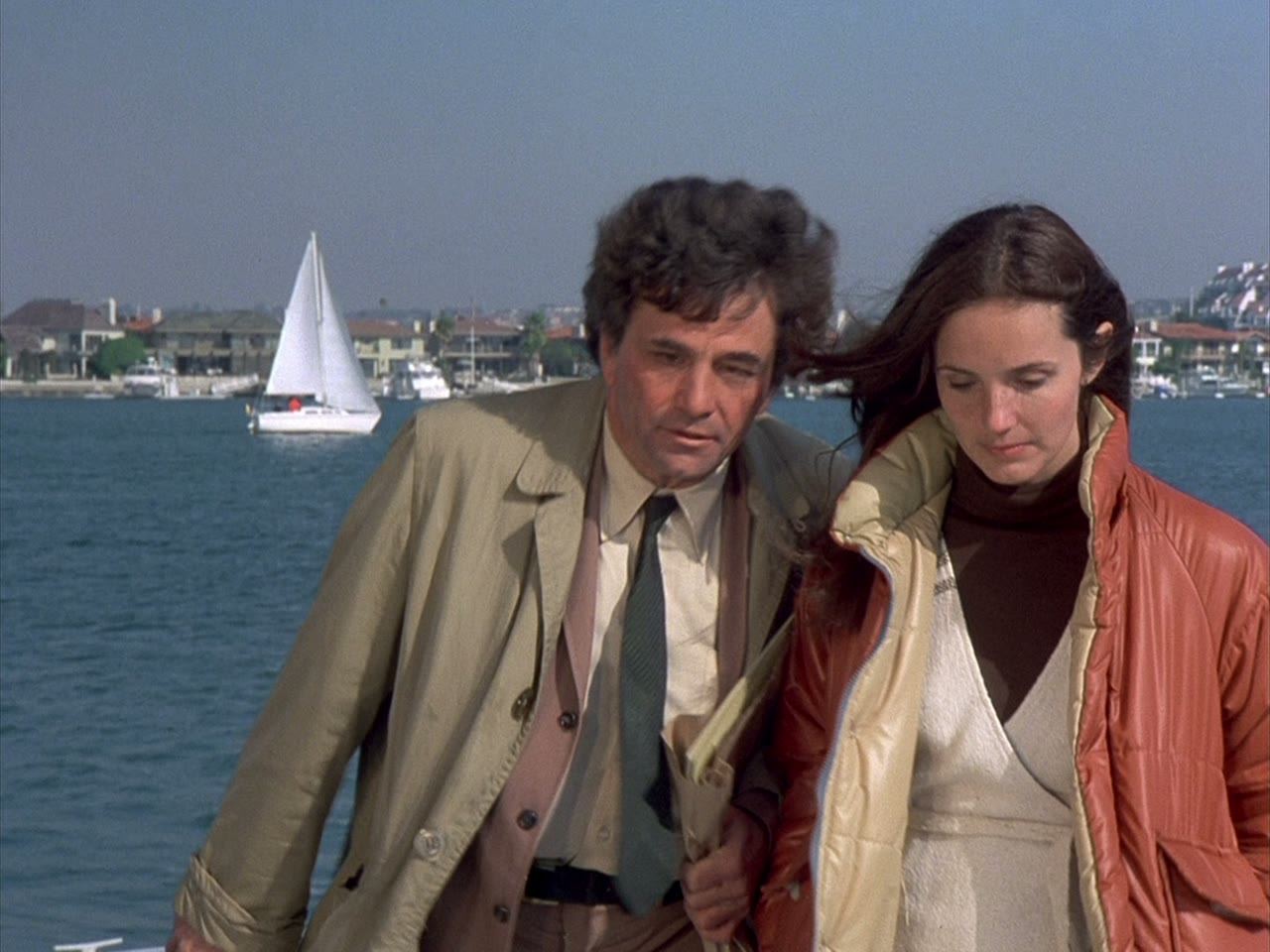
The strangest film in the series was directed by Patrick McGoohan, who had a theory of his own: Columbo’s clumsiness is not character but technique, and nobody who works with him could possibly be taken in by it.
“McGoohan's thought was that the whole thing's an act — that he's one of the greatest detectives of all time, and there's no way he could not know how great he is. He's put Robert Culp in jail three times; there's no way he could be this seeming dope. No one who knows him could fall for that.”
It was made as the end of the series, and McGoohan talked Falk into taking the character somewhere nobody had taken him. Hence the singing lieutenant and a plot with none of the usual structure.
“In his second episode that he directed — the one they thought would be the final episode, Last Salute to the Commodore — he really pulls out all the stops, convincing Peter to take this character places that no one had thought to before.”
Quotes are in the speaker’s own words — from a transcript of the recording, or from the printed source. Players open at the right minute. Everything is shortened; the full version is in the source.
Familiar faces
Actors who turn up in the series more than once — sometimes in very different parts.
- John Finnegan as Guard 12 episodes also in Blueprint for Murder, The Most Dangerous Match, Lovely But Lethal, A Friend in Deed, Fade in to Murder and 6 more
- Bruce Kirby as Sergeant Kramer 8 episodes also in Lovely But Lethal, By Dawn’s Early Light, A Deadly State of Mind, Identity Crisis, Make Me a Perfect Murder and 2 more
- Fred Draper as Swanny Swanso 4 episodes also in Lovely But Lethal, A Deadly State of Mind, Fade in to Murder
- Jimmy Joyce as Handwriting Expert 3 episodes also in Blueprint for Murder, Fade in to Murder
- Robert Vaughn as Charlie Clay 2 episodes also in Troubled Waters
- Wilfrid Hyde-White as Kittering 2 episodes also in Dagger of the Mind
- John Dehner as Otis Swanson 2 episodes also in Swan Song
- Joshua Bryant as Wayne Taylor 2 episodes also in A Friend in Deed
Cast data from TMDB, including uncredited bit parts. All the familiar faces →