Home → Episodes → A Deadly State of Mind
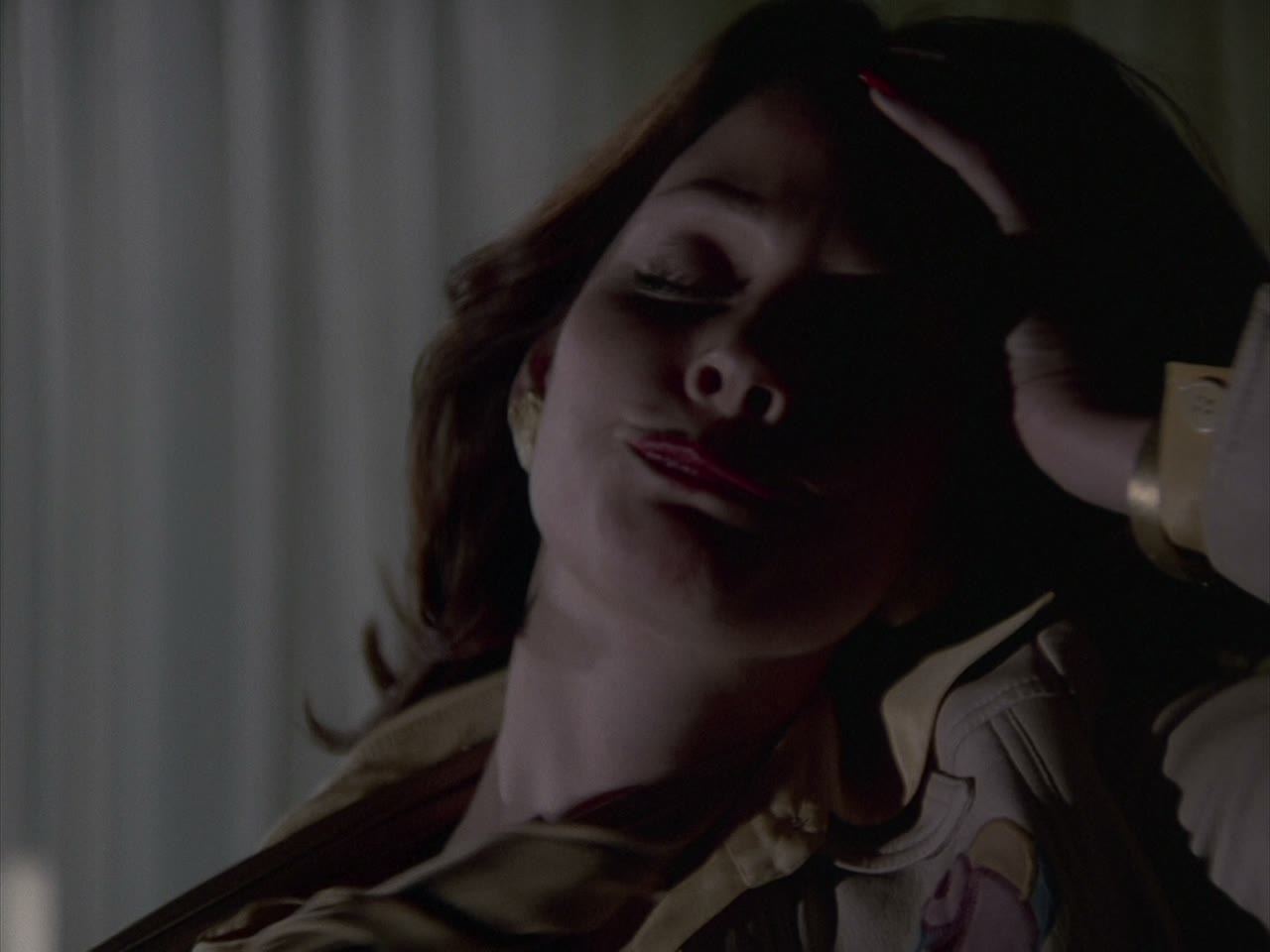
A Deadly State of Mind
Russian title: Горе от ума · Russian version
A psychiatrist kills his patient's husband, then uses hypnosis to make the wife's testimony worthless — and finally to make her walk out of a window. The most morally repellent murderer in the run, because his weapon is his profession.
Editor’s rating — 7 out of 10.
- Number
- 31 of 69
- Aired
- April 27, 1975
- Running time
- 70 min
- Director
- Harvey Hart
- Writer
- Peter S. Fischer
- Music
- Bernardo Segall
The case
- The killer
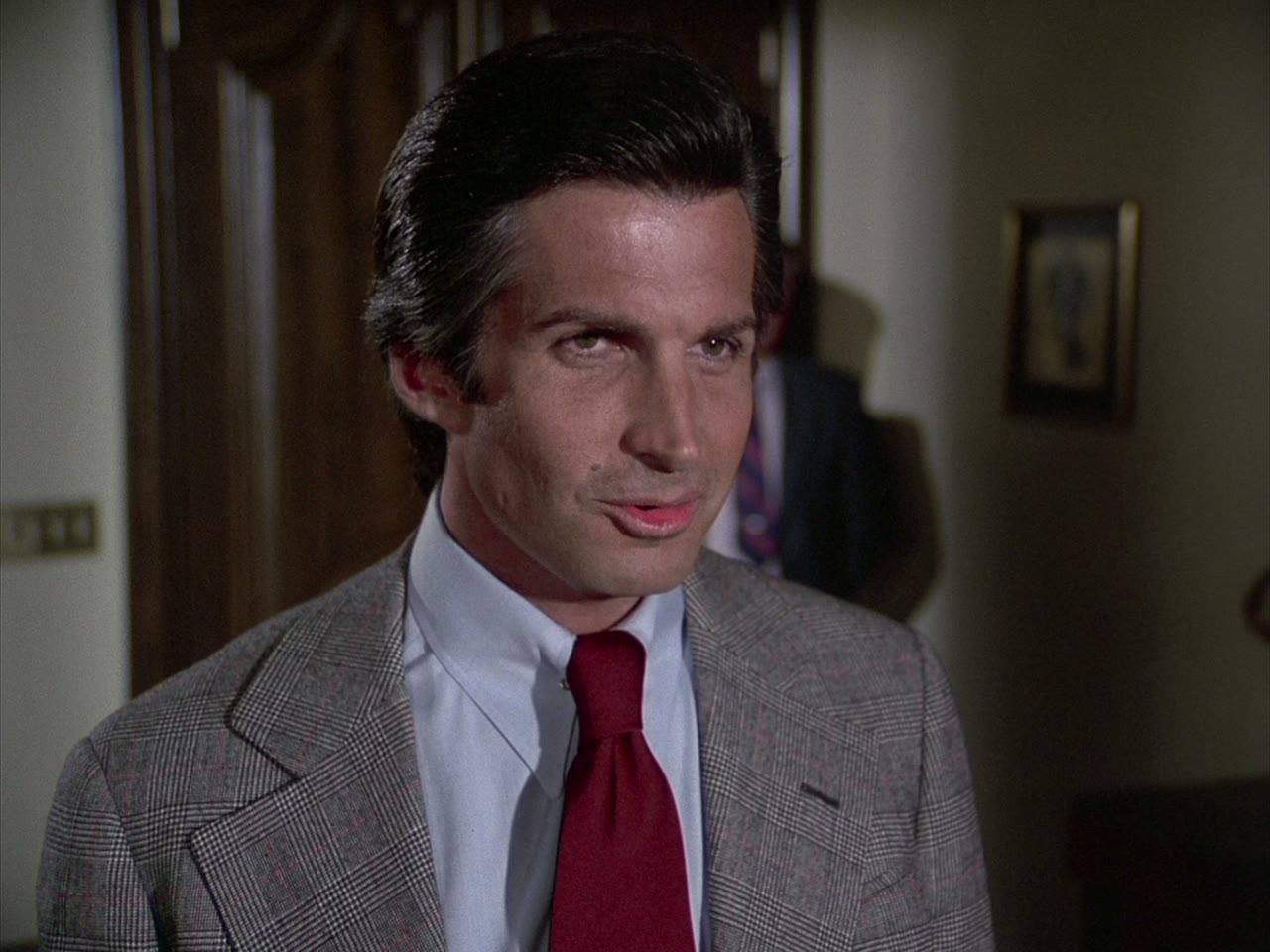
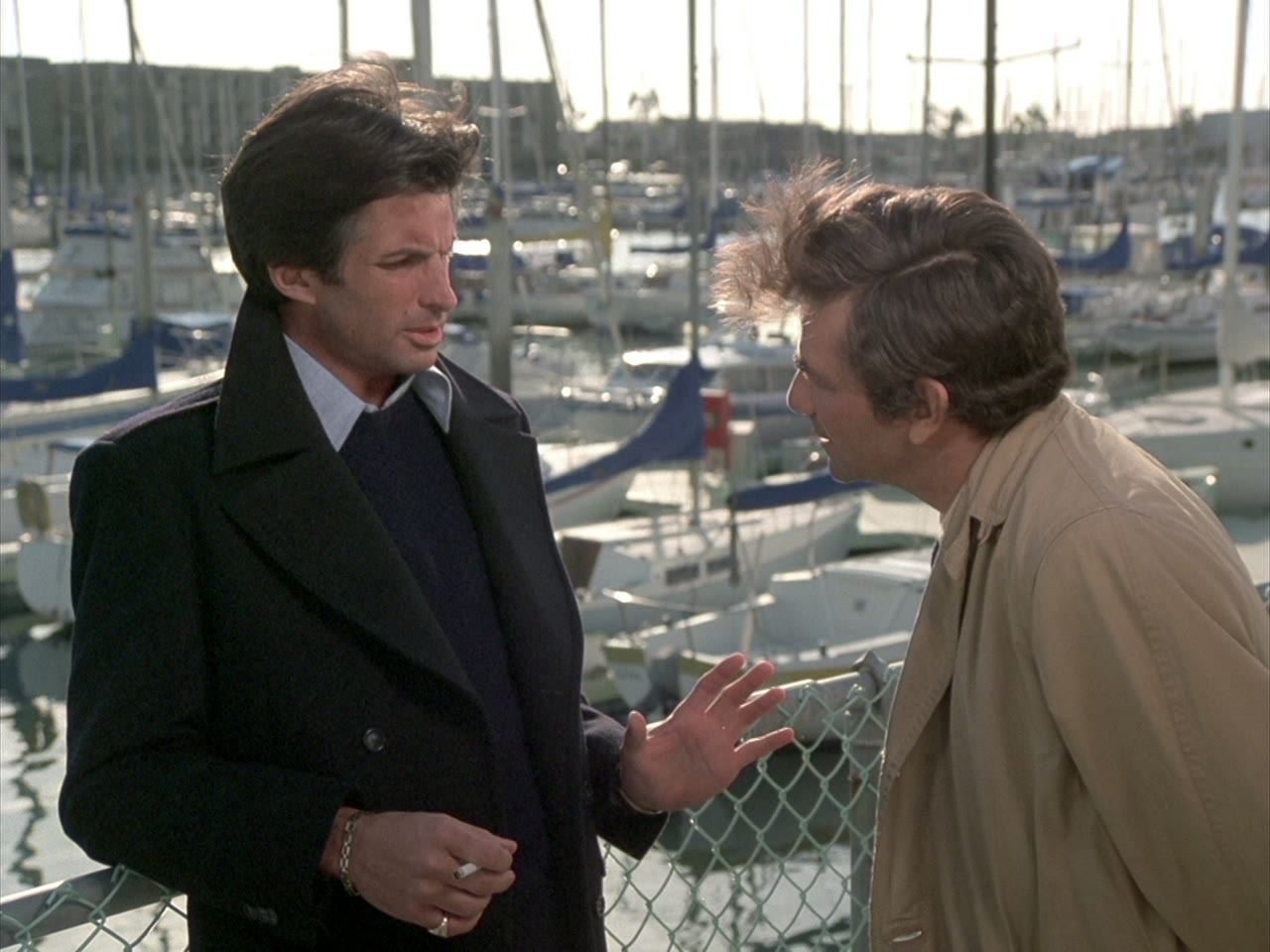
- George Hamilton as Mark Collier
- The victim
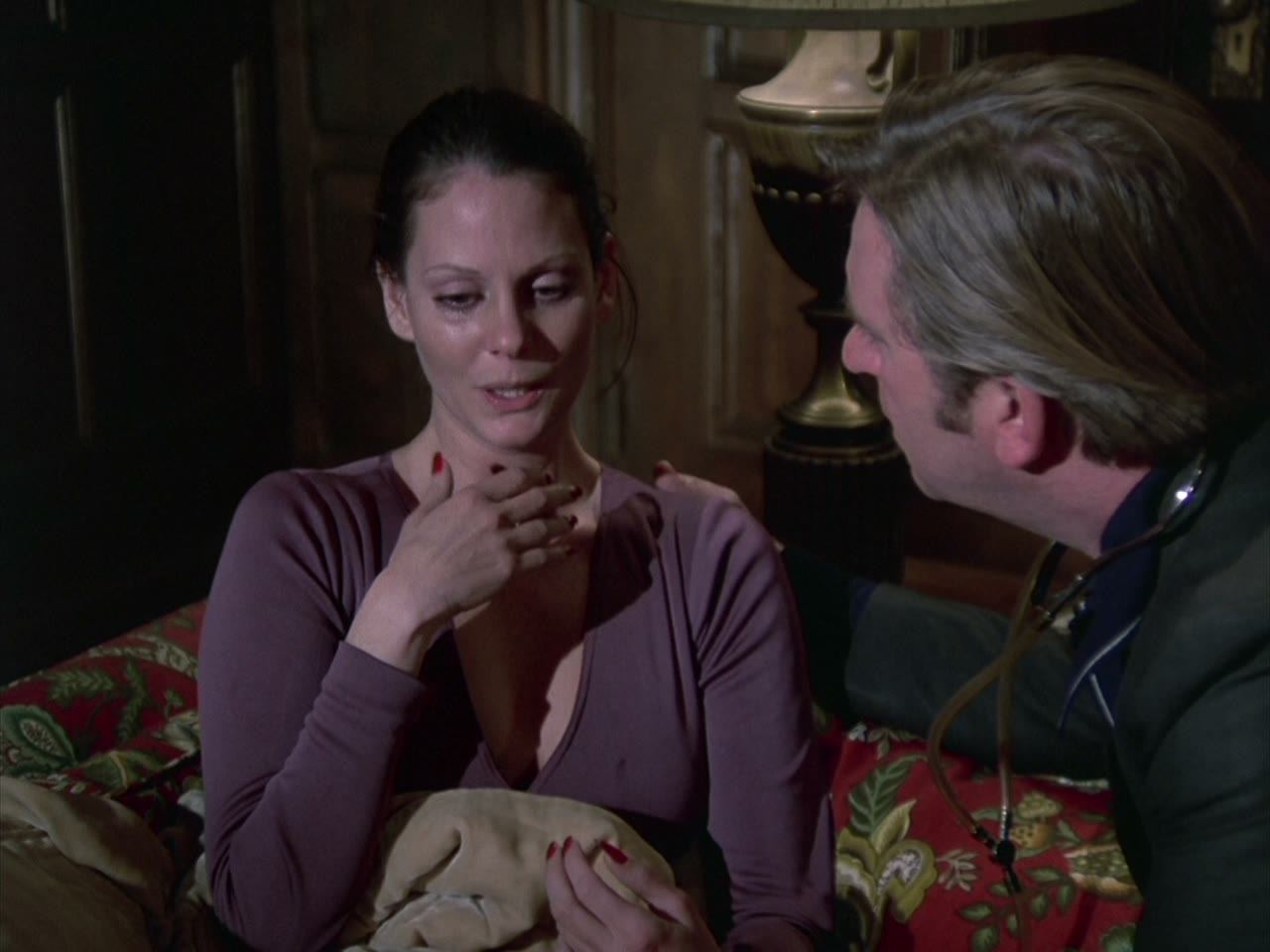
- Stephen Elliott as Carl Donner and Lesley Ann Warren as Nadia Donner
- Guest cast
- George Hamilton, Bruce Kirby, Lesley Ann Warren, Stephen Elliott, Karen Machon, William Wintersole
Columbo is an inverted mystery: the murder opens the film and the killer is known from the first minutes. What you are watching for is how he proves it — see how the character works.

The murder
Dr Mark Collier is a psychiatrist having an affair with his patient Nadia Donner. Her husband Karl finds them together; there is a struggle; Collier kills him with a heavy object, and Nadia witnesses it.
From that moment the murder becomes the smaller crime. Collier's problem is a living witness who is also his patient, and he solves it the way his training allows: he uses their sessions to rewrite what she remembers, planting a version in which she is responsible and he was never there.
When she starts to surface anyway, he escalates. Under hypnosis he gives her a suggestion designed to trigger later, and she goes out of a high window while he is publicly elsewhere. He has now killed twice without being present for either death in the sense a court would accept.
Dr Mark Collier is a psychiatrist sleeping with a patient, which is where the episode's real ugliness begins. Nadia Donner is unwell, dependent on him, and being treated by the man exploiting her.
Karl Donner finds them together. The struggle is brief, Collier kills him, and Nadia sees it happen — which turns a manageable scandal into a witness who is also a patient.
He solves that with his profession. In their sessions he rewrites what she remembers, planting a version in which she is responsible. When that starts to fail, he gives her a post-hypnotic suggestion and she walks out of a high window while he is publicly elsewhere.
How Columbo gets him
Columbo's usual method — patient, deferential questioning — is almost useless against a man who does that professionally. Collier reads him from the first minute, treats every question as a symptom, and offers diagnoses instead of answers.
The lieutenant's response is to stop investigating the psychiatrist and start investigating the sessions. What was said, in what order, and what a suggestible woman was told to believe. The evidence he needs is not physical but sequential: Nadia's account changed, and it changed in a direction that only helped one person.
The final trap is built on Collier's own technique. Columbo arranges a demonstration in which the doctor is invited to respond to a stimulus he believes only the killer would recognise — and Collier, confident he cannot be caught by a policeman who does not understand the mind, responds.
Columbo's usual manner is nearly useless here, because Collier does the same thing professionally. He reads the lieutenant immediately, treats every question as a symptom, and answers with diagnoses.
So the lieutenant stops investigating the psychiatrist and starts investigating the sessions: what was said, in what order, and what a suggestible woman was told to believe. The evidence is sequential rather than physical.
The final trap uses Collier's own technique against him. Columbo arranges a demonstration in which the doctor responds to a stimulus only the killer would recognise, confident that a policeman cannot catch a man who understands the mind.
Worth knowing
- George Hamilton plays Collier as a man of impeccable manners whose entire vocabulary is a way of not being contradicted.
- The episode is one of the darkest in the run: the second victim is killed by suggestion, which the series treats as murder without hesitation.
- Lesley Ann Warren plays Nadia, and the scenes in which she cannot trust her own memory are genuinely distressing.
- Lesley Ann Warren plays Nadia, and the scenes in which she cannot trust her own memory are genuinely distressing.
- The second death — by suggestion — is treated by the script as murder without hesitation, which was unusual for 1975 television.
- Broadcast in April 1975.
Verdict
Unpleasant in the way the series is rarely willing to be, and stronger for it. Collier is not stylish or witty; he is a professional abusing a position of trust, and Columbo's dislike of him is visible throughout.
The hypnosis mechanics are pure 1970s television, but the moral horror underneath them still works.
Unpleasant in a way the series is rarely willing to be, and stronger for it. Collier has no style and no wit; he is a professional abusing a position of trust, and Columbo's dislike shows.
The hypnosis mechanics are pure period television, but the moral horror underneath them has not dated at all.
Familiar faces
Actors who turn up in the series more than once — sometimes in very different parts.
- Bruce Kirby as Sergeant Kramer 8 episodes also in Lovely But Lethal, By Dawn’s Early Light, Identity Crisis, Last Salute to the Commodore, Make Me a Perfect Murder and 2 more
- Fred Draper as David Morris 4 episodes also in Lovely But Lethal, Last Salute to the Commodore, Fade in to Murder
- George Hamilton as Mark Collier 2 episodes also in Caution: Murder Can Be Hazardous to Your Health
- Stephen Elliott as Carl Donner 2 episodes also in Grand Deceptions
- Redmond Gleeson as Arnold 2 episodes also in Now You See Him
- Danny Wells as Gary Keppler 2 episodes also in Forgotten Lady
- Morris Buchanan as Lab Man 2 episodes also in Old Fashioned Murder
Cast data from TMDB, including uncredited bit parts. All the familiar faces →