Home → Episodes → By Dawn’s Early Light
By Dawn’s Early Light
Russian title: При первых проблесках зари · Russian version
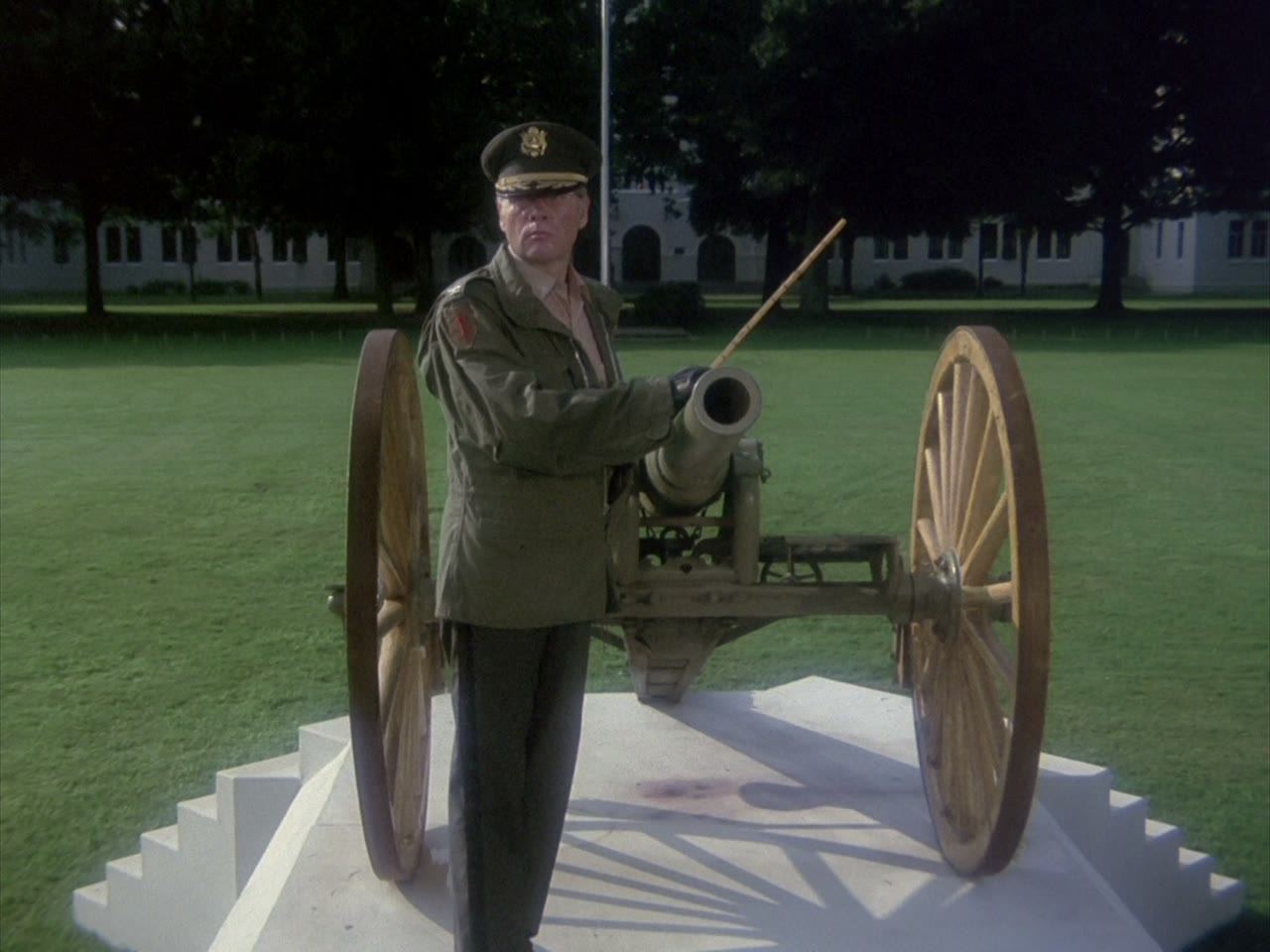
The commandant of a military academy blows up a cannon to kill the chairman of the board who intends to turn his school into a coeducational college. Patrick McGoohan's first Columbo murderer, and the one that won him an Emmy.
Editor’s rating — 9.5 out of 10.
- Number
- 28 of 69
- Aired
- October 27, 1974
- Running time
- 94 min
- Director
- Harvey Hart
- Writer
- Howard Berk
- Music
- Bernardo Segall
The case
- The killer
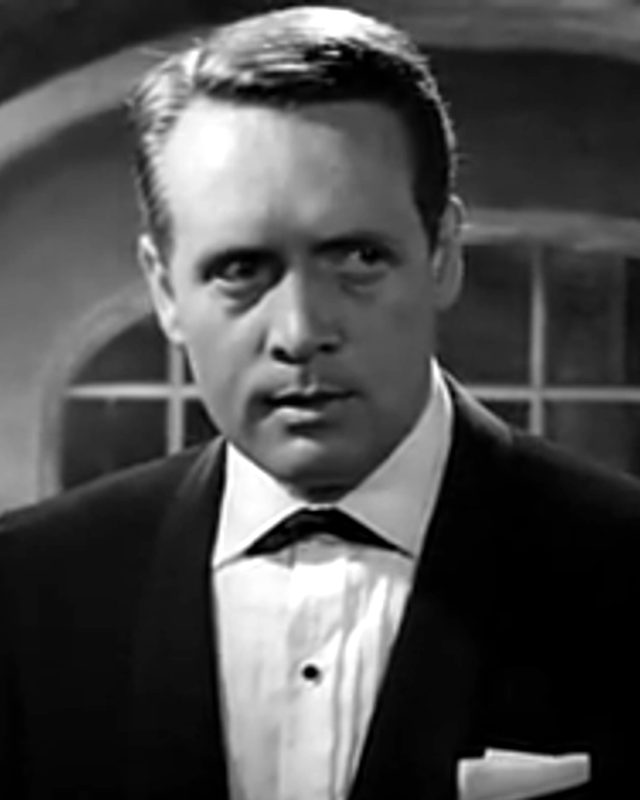
- Patrick McGoohan as Lyle Rumford
- The victim
- Tom Simcox as William Haynes
- Guest cast
- Patrick McGoohan, Bruce Kirby, Burr DeBenning, Madeleine Sherwood, Tom Simcox, Mark Wheeler
Columbo is an inverted mystery: the murder opens the film and the killer is known from the first minutes. What you are watching for is how he proves it — see how the character works.
The murder
Colonel Lyle Rumford runs Haynes Military Academy the way it has been run for a century, and believes without irony that he is preserving something worth preserving. William Haynes, who owns the place, has decided to convert it into a liberal arts college — which to Rumford is not a business decision but a desecration.
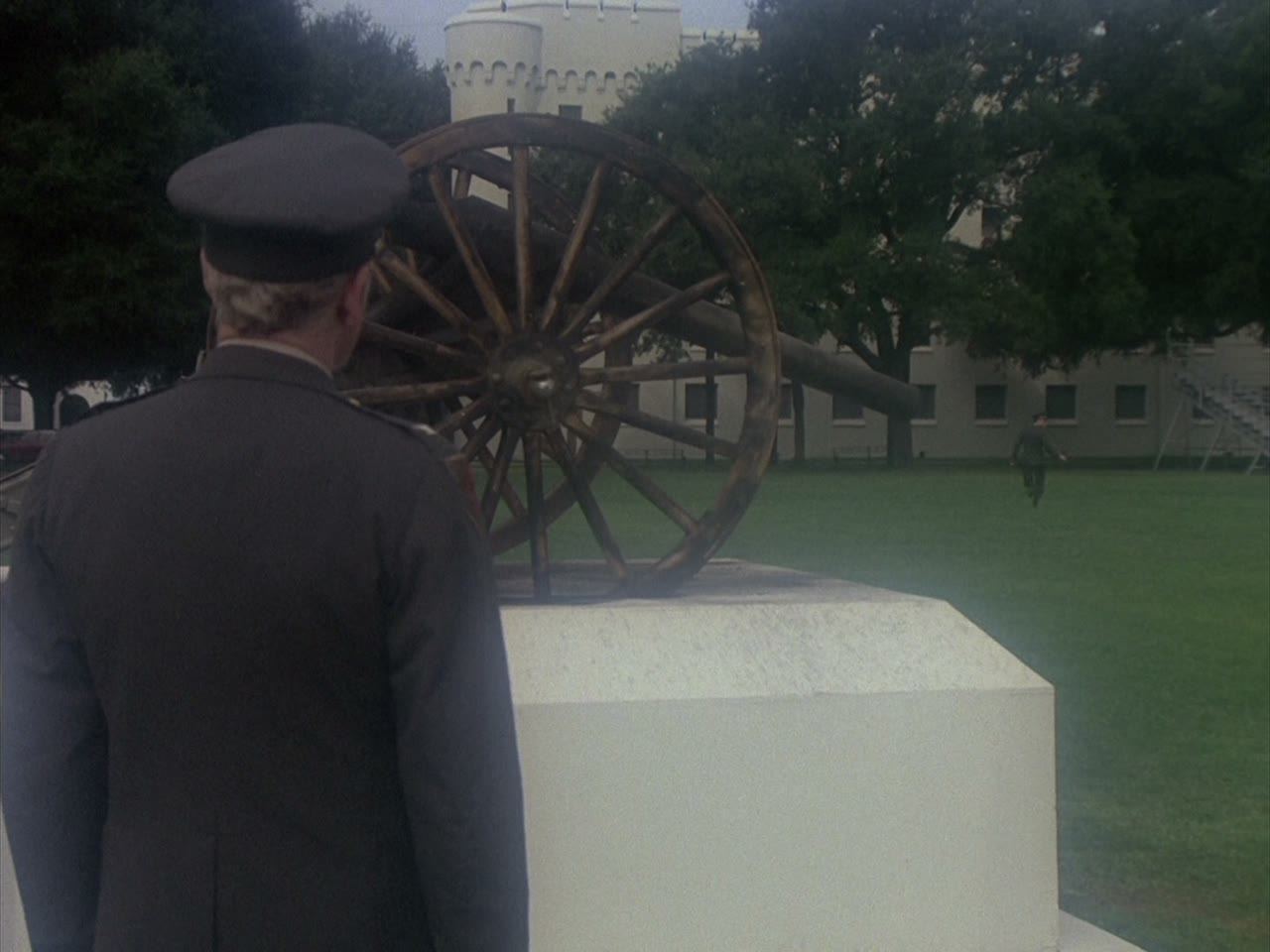
The murder uses the academy's own ceremony. A cannon is fired at dawn as tradition demands; Rumford packs it so that the man who fires it dies with it. The victim is not the cadet who lights it but Haynes, standing where the chairman always stands.
What makes Rumford distinct among Columbo villains is that he never once claims innocence to himself. He believes the killing was correct — a duty performed for an institution — and behaves throughout with the calm of a man who has already justified everything.
Haynes Military Academy has been run the same way for a century, and Colonel Rumford believes without irony that he is preserving something worth preserving: discipline, tradition, the making of men out of boys.
William Haynes owns it and intends to convert it into a liberal arts college. To Rumford this is not a business decision but a desecration, and he treats his response as a duty rather than a crime.
The murder uses the academy's own ritual. A cannon is fired at dawn as tradition demands; Rumford packs it so that it kills the man standing where the chairman always stands. The institution's own ceremony is turned into the weapon.
How Columbo gets him
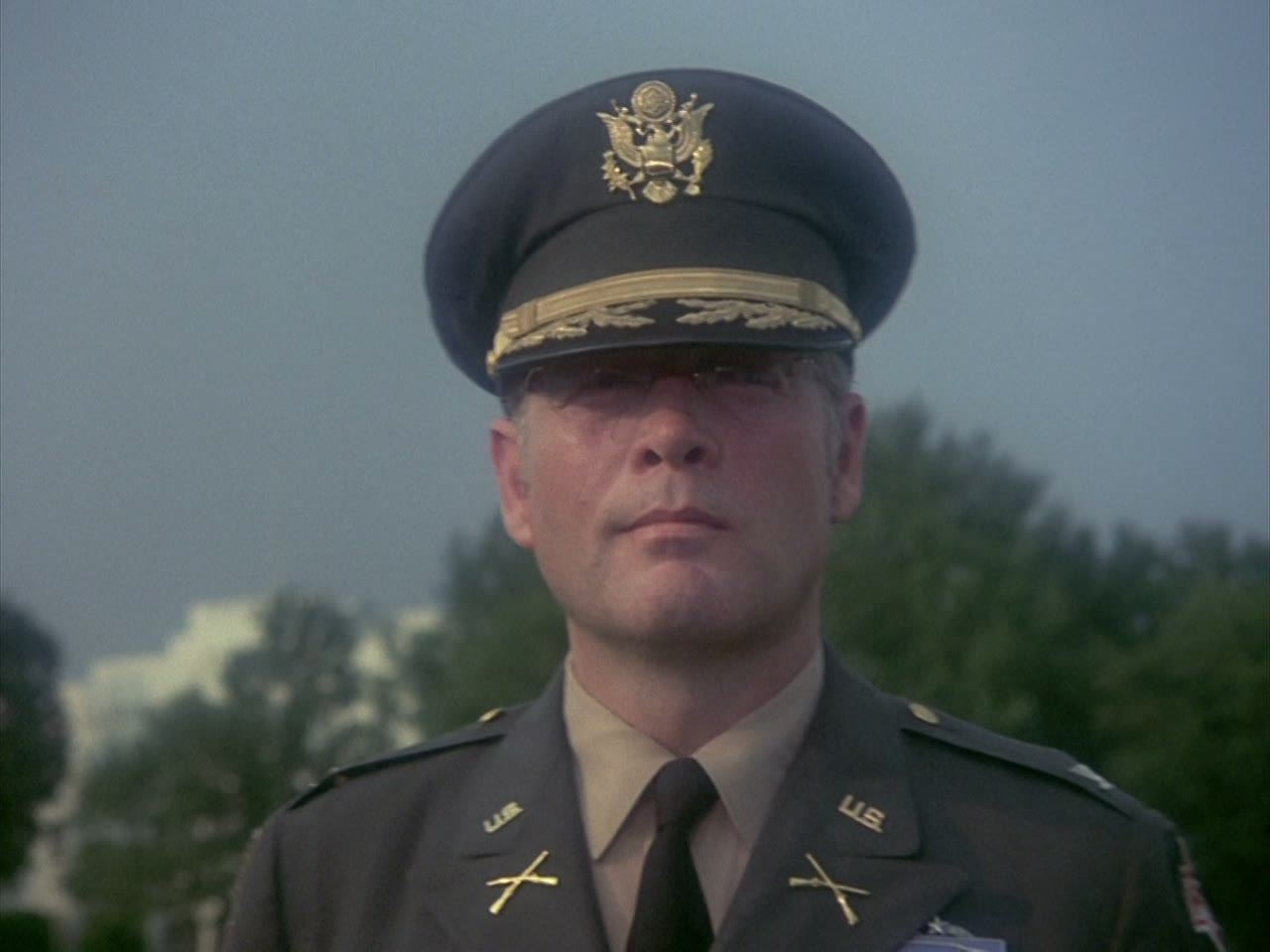
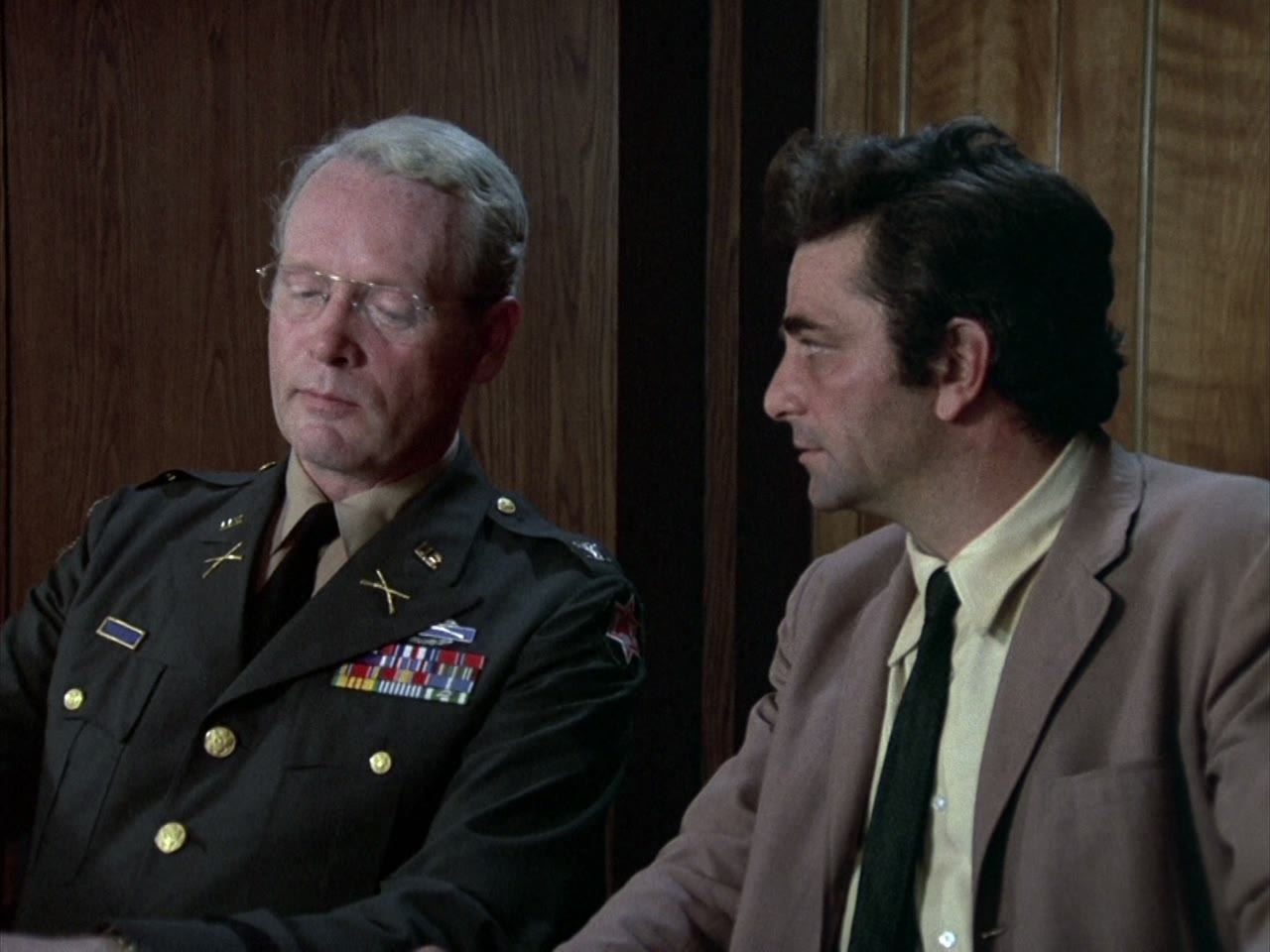
The duel here is between two kinds of authority. Rumford commands, and expects to be answered; Columbo asks, and does not stop. Their scenes are extraordinarily tense precisely because there is no charm on either side — McGoohan plays contempt without any of the usual seduction.
The technical work is about the cannon: who had access, when the charge was prepared, and why a weapon fired ceremonially for decades failed on the one morning the chairman was standing in the wrong place.
The cadet, Springer, is the film's conscience — a boy raised inside the colonel's system who has to decide whether the institution is worth lying for. Rumford's real crime, the episode suggests, is not the murder but what he has spent years doing to boys like him.
The duel is between two kinds of authority. Rumford commands and expects to be answered; Columbo asks and does not stop. There is no charm on either side, which makes these the tensest scenes in the series.
The technical work concerns the cannon: who held the key, when the charge was prepared, and why a weapon fired ceremonially for decades failed on the single morning the chairman was in the wrong place.
Cadet Springer is the film's conscience — a boy raised inside Rumford's system who must decide whether the institution is worth lying for. The colonel's real crime, the episode suggests, is what he has spent years doing to boys like him.
Worth knowing
- McGoohan won an Emmy for this performance and would return three more times as a murderer, as well as directing five episodes.
- He and Falk became close friends, and their working relationship shaped the later years of the series more than any other collaboration.
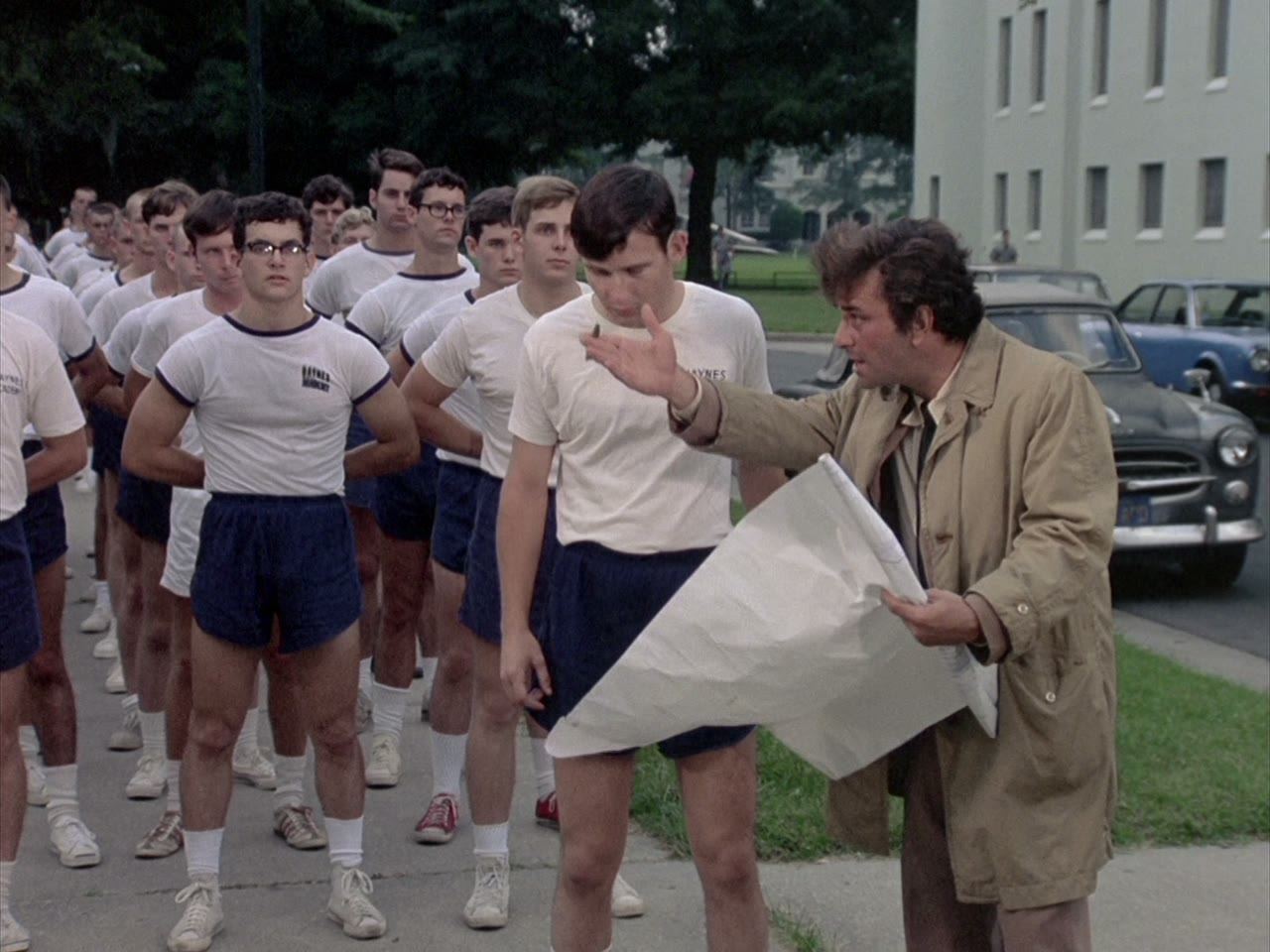
- The academy scenes were shot at a real military school, using its cadets as extras.
- McGoohan won an Emmy for this performance, the first of two he received for the series.
- He and Falk became close friends; the collaboration produced four murderers and five directing credits over twenty-four years.
- The academy scenes were shot at a working military school with its own cadets as extras; broadcast October 1974.
Verdict
The best episode of the fourth season and one of the coldest in the run. There is no charm, no flirtation, no shared drink at the end — just two immovable men, and one of them is wrong.
McGoohan's Rumford is the most frightening thing the series produced, because he is not greedy or vain. He is principled, and the principle is monstrous.
The best film of the fourth season and one of the coldest in the run. No charm, no flirtation, no shared drink at the end — two immovable men, one of whom is wrong.
Rumford is the most frightening thing the series produced precisely because he is not greedy or vain. He is principled, and the principle is monstrous.
What the people who made it said
This is the first of the four killers McGoohan played in the series. Producer Everett Chambers brought him in, although the part had first gone to someone else.
“I think Ed Asner had been asked to do it. Then he couldn't do it, and Everett asked me. It was a rare privilege for me. It was a classy show. How many TV series in the United States are done with that much care? M*A*S*H is the only one I can think of that's comparable.”
The part of Colonel Rumford won him an Emmy — and was the reason he came back to the series.
“That's probably my favorite. It might be my favorite role in the United States. It took a bit of work, but I thought it was excellent. It was on the basis of that experience that I agreed to do the others.”
Quotes are in the speaker’s own words — from a transcript of the recording, or from the printed source. Players open at the right minute. Everything is shortened; the full version is in the source.
Familiar faces
Actors who turn up in the series more than once — sometimes in very different parts.
- Bruce Kirby as Sergeant Kramer 8 episodes also in Lovely But Lethal, A Deadly State of Mind, Identity Crisis, Last Salute to the Commodore, Make Me a Perfect Murder and 2 more
- Patrick McGoohan as Nelson Brenner 4 episodes also in Identity Crisis, Agenda for Murder, Ashes to Ashes
Cast data from TMDB, including uncredited bit parts. All the familiar faces →