Home → Episodes → Sex and the Married Detective
Sex and the Married Detective
Russian title: Секс и женатый детектив · Russian version
A sex therapist murders her business partner and lover after discovering he has been sleeping with her assistant, and builds an alibi around a disguise and a hotel bar. The episode in which Columbo plays the tuba.
Editor’s rating — 8 out of 10.
- Number
- 48 of 69
- Aired
- April 3, 1989
- Running time
- 90 min
- Director
- James Frawley
- Writer
- Jerry Ludwig
The case
- The killer
- Lindsay Crouse as Joan Allenby
- The victim
- Stephen Macht as David Kincaid
- Guest cast
- Lindsay Crouse, Peter Jurasik, Janet Julian, Stephen Macht, Ken Lerner, Marge Redmond
Columbo is an inverted mystery: the murder opens the film and the killer is known from the first minutes. What you are watching for is how he proves it — see how the character works.
The murder
Dr Joan Allenby runs a successful sex therapy practice with David Kincaid, her partner in the clinic and in bed. When she learns he is engaged to her own assistant, the betrayal is professional as much as personal — he built his half of the practice on her work.
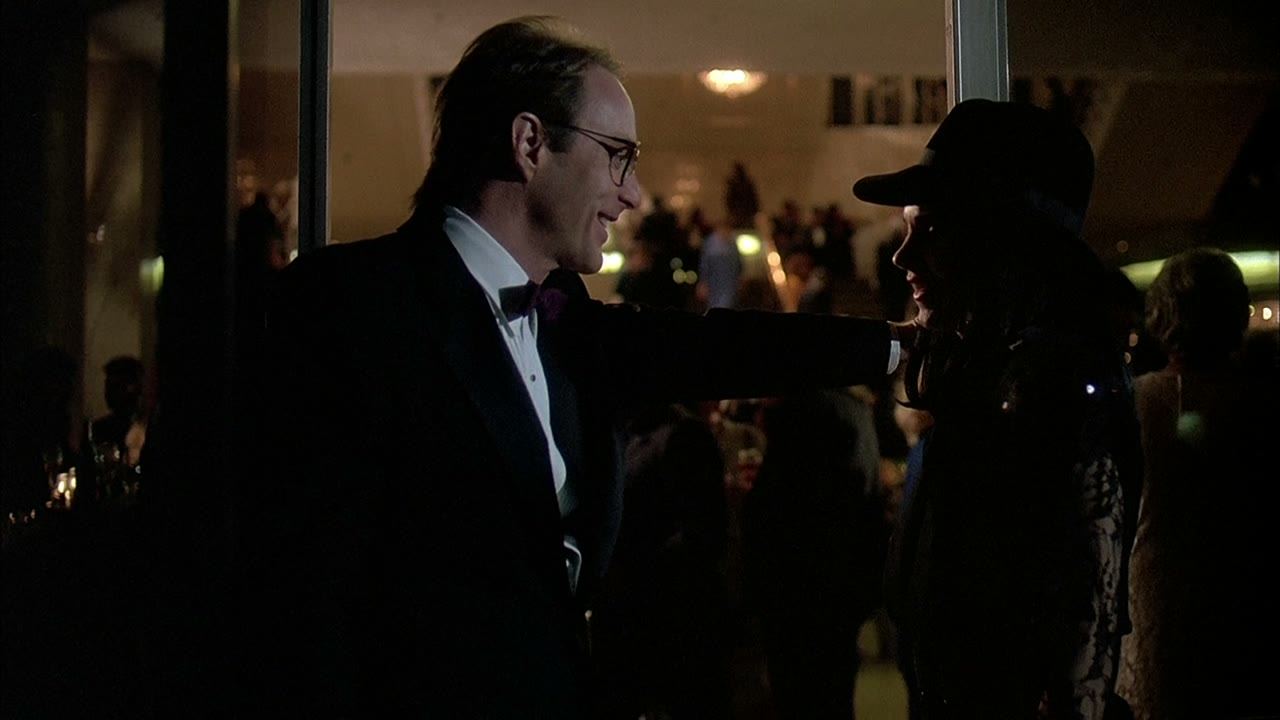
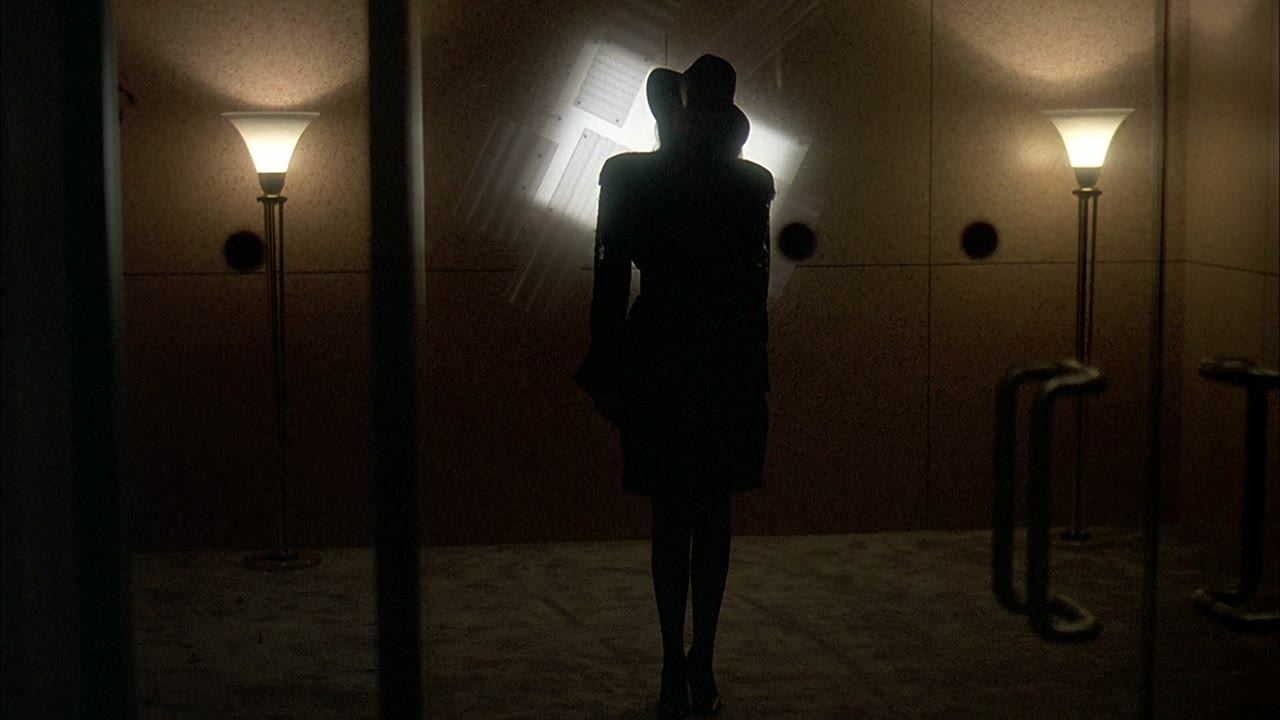
She kills him at the clinic and constructs an alibi that is pure theatre: disguised as a woman he does not know, she meets him at a hotel bar earlier in the evening in front of witnesses, establishing a version of the night that puts the murder in someone else's hands.
The disguise is the whole plan, and it is genuinely clever — she is seen, described and remembered, but not as herself.
The practice was built on Allenby's research and Kincaid's presentation, an arrangement the series has used before with writers and painters. What makes this version sharper is that the professional betrayal and the personal one arrive in the same sentence: he is marrying the assistant who does the filing.
The disguise is prepared carefully — a wig, a different voice, an outfit calculated to be remembered in exactly the terms she wants remembered. She meets Kincaid at the hotel bar as a stranger, is noticed by staff and customers, and thereby creates a woman who does not exist for the police to look for.
Then she kills him at the clinic, on the tango floor, in a scene the episode stages with more style than almost anything else in the second run.
How Columbo gets him
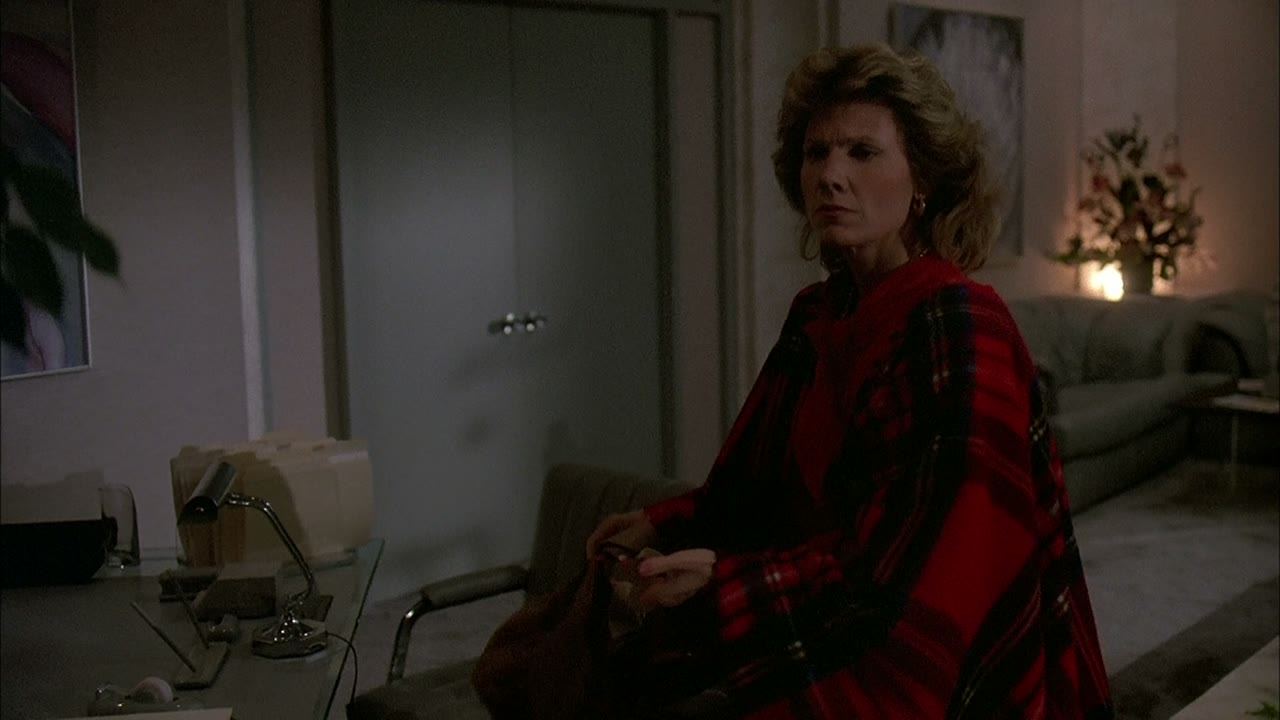
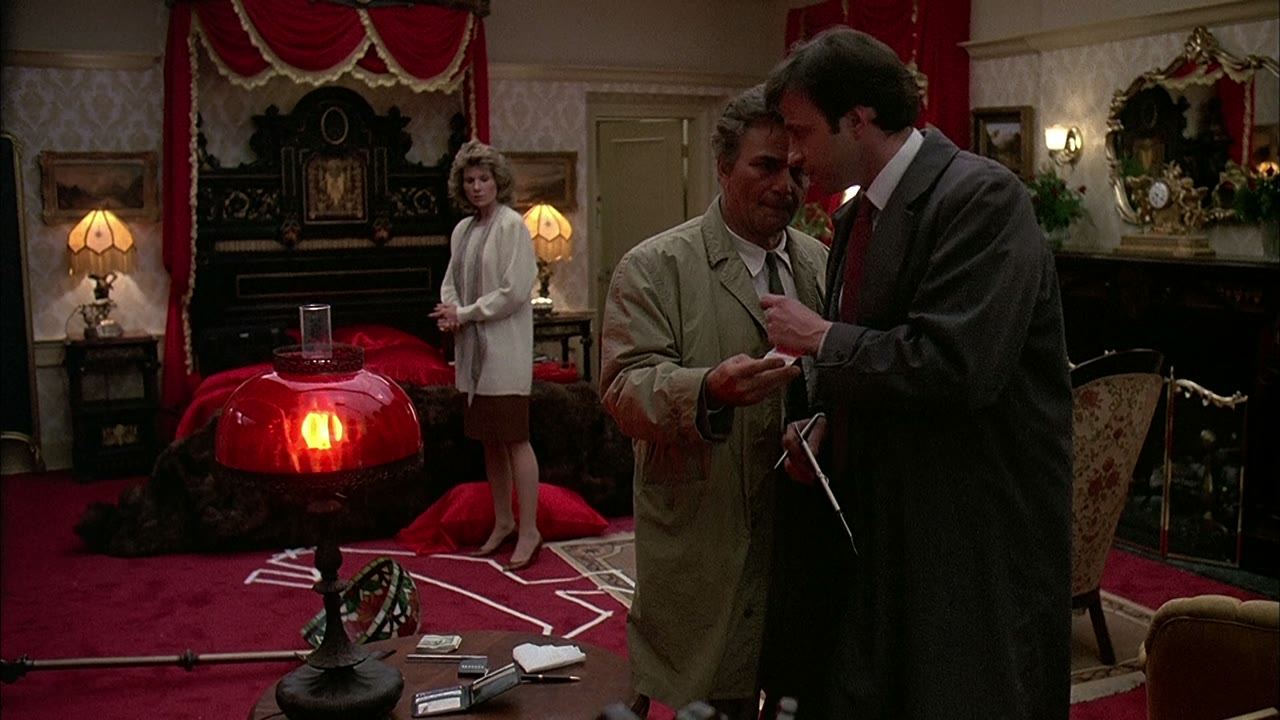
Columbo spends much of the film being educated about a subject he is visibly uncomfortable discussing, and the comedy is gentler than it sounds: the joke is never on the therapy, it is on the lieutenant's determination to take notes.
The alibi's weakness is the witnesses. People who saw a woman in a bar remember the woman they were shown, and the details they recall are the details she chose to give them — which means every one of them is a decision rather than an observation.
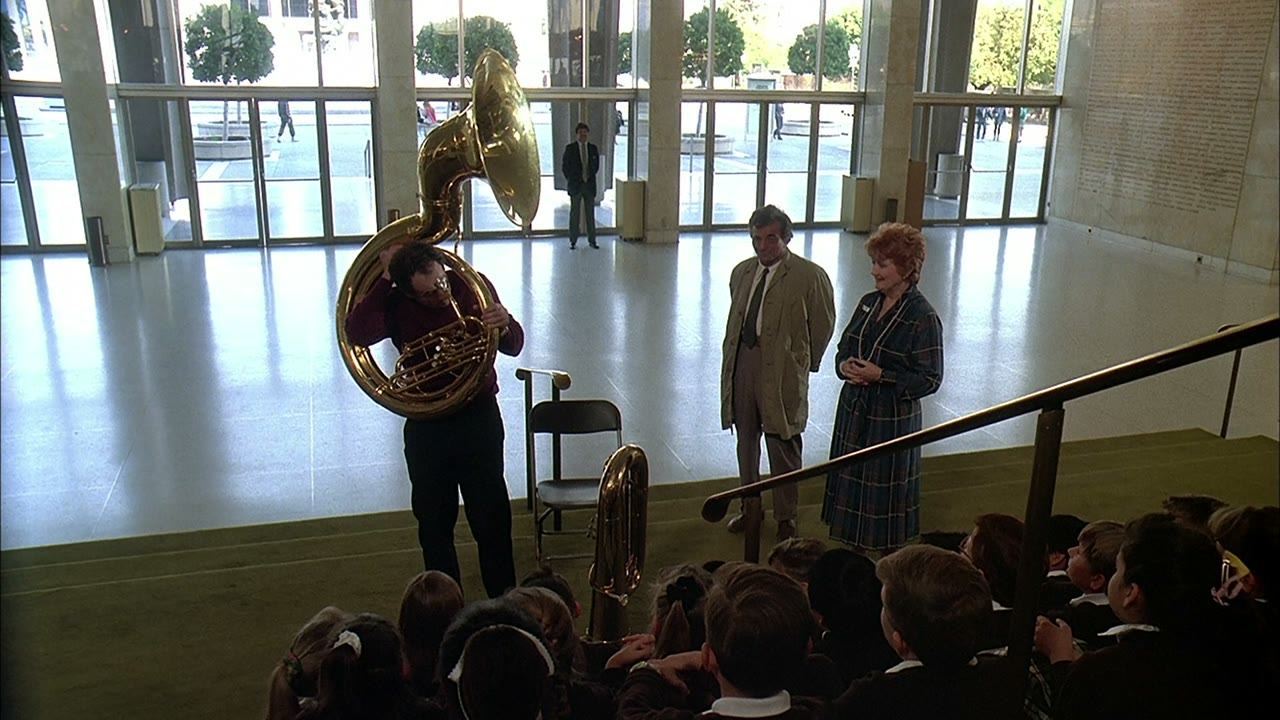
The tuba appears here: Columbo plays it, badly and with total sincerity, in a scene that exists purely to establish that the man has a life outside the case.
The therapy setting produces the run's most sustained comic discomfort: Columbo taking notes on subjects he would rather not discuss, and being entirely too polite to say so.
The witnesses are the case. Everyone who saw the mystery woman describes the same things, in the same order, which is not how independent observation works — it is how a costume works.
The perfume closes it. A scent chosen to make an impression makes one, and it lingers in places Allenby has said she never went.
Worth knowing
- This is the episode that establishes Columbo plays the tuba, a detail fans cite as one of the few concrete facts about his private life.
- Lindsay Crouse plays Allenby as brisk and professional rather than seductive, which makes the disguise sequence more effective.
- Directed by James Frawley, the ninth and last of his Columbo films.
- The tango sequence was choreographed for the production and is one of very few overtly stylised scenes in the series.
- Lindsay Crouse was primarily a stage and film actor; this was her only Columbo.
- The tuba scene was Falk's idea, added during production to give the lieutenant a private life outside the case.
Verdict
One of the better early ABC films: a strong central trick, a murderer with a real grievance, and a comic register that never tips into farce.
The alibi is also a rare example of the series letting the killer be genuinely inventive rather than merely thorough.
One of the strongest of the early ABC films, with a clever alibi and a murderer whose motive is professional theft as much as jealousy.
It is also the episode that gave the character his most-cited hobby, which is a strange legacy for a film about a sex therapist.
What the people who made it said
No Columbo was ever green-lit faster, Koenig says: the writer needed one phrase to get a yes.
“The writer came in to see the producers with the idea and got it done in a four-word pitch. He said: Columbo meets Dr. Ruth. And the producers immediately said: go write it, that's gold.”
The model was Dr Ruth Westheimer — a sixty-year-old, four-foot-seven sex therapist and radio star. Linda Hunt was considered for the part, but the show wanted to look younger.
“As they tried to make the show a little more modern, the murderer became taller, younger and sexier.”
Quotes are in the speaker’s own words — from a transcript of the recording, or from the printed source. Players open at the right minute. Everything is shortened; the full version is in the source.
Familiar faces
Actors who turn up in the series more than once — sometimes in very different parts.
- Stewart J. Zully as Sergeant Burke 3 episodes also in Murder, Smoke and Shadows, It's All in the Game
- Elizabeth Lambert as Woman in Bar 2 episodes also in Death Hits the Jackpot
Cast data from TMDB, including uncredited bit parts. All the familiar faces →