Home → Episodes → Double Shock
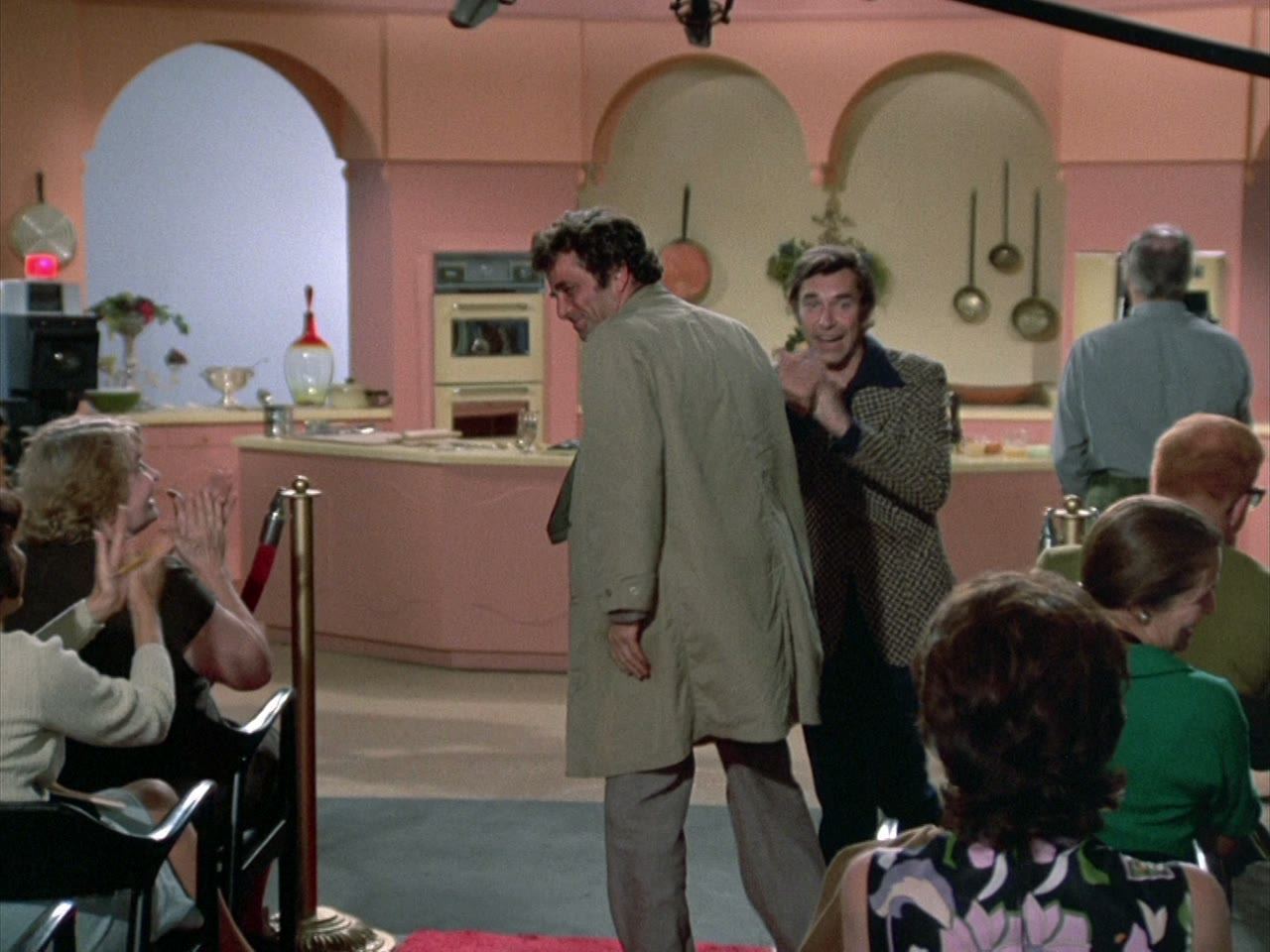
Double Shock
Russian title: Двойной удар · Russian version
Twin brothers, one respectable and one raffish, and a rich uncle who dies in the bath just before changing his will. Martin Landau plays both, and the episode plays the oldest trick in the mystery book with real skill.
Editor’s rating — 7.5 out of 10.
- Number
- 17 of 69
- Aired
- March 25, 1973
- Running time
- 70 min
- Director
- Robert Butler
- Writer
- Jackson Gillis and Richard Levinson & William Link / Steven Bochco
- Music
- Dick DeBenedictis
The case
- The killer
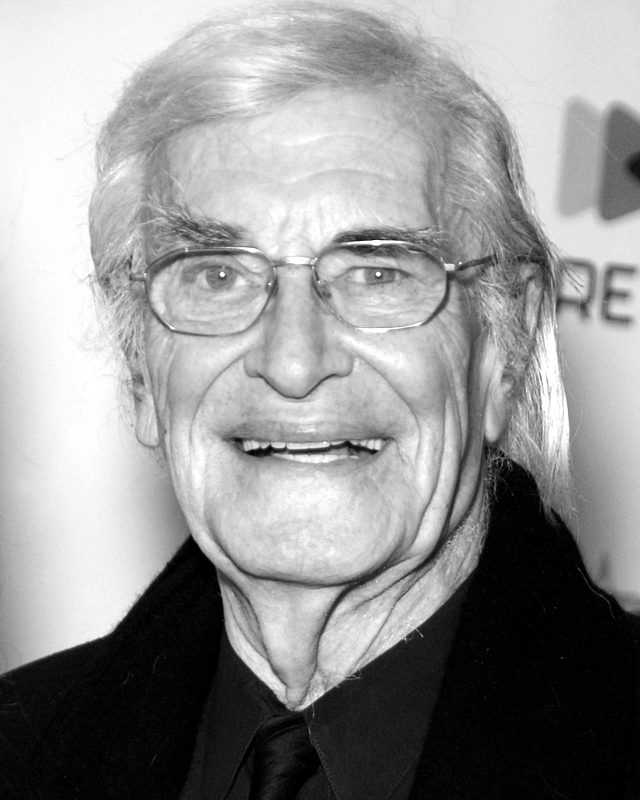
- Martin Landau in a dual role as Dexter Paris and Norman Paris
- The victim
- Paul Stewart as Clifford Paris and Julie Newmar as Lisa Chambers
- Guest cast
- Martin Landau, Tim O'Connor, Jeanette Nolan, Julie Newmar, Paul Stewart, Dabney Coleman
Columbo is an inverted mystery: the murder opens the film and the killer is known from the first minutes. What you are watching for is how he proves it — see how the character works.
The murder
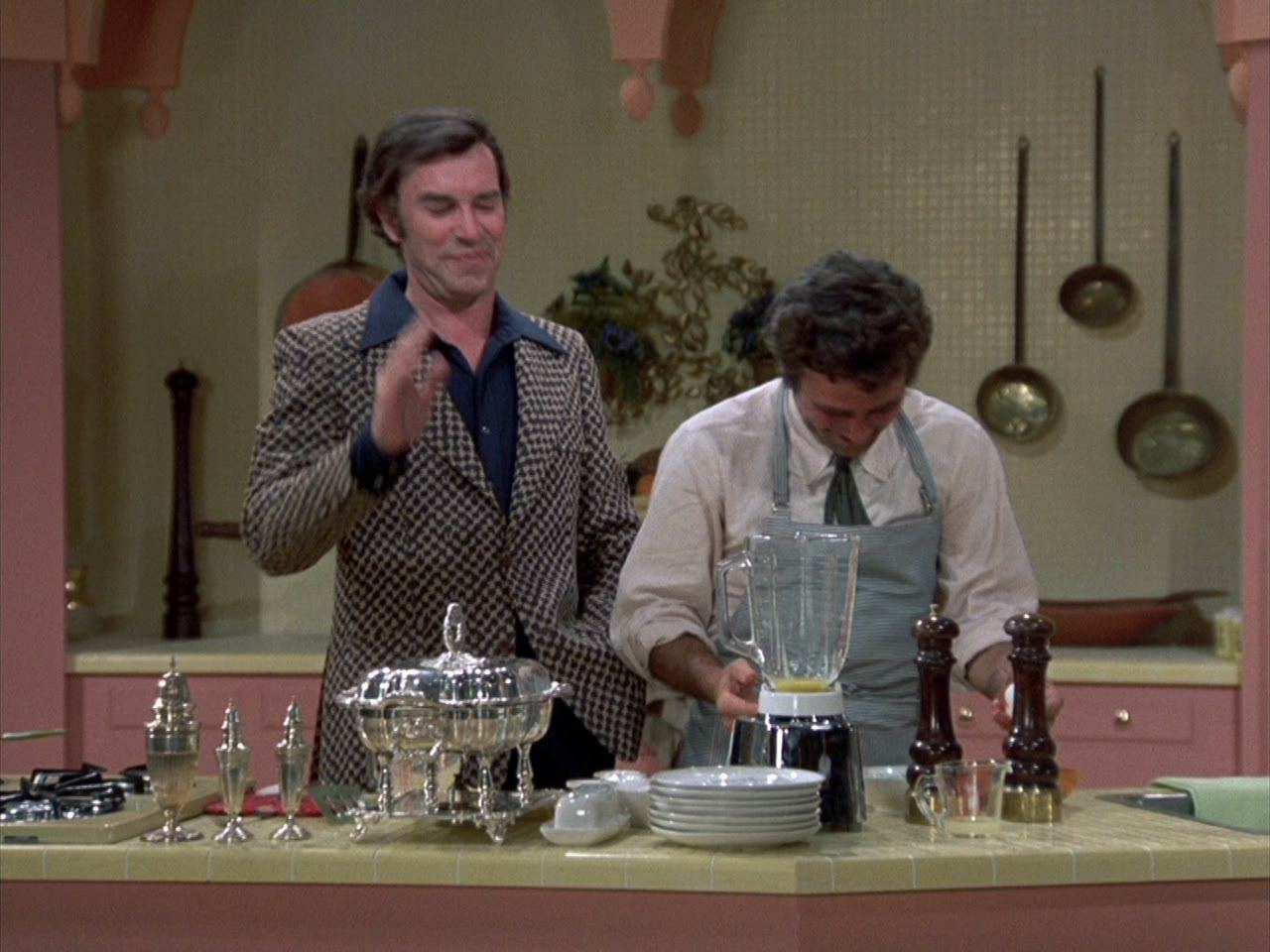
Clifford Paris is about to marry a much younger woman and rewrite his will, which would leave his twin nephews — the buttoned-up banker Norman and the flamboyant television chef Dexter — with nothing. The nephews are estranged, opposite in every visible way, and equally motivated.
The murder is staged as a heart attack in the bathtub, with an exercise bicycle used to induce the strain and the body arranged to look like an old man who overdid it. It is a domestic, quiet killing, and it is committed by one twin while the other provides — knowingly or not — the confusion.
The identity game is the mechanism of the whole film. Everything a witness saw could have been either brother, and everything either brother says can be reassigned to the other. Columbo is not chasing a murderer so much as trying to establish which of two men was in a given room.
Clifford Paris is about to marry a much younger woman and rewrite his will, which would leave his twin nephews with nothing. Norman is a buttoned-up banker, Dexter a flamboyant television chef, and they are estranged, opposite and equally motivated.
The murder is domestic: an exercise bicycle used to induce strain, a bath, and an old man arranged to look as though his heart gave out doing something foolish.
The identity game is the mechanism of the whole film. Anything a witness saw could have been either brother, and anything either says can be reassigned to the other. Columbo is not chasing a murderer so much as establishing which of two men was in a given room.
How Columbo gets him
Landau's double performance is the reason the episode works: the two men are distinguishable in every scene, and the film is careful to let the audience see differences that no witness inside the story could.
Columbo's route in is domestic detail, and it comes through the housekeeper, Mrs Peck, who dislikes the police and the nephews in equal measure. What she noticed about laundry, about crockery, about who used which room, turns out to matter more than anything forensic.
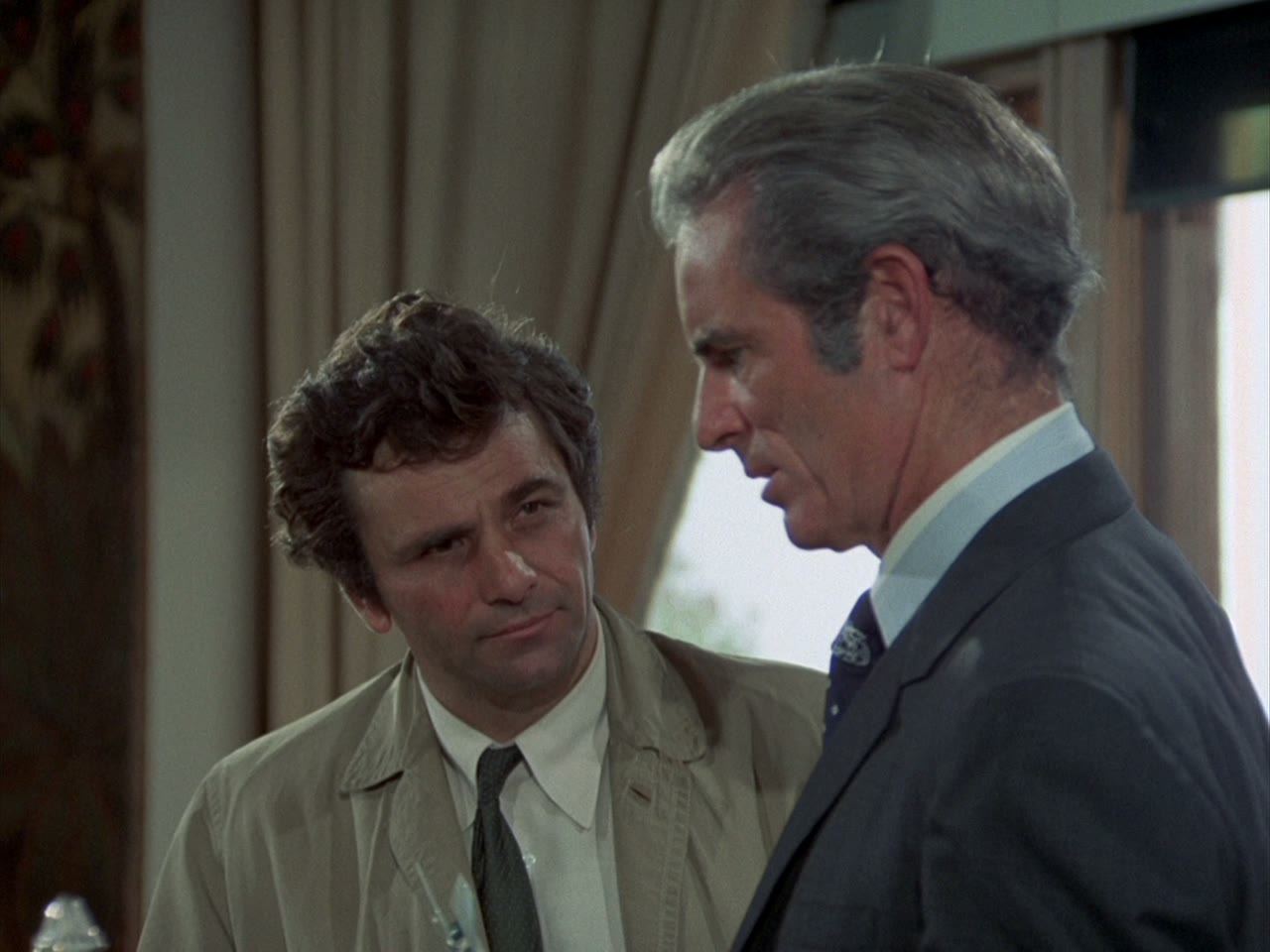
The lieutenant also does something rare here: he lets the brothers work on each other. Each begins to suspect he is being set up by the other, and the more they manoeuvre, the more they reveal which of them had to be somewhere at a particular time.
Landau plays the twins without a single split-screen effect deployed for its own sake, and the film lets the audience see differences no witness inside the story could.
The way in is domestic, through the housekeeper Mrs Peck, who dislikes the police and the nephews equally. What she noticed about laundry, crockery and who used which room matters more than anything forensic.
Columbo also lets the brothers work on each other. Each starts to suspect he is being set up by the other, and the more they manoeuvre the more they reveal about who needed to be where.
Worth knowing
- Martin Landau plays both twins without a single split-screen gimmick played for its own sake; the doubles work is deliberately unshowy.
- Julie Newmar appears as the fiancée whose engagement triggers the whole plot.
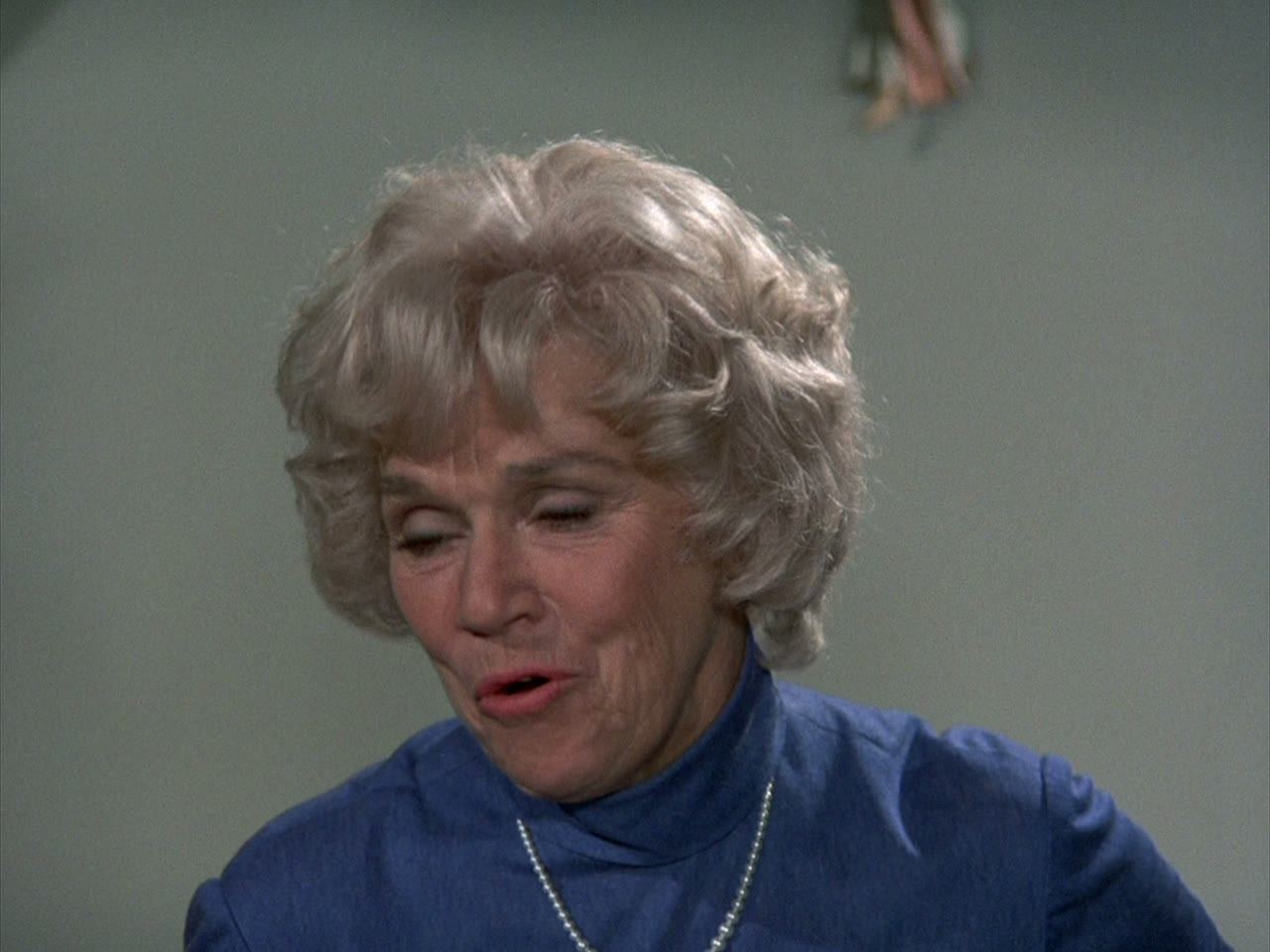
- Jeanette Nolan's housekeeper is one of the great supporting turns of the series — openly rude to everyone, including Columbo.
- Julie Newmar plays the fiancée whose engagement sets the plot going.
- Jeanette Nolan's housekeeper is one of the great supporting turns in the series — openly rude to everybody, including Columbo.
- Broadcast in March 1973.
Verdict
A neat, playful episode that knows exactly which mystery convention it is using and does not pretend otherwise. Landau is excellent, and the housekeeper steals every scene she is in.
It is also the one where the trick of the format shows most clearly: knowing whodunit from the start does not spoil anything when the question is not who but which.
Neat and playful, entirely aware of which mystery convention it is using. Landau is excellent and the housekeeper steals every scene she is in.
It also demonstrates the format's flexibility: knowing whodunit spoils nothing when the real question is which one.
What the people who made it said
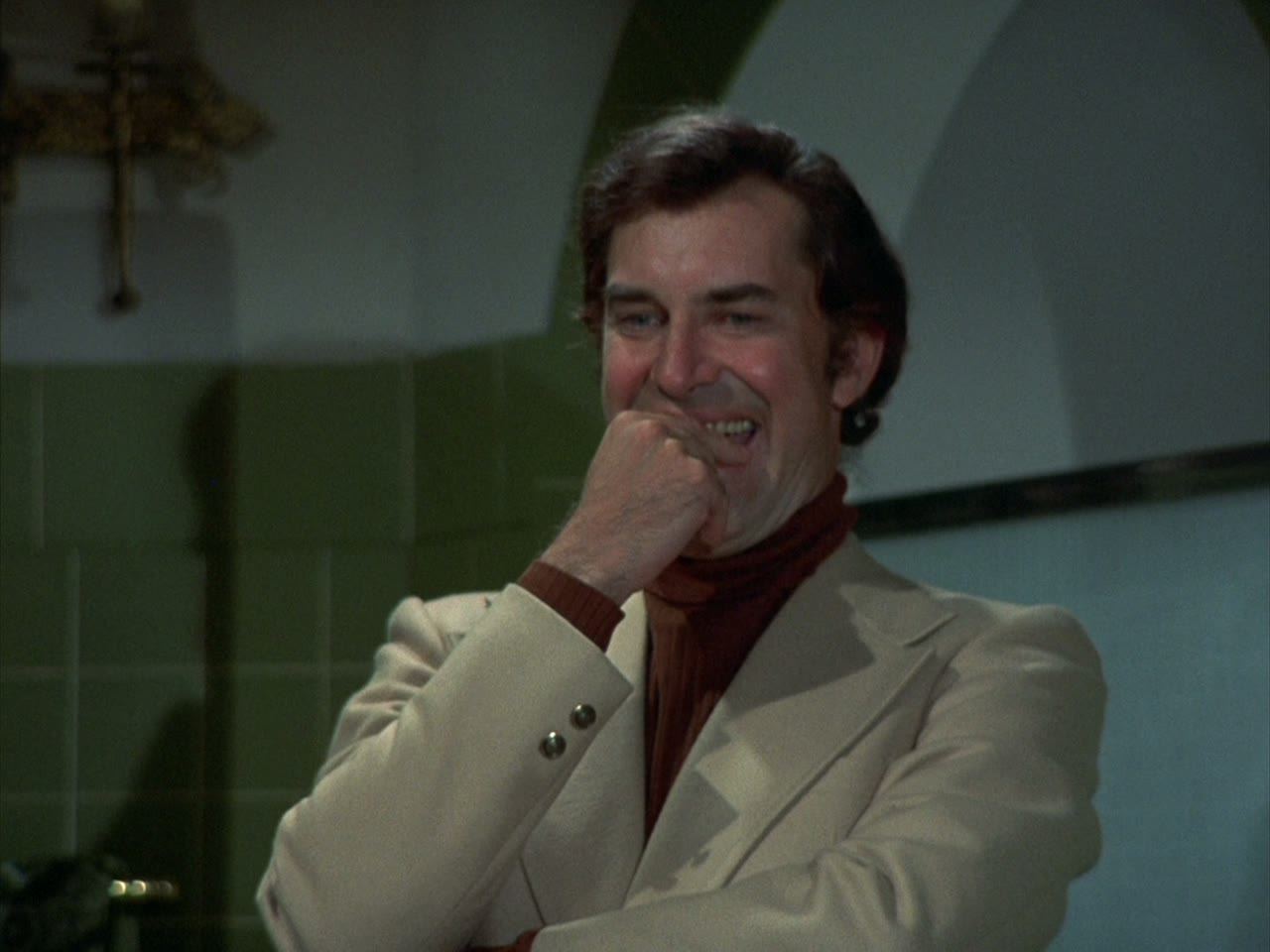
Butler had already worked the twin trick out at Disney, so the technical side held no surprises. What holds the scene together, he says, is not the split screen but Landau: you knew which brother you were looking at from the walk, before a word was spoken.
“Marty did a wonderful job of playing two distinct characters — one was carefree and jive, and the other one wasn't.”
Quotes are in the speaker’s own words — from a transcript of the recording, or from the printed source. Players open at the right minute. Everything is shortened; the full version is in the source.
Familiar faces
Actors who turn up in the series more than once — sometimes in very different parts.
- Tim O'Connor as Michael Hatheway 2 episodes also in Old Fashioned Murder
- Jeanette Nolan as Mrs. Peck 2 episodes also in The Conspirators
- Dabney Coleman as Detective Murray 2 episodes also in Columbo and the Murder of a Rock Star
- Robert Rothwell as Detective #2 2 episodes also in Death Hits the Jackpot
Cast data from TMDB, including uncredited bit parts. All the familiar faces →