Home → Episodes → Murder With Too Many Notes
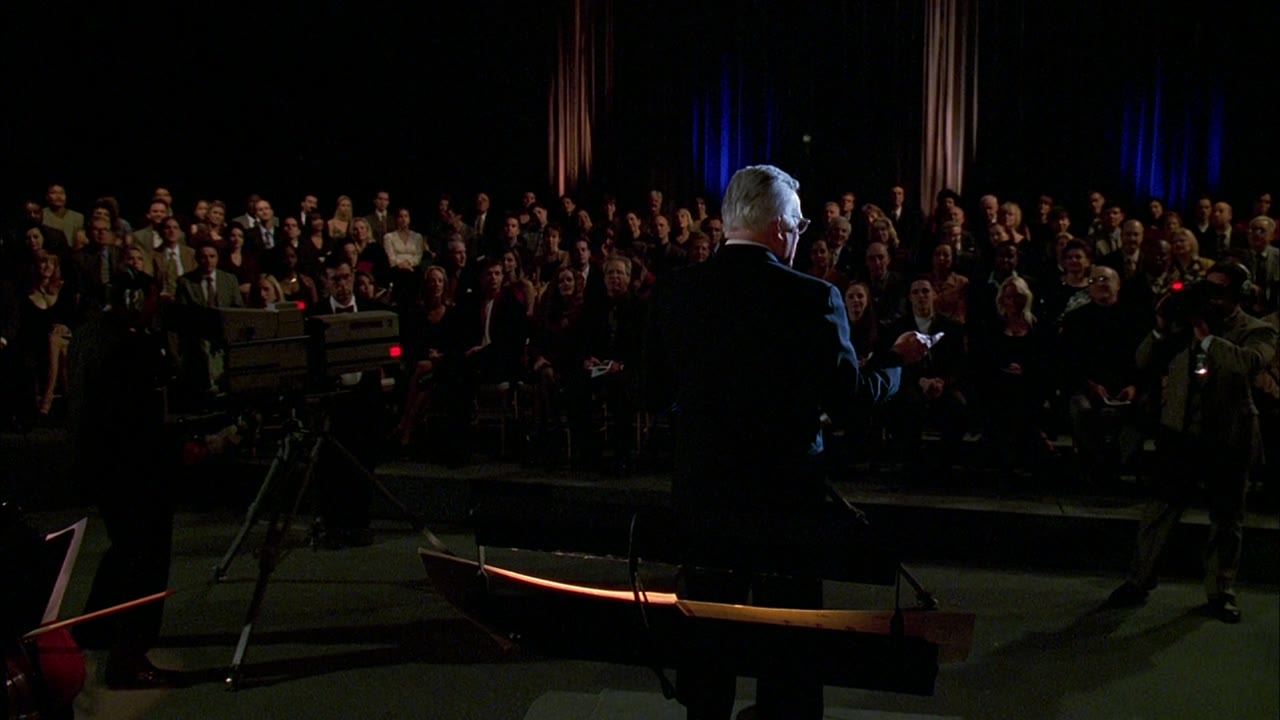
Murder With Too Many Notes
Russian title: Убийство по нотам · Russian version
A film composer murders his assistant, who has been writing the music he takes credit for. Billy Connolly plays him, and the episode is one of the better late entries.
Editor’s rating — 7 out of 10.
- Number
- 68 of 69
- Aired
- March 12, 2001
- Running time
- 85 min
- Director
- Patrick McGoohan
- Writer
- Jeffrey Cava / Jeffrey Cava and Patrick McGoohan
The case
- The killer
- Billy Connolly as Findlay Crawford
- The victim
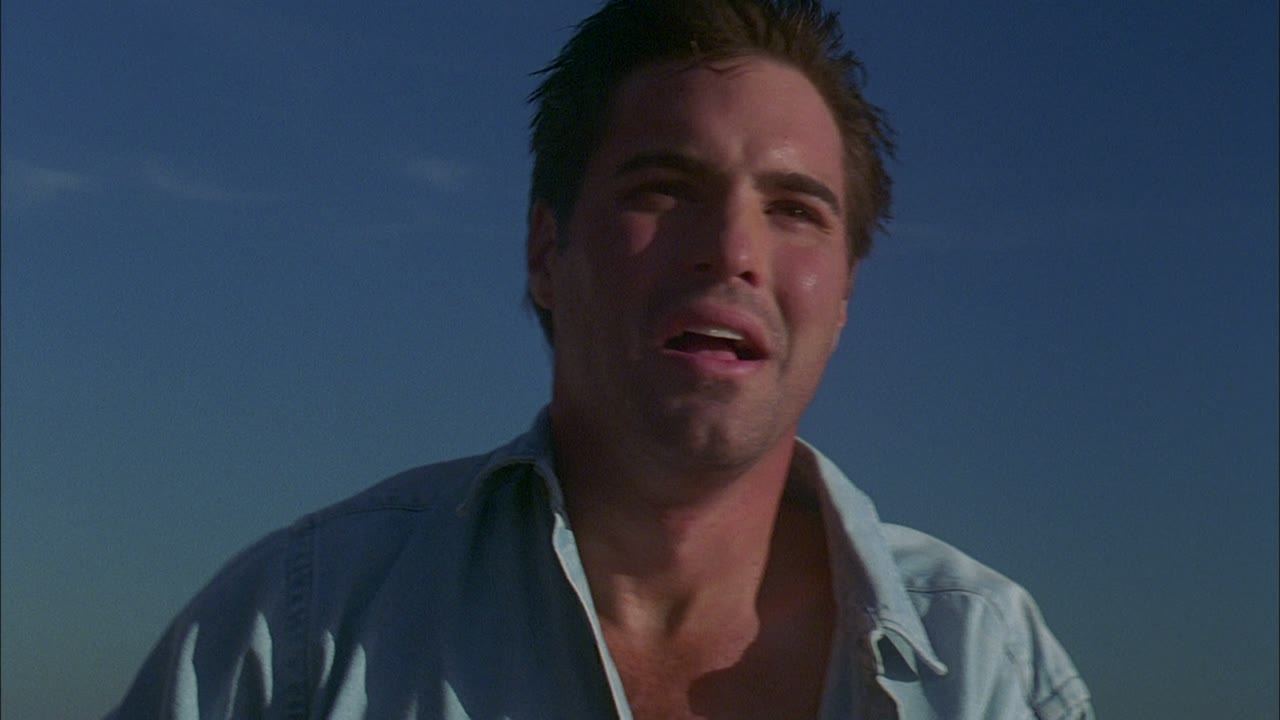
- Chad Willett as Gabriel McEnery
- Guest cast
- Billy Connolly, Richard Riehle, Charles Cioffi, Hillary Danner, Chad Willett, Scott Atkinson
Columbo is an inverted mystery: the murder opens the film and the killer is known from the first minutes. What you are watching for is how he proves it — see how the character works.
The murder
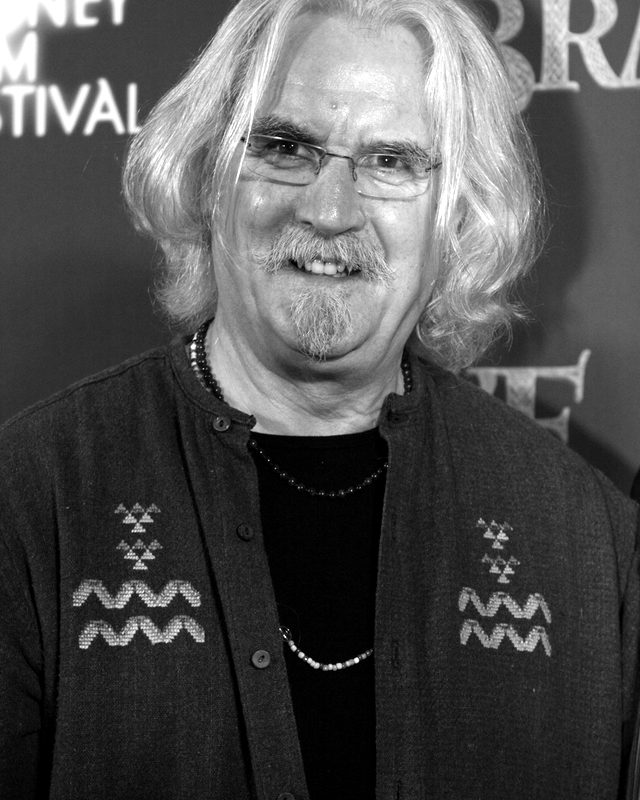
Findlay Crawford is a celebrated composer of film scores whose reputation rests on the work of Gabriel McEnery, a young assistant who writes what Crawford signs. When Gabriel decides to claim his own work, Crawford's career ends with him.
He kills him at the concert hall, pushing him from a height, and arranges the death as an accident during a late-night working session.
The plagiarism is the emotional core, and the film treats it as the real crime: Crawford has been stealing a man's life work for years, and the murder is only the final theft.
The arrangement between them had lasted years and suited Crawford perfectly: Gabriel wrote in a back room, Crawford conducted, took the interviews and collected the awards. What broke it was not money but credit — Gabriel had begun to want his name on a score, and once that has been said aloud it cannot be unsaid.
The disposal is opportunistic rather than designed. Crawford does not build an alibi so much as rely on the geography of a concert hall late at night: catwalks, unlit galleries, a building where a fall from a height explains itself. He then goes home and waits to be told about a tragedy.
How Columbo gets him
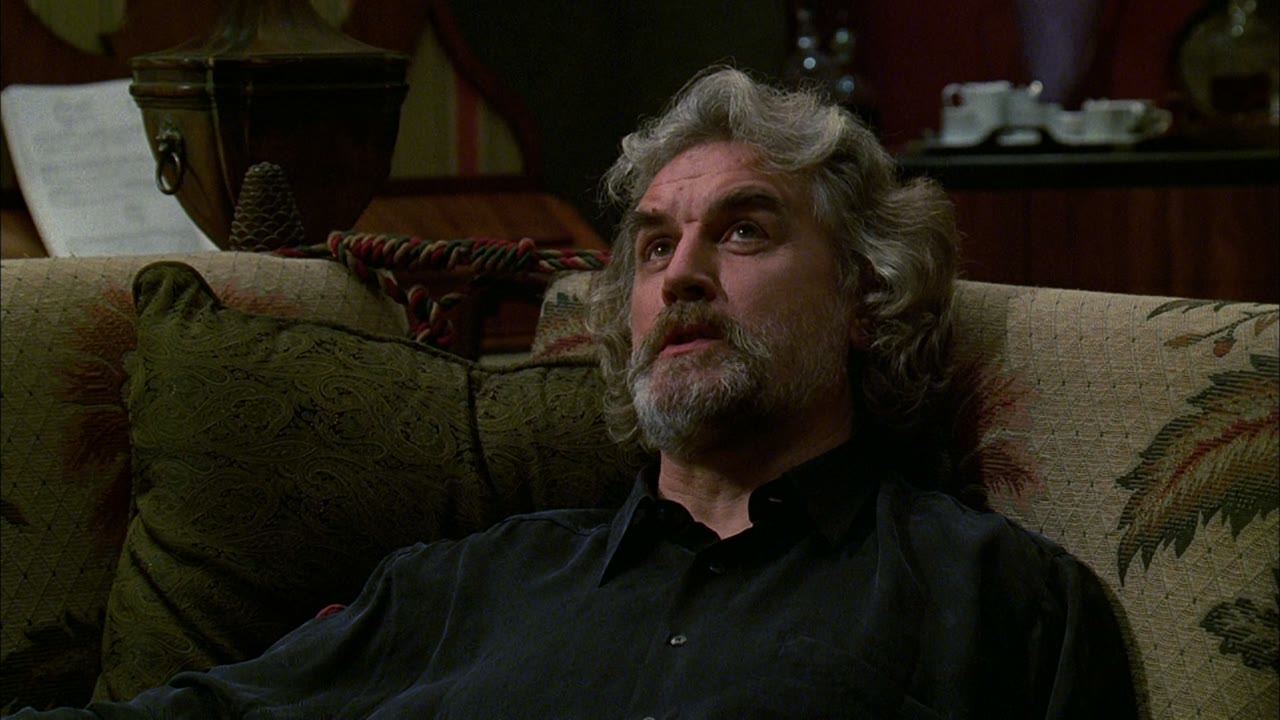
The music gives Columbo something to be curious about, and Connolly gives him someone to be curious at — Crawford is voluble, funny and constantly performing modesty about talent that is not his.
The technical route is the score itself. Manuscripts have handwriting, revisions and dates, and the paper trail of who actually wrote what survives the man who wrote it.
The lieutenant's trap uses the composer's ear against him: he is asked to identify something only the author of a piece would recognise.
Columbo's difficulty is that nothing about the scene is obviously wrong. A man working late in a dark building fell; there is no weapon, no struggle and no witness. So the lieutenant goes at the relationship instead, and starts asking the question the music world has been carefully not asking for a decade: who actually writes this.
The answers come from the people around the composer — copyists, orchestral players, a librarian — all of whom know and none of whom has ever been asked. It is one of the better uses of the series' recurring idea that the truth is usually already known by somebody without status.
Worth knowing
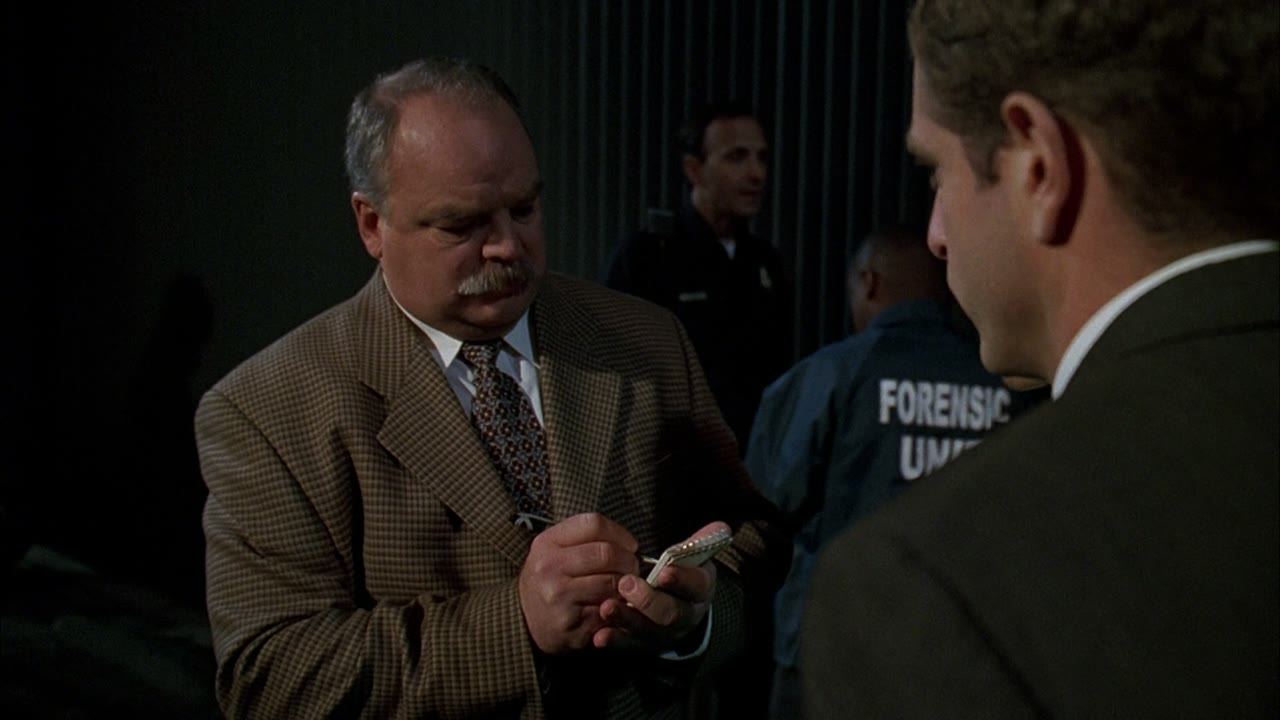
- Billy Connolly, primarily a stand-up comedian, plays the part straight and is one of the better late-period villains.
- Patrick McGoohan directed, his last work on the series, and co-wrote the script.
- It is the penultimate Columbo film, broadcast in 2000.
- The score heard in the film was composed for the production; the plot required music that could plausibly be attributed to two different hands.
- Falk was seventy-two when this was shot, and the concert-hall staircases were reportedly a genuine problem for him.
Verdict
One of the stronger films of the final stretch. The motive is unusual and genuinely sad, and Connolly plays charm covering fraud very well.
McGoohan's direction gives it more shape than most of the late entries, and the concert-hall setting is used properly rather than decoratively.
It also belongs to a small group of late episodes about professional theft rather than passion — with Murder, A Self Portrait and The Bye-Bye Sky-High I.Q. Murder Case, it forms the run's quiet argument that the worst thing a person can steal is somebody else's work.
Familiar faces
Actors who turn up in the series more than once — sometimes in very different parts.
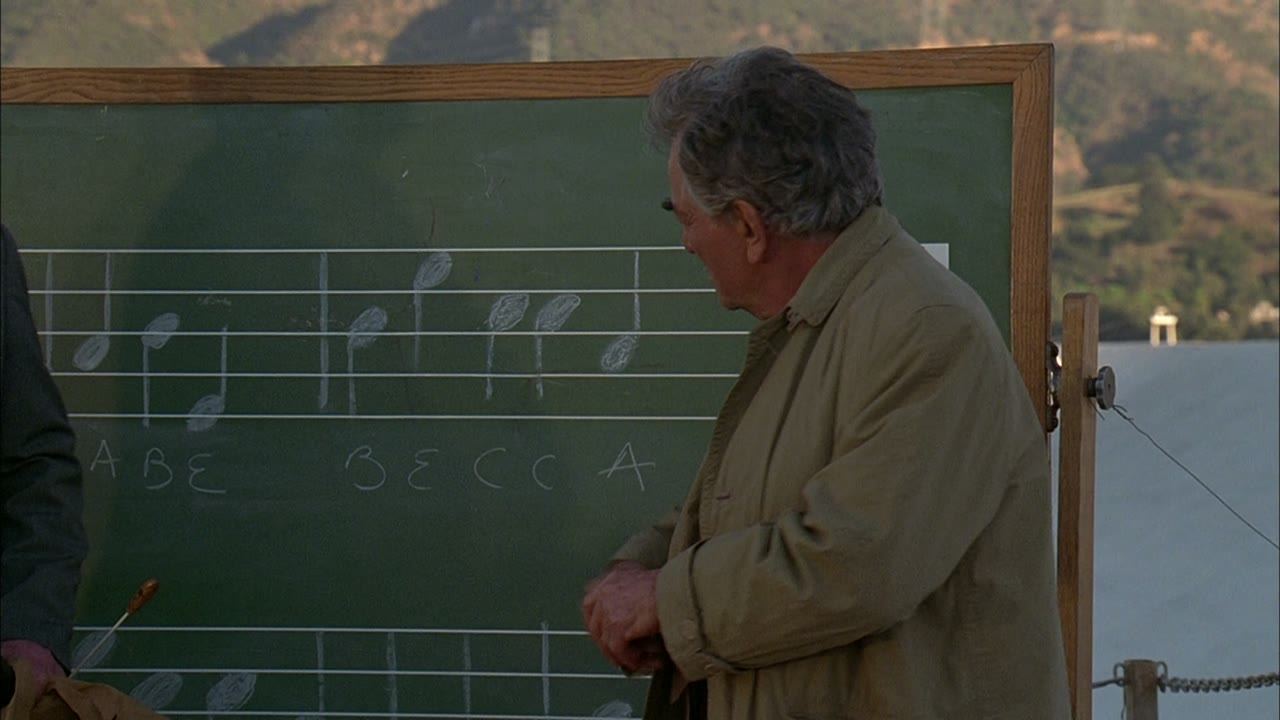
- Richard Riehle as Sergeant Degarmo 2 episodes also in Ashes to Ashes
Cast data from TMDB, including uncredited bit parts. All the familiar faces →